

Kotak
Stockshaala
Chapter 1 | 3 min read
Stop Loss and Target Placement
Two traders enter the same stock at the same price of ₹500 from an account of ₹5,00,000. One places their stop just below the entry candle's low. The other places it below the most recent swing low at ₹482, giving the trade structural room to breathe. The stock dips 1.5% before resuming upward. The first trader is stopped out. The second stays in and hits the target.
Stop loss placement is not just a risk management decision. It is a strategic decision about where the market would need to go for your trade thesis to be proven wrong.
By the end of this chapter, you will be able to:
- Place stop losses at structurally meaningful levels rather than arbitrary distances from entry.
- Set profit targets at prior swing highs, resistance levels, or minimum risk-reward multiples.
- Calculate risk-reward ratio before entering any trade and reject setups below 1.5R.
Stop Loss and Target Logic
A structural stop loss is placed beyond the level that, if broken, would invalidate the trade thesis. For a bullish pullback to support at ₹500, the stop goes below the most recent swing low at ₹482. The key question is not: how much am I willing to lose? It is: where would price need to go for me to know I was wrong?
Do not place stop loss at round numbers unless they coincide with structural levels. Round numbers attract other traders' stops, making them more likely to be triggered by a quick sweep before the intended move resumes.
The primary target for any swing trade is the next meaningful resistance level: a prior swing high, a major moving average overhead, or a round number with historical significance. Book partial profits — typically 50% — at the first target.
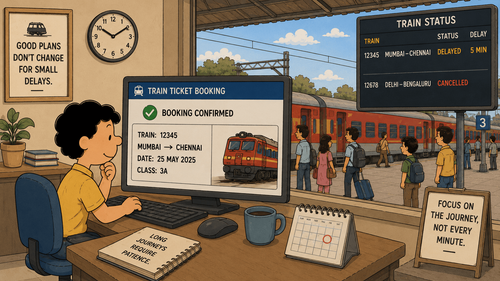
Think of someone booking train tickets for a long journey. They do not cancel the booking the moment the train is five minutes delayed. They would cancel if the train is cancelled entirely — a structural event. Small delays are normal. A structural stop works the same way: you stay in the trade through normal volatility, and exit only when the structure that justified the entry is clearly broken.
Element | Detail | Calculation |
|---|---|---|
Account Capital | ₹5,00,000 | Base for all risk calculations |
Max Risk per Trade (1%) | ₹5,000 | ₹5,00,000 x 1% |
Entry price | ₹500 (break of trigger candle high) | Standard course entry |
Structural stop loss | ₹482 (below last swing low) | Risk = ₹18 per share |
Position size | 278 shares | ₹5,000 / ₹18 = 278 shares |
First target | ₹550 (prior swing high) | Reward = ₹50; Risk-reward = 2.8R |
Second target (trail) | Trail with 20 EMA after first target hit |
Common Mistakes
Mistake 1: Moving the stop loss further away to avoid being stopped out
Once placed at a structural level, the stop defines the trade thesis. Moving it away because price is approaching it does not preserve the trade. It abandons the discipline that makes the position manageable.
Mistake 2: Setting a fixed rupee or percentage stop regardless of structure
A 2% stop on every trade ignores that different stocks have different volatility profiles. Stops must be calibrated to the structure of each individual setup.
Key Takeaways
- Stop losses must be placed at structural levels: below swing lows for longs. The stop marks where the trade thesis is proven wrong, not where the loss becomes uncomfortable.
- Primary targets are set at prior swing highs or meaningful resistance levels. Book 50% at the first target and trail the remainder. Reject setups with a risk-reward below 1.5R.
- Position size is determined by dividing the maximum acceptable rupee risk (1% of ₹5,00,000 = ₹5,000) by the distance from entry to stop.
Assignment
On the Nifty 50 or any stock from your watchlist, find a setup where price is near a structural support zone. For that setup:
(1) Identify the structural stop level,
(2) Calculate the stop distance in rupees,
(3) Calculate the position size using 1% risk on ₹5,00,000,
(4) Identify the nearest resistance as your first target and calculate the risk-reward ratio.
Only proceed if the ratio is at least 1.5R. Write this out before opening any position.
In the next chapter, we look at what to do after you have hit your first target — specifically, how to let the winning portion of a trade run further using a trailing stop.
Prefer watching over reading? We also have a video course covering this topic in full detail. Check it out here →
Disclaimer: This article is for informational purposes only and does not constitute financial advice. It is not produced by the desk of the Kotak Neo Research Team, nor is it a report published by the Kotak Neo Research Team. The information presented is compiled from several secondary sources available on the internet and may change over time. Investors should conduct their own research and consult with financial professionals before making any investment decisions. Read the full disclaimer here.
Investments in securities market are subject to market risks, read all the related documents carefully before investing. Brokerage will not exceed SEBI prescribed limit. The securities are quoted as an example and not as a recommendation. SEBI Registration No-INZ000200137 Member Id NSE-08081; BSE-673; MSE-1024, MCX-56285, NCDEX-1262.
Recommended Courses for you















Learn, Invest, and Grow with Kotak Videos
Explore our comprehensive video library that blends expert market insights with Kotak's innovative financial solutions to support your goals.

Trading with collateral as margin with Kotak Neo

How India is Redefining Space Exploration