Margin Funding: Meaning, How It Works, Benefits & Risks
- Updated: 29 May 2026, 4:58 PM IST
- | 4 min read
- 1,694
 Add Preferred News Source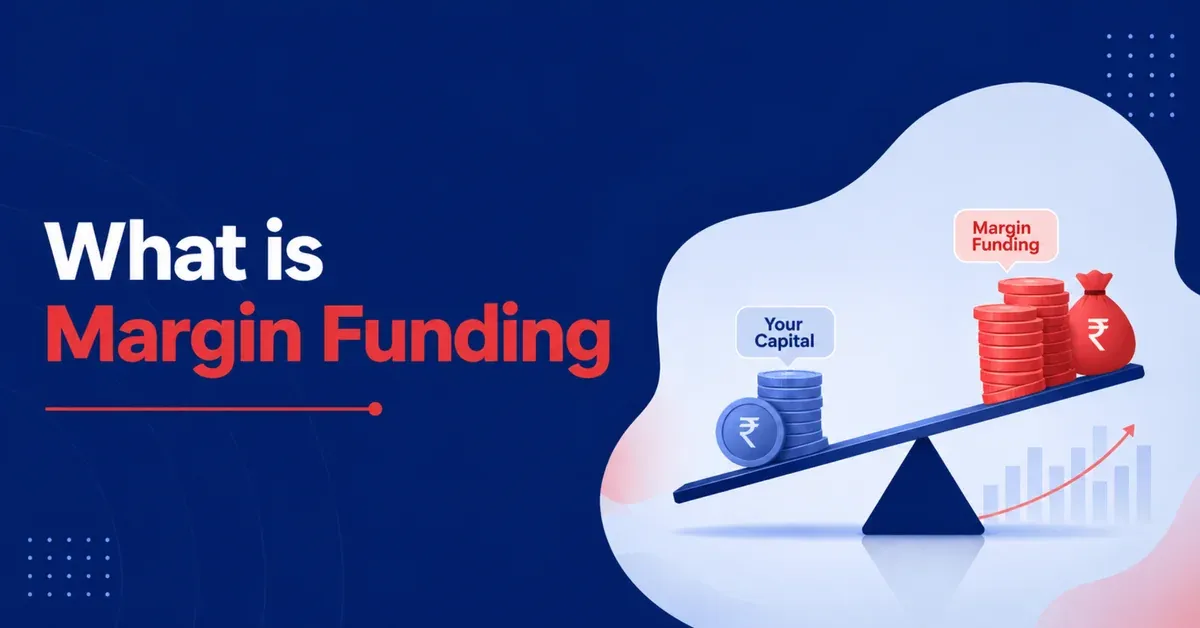
Imagine you want to buy a smartphone that costs ₹ 25,000. You’ve only got ₹ 20,000 with you. Your friend funds the shortfall of ₹ 5000, allowing you to purchase the phone. In the world of trading, margin funding works on similar lines. Here, your broker gives you the funds to buy the securities you want.
What Is Margin Funding?
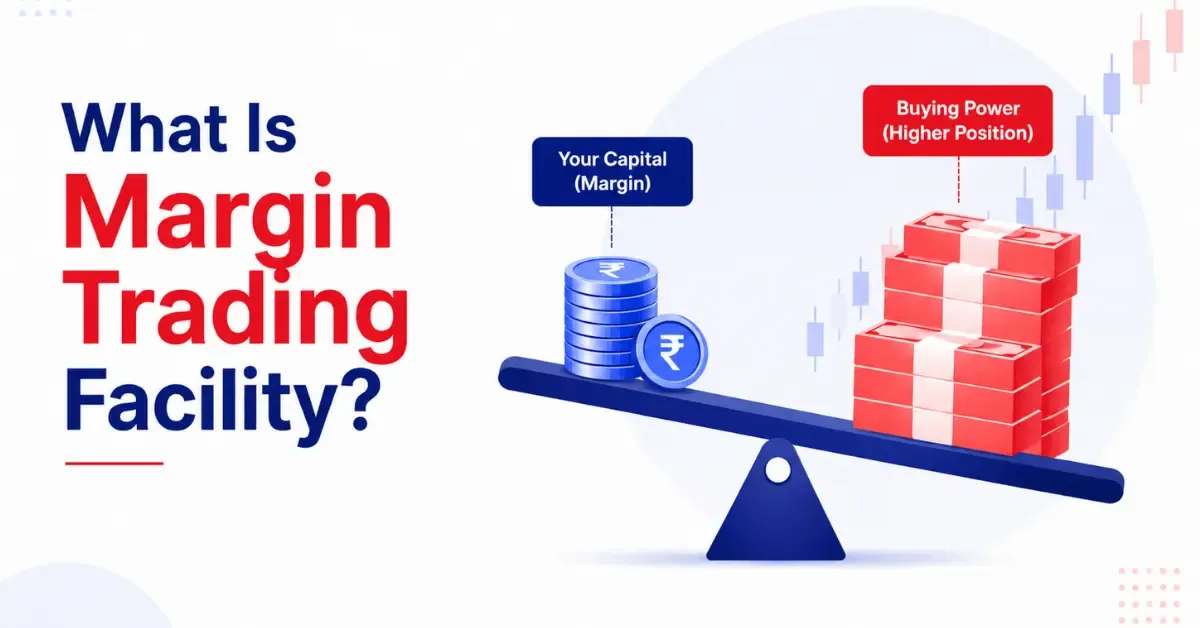
Margin funding is when you buy shares using a mix of your money and the broker’s money. You do not pay the full amount upfront. Instead, you pay a part, and the rest is funded for you.
For example, even if you have ₹1,00,000, you can buy stocks worth up to ₹4,00,000. The extra ₹3,00,000 is borrowed from the broker. This sounds helpful, but there is a catch. If the price moves in your favour, your gains improve. When it goes the other way, losses feel heavier.
How Does Margin Funding Work?
First, your broker needs to enable Margin Funding in your account. Not all stocks are allowed, so you can only pick from a set list.
When you buy, you pay a portion of the total value. The broker covers the balance. Those shares stay with the broker as collateral.
You are charged interest on the borrowed amount for the number of days you hold the position. If the stock price drops and the value falls below a level, you may get a call to add funds. If you don’t, the broker may square off the position.
Now, let’s break down Margin Funding with an example.
You buy 500 shares of ABC Ltd. at ₹200 each, so the total cost is ₹1,00,000. Instead of paying the full amount, you put in ₹25,000, and the broker funds the remaining ₹75,000.
If the price moves up to ₹220, you’re gaining ₹20 per share. Across 500 shares, that comes to ₹10,000 (interest not included).
If the price drops to ₹180, it’s a fall of ₹20 per share. That means a loss of ₹10,000, and on top of that, you’ll also have to pay interest on the borrowed ₹75,000.
Key Features Of Margin Funding
Some common features of Margin Funding that most brokers offer are the following:
-
Leverage (Increased Buying Power)
Margin lets you stretch your capital. You can take a bigger position than what your cash alone would allow. For example, a trader with limited funds can still take part in a larger trade. But the flip side is clear - both profit and loss move faster.
-
Interest On Borrowed Amount
The funded portion comes at a cost. Interest is charged for the period you hold the trade. Even if the stock stays flat, this cost continues. Over time, it can eat into returns if the move is small.
-
Holding Period Flexibility
Unlike intraday trades, these positions can be carried forward. Some traders use this flexibility to wait for a price move instead of closing the trade the same day. But keeping it open longer also means paying more interest.
-
Collateral Requirement
The shares bought under margin stay pledged with the broker. In some cases, extra securities may also be required. If prices fall and the value drops, you may need to add more funds. This is often called a margin call.
Who Should Use Margin Funding?
This facility is generally used by people who keep a close watch on the markets. It tends to suit those who can tolerate short-term ups and downs and can take calls without much delay.
In essence, margin trading is more suited to experienced traders who can handle losses. One must understand that it is not a way to generate quick returns. It is a way to leverage borrowed money to take greater positions.
Margin Funding Vs Regular Investing
In regular investing, you use your own money to buy shares. There is no borrowing involved, and the shares are fully yours from the start. There is no daily cost linked to holding them. You can keep them for years if you want.
Margin funding works differently. You are using borrowed money, so interest is always running in the background. Also, if prices fall, you may need to act quickly and add funds.
In simple terms, regular investing is slow and steady. Margin trading moves faster, but it needs more attention and control.
Conclusion
While margin funding can help you manage a shortfall in funds for trading, using it with prudence is vital. It’s wise to avail yourself of an amount you can easily repay. Ensure you understand the margin account meaning and the associated terms and conditions well before opting for it.

Understanding MTF (Margin Trading Facility): Learn Margin Funding, Amount, Interest Rate, Collateral
Kotak Neo
•3m 18s
The content in this blog is intended purely for educational purposes. Any securities or mutual funds referenced are illustrative in nature and do not constitute a recommendation or endorsement by Kotak Neo. Investors are encouraged to assess their own financial situation and seek professional advice before making any investment decisions. For compliance T&C and disclaimers, Visit https://www.kotakneo.com/disclaimer/
0 people liked this article.

Kotak Neo (Kotak Neo) is India's venerable stockbroking company with a rich legacy. It offers comprehensive investment services across asset classes, prioritising a technology-first approach for a seamless experience. Trusted by 5 million+ customers, it guides you toward financial success with ease of investment and speed of trade.
Note: The opinions expressed in this blog are personal viewpoints and should not be construed as recommendations.