What is MTF in the Stock Market? A Complete Guide to Margin Trading
- Updated: 15 Oct 2026, 5:04 PM IST
- | 4 min read
- 6,854
 Add Preferred News Source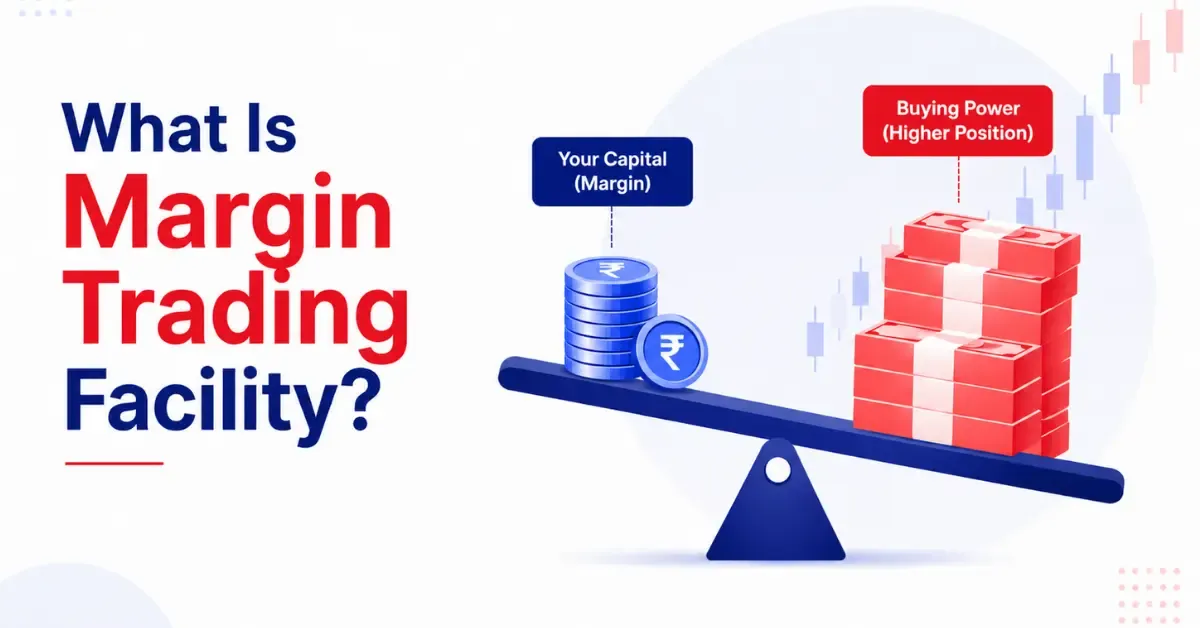
A lot of people think you need a pile of cash to start trading in the stock market, but that’s not really true. You can actually get started with less money or sometimes even make bigger profits thanks to something called MTF. With MTF, you only put up a fraction of the trade’s value. Your broker steps in to cover the rest, basically giving you a short-term loan and charging interest on what you borrow. It’s a simple way to boost your buying power and jump into trades that might usually be out of reach with just your own funds.
What is MTF?
MTF stands for Margin Trading Facility which is a SEBI-approved feature that functions a lot like a line of credit for your equity trades. Instead of paying the whole price upfront, you just provide an “initial margin,” which could be cash or even some of your existing shares, and your broker funds the rest. This facility is also commonly called margin trading or simply MTF.
How does MTF Work?
When you open an MTF position, you pay a portion of the cost, and the broker funds the remaining amount. The stocks you buy are then pledged as collateral. Here’s a margin trading example: let’s say you want to buy shares worth ₹40,000 but only have ₹10,000 in your account. By using MTF, this is what the breakup would be:
Your Contribution: ₹10,000 (25% margin) Broker Funding: ₹30,000 (75% loan).
You can hold these stocks for as long as you like, given that you keep up with the interest payments and the required margin levels are maintained.
Step-By-Step Guide To Buying On Margin
-
Activate MTF: The first step is to activate the facility. To do this, head to the 'Products' section on your trading platform and pick 'MTF' to turn on the facility.
-
Pick Your Stock: Find the stock you want to buy and ensure that it is eligible for margin trading.
-
Select Product Type: Enter your quantity and choose 'MTF' instead of the standard 'Delivery' option.
-
Check The Details: The order summary will show you the required margin, the broker's funding, and the margin rates. Make sure this information is correct.
-
Swipe to Trade: The trade goes through as soon as you confirm it. Just make sure to finish the auto-pledge so your position stays open.
Key Elements Of Margin Trading
Minimum Margin
It is the minimum amount of money or equity you must have in your account to keep your position open.
Initial Margin
This is the percentage of the trade value you have to pay upfront.
According to SEBI rules, you usually have to put up at least 20% of the trade value as a margin when trading in cash.
Maintenance Margin And Margin Calls
While your trade is live, you have to keep a maintenance margin in your account. If the stock price falls and your account value drops below this level, the broker will issue a margin call. This call must be served by either adding more funds or selling some shares. If these calls are not paid, the broker might sell your shares to get their money back.
Benefits Of Margin Trading
-
More Buying Power: Margin trading allows you to take bigger positions than your cash balance.
-
Better Diversification: More capital allows you to invest in a number of different sectors instead of just one stock.
-
Hold For Longer: With MTF, you can keep your positions open for days, weeks, or even months, unlike intraday trading.
-
Use Existing Stocks: You don't always need cash; MTF lets you use the stocks you already own as collateral for new trades.
Risks Of Margin Trading
Higher Losses: Leverage is a double-edged sword. If stock prices fall, your losses also increase.
Interest Charges: Because the margin is a loan, you pay interest every day you hold the position. These costs add up and lower your overall returns if the stock stays the same.
Forced Exit: If the markets crash and you can't meet a margin call, your stocks could be sold at the worst possible time.
New SEBI Regulations On Margin Trading
New SEBI rules have opened up an interesting option for traders: securities bought using cash collateral can now be counted towards the maintenance margin for MTF positions. However, there are some extra rules that go along with this option. Only funded stocks from the Group 1 securities can be used as maintenance margin. Trading members are also required to report their MTF exposure by 6:00 PM on the T+1 day, and the stocks or ETF units that were used as collateral must be kept separate from the ones that were bought with margin trading.
Takeway
MTF is a useful tool for investors who want to start with minimal capital. However, since it is a form of loan, investors should be careful and ensure the maintenance margin and margin calls are fulfilled to avoid drastic measures from brokers.
The content in this blog is intended purely for educational purposes. Any securities or mutual funds referenced are illustrative in nature and do not constitute a recommendation or endorsement by Kotak Neo. Investors are encouraged to assess their own financial situation and seek professional advice before making any investment decisions. For compliance T&C and disclaimers, Visit https://www.kotakneo.com/disclaimer/

Get upto 5X Leverage with Kotak Neo Pay Later | Trade Smarter | Low-Cost MTF | Kotak Neo
Kotak Neo
•2m 39s
FAQs
With margin trading facility, you can get more funds to trade than available in your account. It allows you to potentially amplify profits on your trading.
Margin trade, if done with prudence, can prove to be beneficial. It has the potential to offer higher profits than traditional modes of trading.
Borrowing less than the allowed limit and wise investment are some of the best practices for trading with margin.
0 people liked this article.

Kotak Neo (Kotak Neo) is India's venerable stockbroking company with a rich legacy. It offers comprehensive investment services across asset classes, prioritising a technology-first approach for a seamless experience. Trusted by 5 million+ customers, it guides you toward financial success with ease of investment and speed of trade.
Note: The opinions expressed in this blog are personal viewpoints and should not be construed as recommendations.