Tax-Loss Harvesting: Definition, How It Works And Key Rules?
- Updated: 22 May 2026, 5:17 PM IST
- | 7 min read
- 1,003
 Add Preferred News Source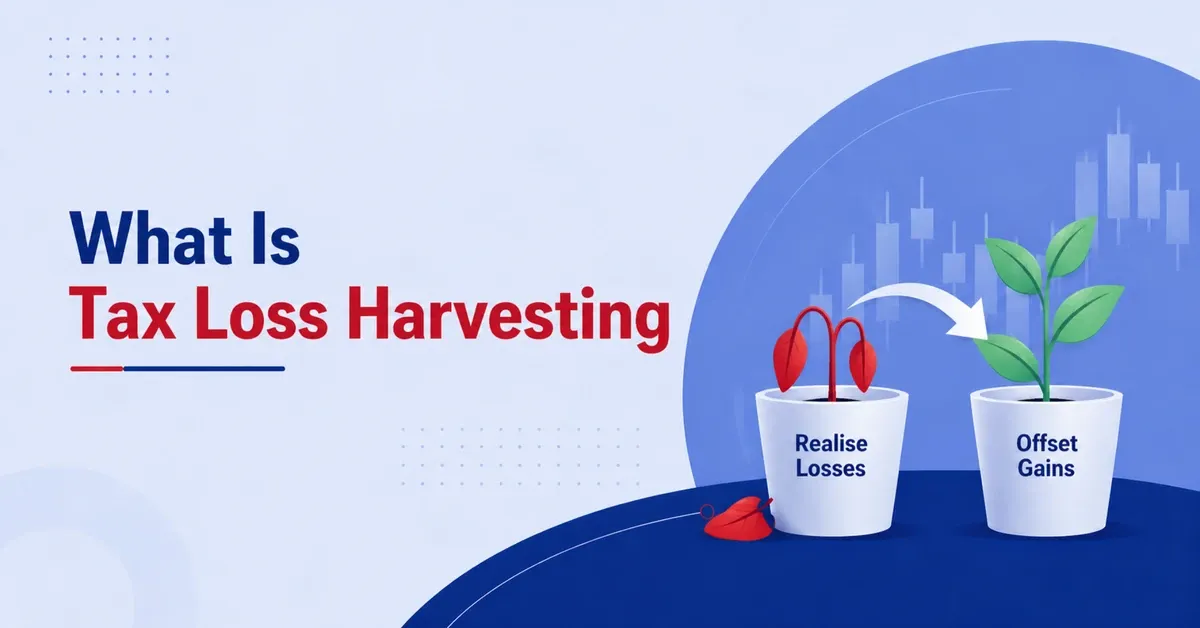
It is the last quarter of the current financial year. A time when most of us go back to the drawing board to find out how to reduce taxes. Tax-loss harvesting is one of the several ways through which you can do so.
So, what is tax loss harvesting, and how can you use it to reduce your tax liability? Let us find out.
What Is Tax-Loss Harvesting?
Tax-loss harvesting is a strategy where you sell your underperforming or loss-making investment to offset taxable gains from other investments. In the process, you lower your tax liability. This strategy is particularly useful when you have not received the returns as expected from your investment, particularly stocks or mutual funds.
How Tax-Loss Harvesting Works?
Let us see how this strategy works and can help you lower your tax burden:
Realising Capital Gains And Losses
First and foremost, you need to identify your capital gains and losses. A capital gain happens when the selling price of an investment is more than its cost price. For instance, if you have purchased a stock for ₹10,000 and have sold it for ₹12,000, your capital gains stand at ₹2,000.
On the other hand, a capital loss happens when you sell an investment for less than the amount paid. So, if you happen to sell the same stock for ₹7,000, your capital losses stand at ₹3,000.
Offsetting Gains With Investment Losses
In tax-loss harvesting, you sell the investments that have lost value to realise capital losses to offset or reduce the taxes owed on capital gains from profitable investments.
Carry Forward Of Capital Losses
If your losses are higher than your gains, you can carry those losses forward for as long as eight years (as long as your income tax return is filed on time).
Example Of Tax-Loss Harvesting
Let us understand tax-loss harvesting with the help of an example.
Suppose you invest ₹2 lakh in mutual fund ‘A’. One year later, the value stands at ₹1.85 lakh. You decide to cash out. That means a capital loss of ₹15,000.
Now, assume you earn long-term capital gains of ₹1.5 lakh from your investment in mutual fund ‘B’. You can use tax-loss harvesting to offset the ₹15,000 loss against these gains. This will bring down the overall gains earned from mutual fund B from ₹1.5 lakhs to ₹1.35 lakhs (₹1.5 lakhs - ₹15,000).
Since long-term capital gains up to ₹1.25 lakh are tax-exempt, you would need to pay tax only on ₹10,000 (₹1.35 lakh − ₹1.25 lakh). Without tax-loss harvesting, your taxable gains would have been ₹25,000 (₹1.5 lakh − ₹1.25 lakh).
Benefits Of Tax-Loss Harvesting
Here are the benefits you get from tax-loss harvesting:
Reducing Capital Gains Taxes
Tax-loss harvesting helps lower the amount of capital gains tax you have to pay. By selling investments that are at a loss, you can use those losses to offset gains from profitable investments. This reduces your overall taxable gains and ultimately lowers your total tax liability.
Improving After-Tax Investment Returns
Tax-loss harvesting helps you improve your post-tax returns. A higher tax outgo reduces the overall returns from your investment. On the other hand, a lower tax outgo boosts the after-tax investment returns.
Portfolio Rebalancing Opportunities
Tax-loss harvesting can help rebalance your portfolio. Sell the underperforming investment and move that money into something that better fits your goals and risk comfort.
The Wash Sale Rule
While tax-loss harvesting is a legal way to reduce your tax liability, one needs to be aware of the wash sale rule before using it. Though this rule does not exist in India, tax authorities can question artificial or colourable transactions done solely with the intention to claim losses.
What Is A Wash Sale?
A wash sale is a process through which investors sell loss-making stocks and then purchase them within 30 days of sale. It usually happens when one tends to sell a stock out of fear, and then the stock jumps.
How The Wash Sale Rule Works?
Let us understand the working of the wash sale rule. Suppose you buy a stock on 12 March 2026. The stock witnesses a decline, and you sell it on 23 March 2026. Now, the stock gains, and you buy it again on 25 March. Under the wash sale rule, you can not use the loss to off-set your capital gains.
Ways To Avoid Wash Sale Violations
Some ways to avoid wash sale violations are:
-
Avoid Buying Sold Stocks In Quick Time
The easiest way to avoid it is to make sure you do not sell and buy the same stock in quick time, within 30 days at least.
-
Start Tax Planning Earlier
Another way to prevent the wash sale trap is to plan your taxes in advance. Last-minute tax planning can make you prone to falling into this trap. On the other hand, if you start tax planning early, you get enough time to adjust.
However, the wash sale rule is not applicable in India; it only applies to investors subject to the US tax law.
Limitations Of Tax-Loss Harvesting
While tax-loss harvesting has benefits, it also has certain limitations. These include:
-
Works Only If You Have Capital Gains
You can use tax-loss harvesting only if you have capital gains. If you do not have capital gains, you can not use this strategy.
-
Different Rules For Long-Term and Short-Term Capital Losses
Tax-loss harvesting rules vary for long-term and short-term capital losses. Note that you can offset long-term capital losses only against long-term capital gains. You can not offset long-term capital losses against short-term capital gains. On the other hand, you can offset short-term capital losses either against short-term or long-term capital gains.
-
Risk of Market Timing
The tax-loss harvesting strategy may expose you to timing the market. If you sell a falling investment, its price may rebound. If it happens, you can miss out on the recovery.
When Should Investors Use Tax-Loss Harvesting?
You can use the tax-loss harvesting strategy in the following scenarios:
-
When You Want To Rebalance Your Portfolio
You can use this strategy when you want to rebalance your portfolio. Doing so can help you replace poor-performing funds with better ones.
-
When You Want To Carry Forward Losses
You can use this strategy if you wish to carry forward your losses. As said above, you can carry forward the losses for up to 8 years, provided you file your tax returns on time.
Tax-Loss Harvesting Vs Tax-Gain Harvesting
Just like tax-loss harvesting, you can also implement tax-gain harvesting to reduce your tax outgo. However, they differ on certain aspects (see table):
Basic Idea | Sell an investment that is in a loss to reduce tax liability | Sell an investment that is a gain to reduce tax liability |
Market Condition When Used | Generally used in a falling market | Generally used in a growing market |
Impact On Portfolio | It is used to remove underperforming investments | It is used to reset purchase price of an asset and continue to hold it |
Conclusion
Tax-loss harvesting is a prudent way to reduce your tax liability. That said, it is essential for you to use it wisely, not only to lower your tax outgo but also to get rid of underperformers that can drag down your portfolio returns.
Sources
Cleartax
The Economic Times
Business Today
The content in this blog is intended purely for educational purposes. Any securities or mutual funds referenced are illustrative in nature and do not constitute a recommendation or endorsement by Kotak Neo. Investors are encouraged to assess their own financial situation and seek professional advice before making any investment decisions. For compliance T&C and disclaimers, Visit https://www.kotakneo.com/disclaimer/
0 people liked this article.

Kotak Neo (Kotak Neo) is India's venerable stockbroking company with a rich legacy. It offers comprehensive investment services across asset classes, prioritising a technology-first approach for a seamless experience. Trusted by 5 million+ customers, it guides you toward financial success with ease of investment and speed of trade.
Note: The opinions expressed in this blog are personal viewpoints and should not be construed as recommendations.