Understand the Record Date Vs. Ex-Dividend Date In Dividend Stocks
- Updated: 22 May 2026, 5:17 PM IST
- | 4 minutes read
- 1,004
 Add Preferred News Source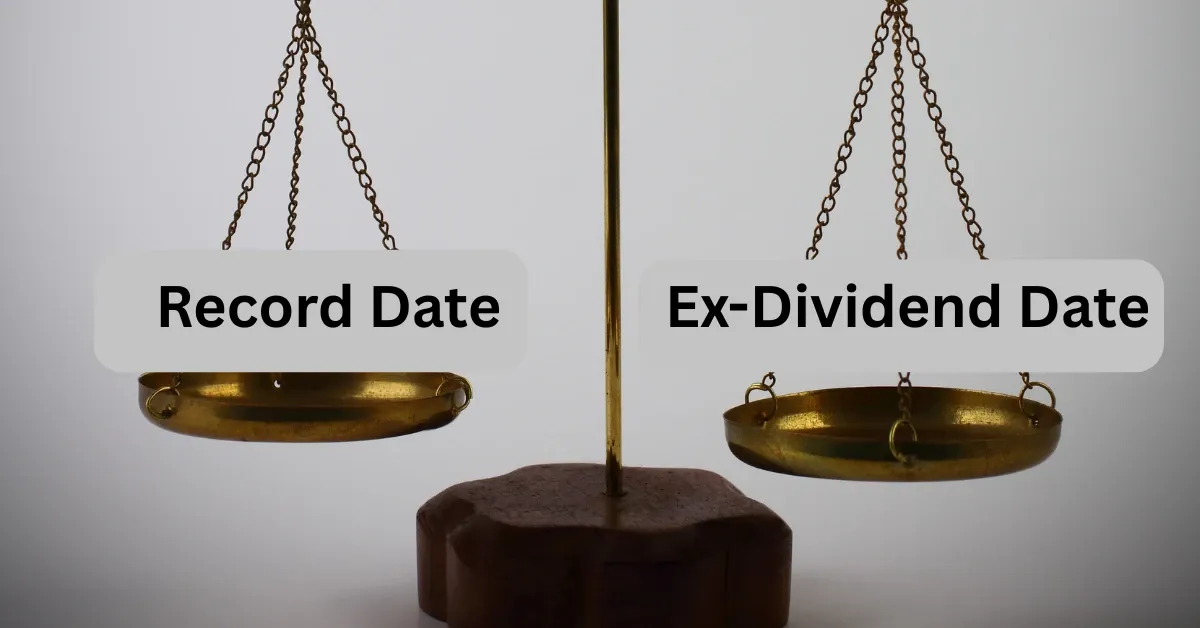
Imagine a company announces that bonuses will be paid to employees whose names appear on the payroll list on Saturday. But payroll updates take one working day. If you join on Friday, your name is recorded in time, and you receive the bonus. Join on Saturday, and the update happens on Monday, too late.
That is exactly how dividends work. Investors often wonder what is the ex-date and record date. Though they sound similar, one is the market’s cut-off and the other is the company’s verification day, and that small timing gap decides who gets paid.
What Is The Record Date?
The record date is the date set by a company to determine which shareholders are officially eligible to receive the dividend.
On this date, the company checks its records to see who is listed as a shareholder. If your name appears in the company’s books on that day, you qualify for the dividend.
So, when investors ask what the record date and ex-dividend date is, the record date is simply the cut-off date for identifying eligible shareholders.
However, here is a piece of information you don’t want to miss. Buying shares on the record date does not automatically mean your name will appear on the records that same day. Why? Because stock market transactions are not settled instantly.
What Is The Ex-Dividend Date?
If there is one date dividend investors should actually remember, it is the ex-dividend date.
This is the day the stock effectively “loses” the right to the upcoming dividend. From this point onward, anyone buying the share is buying it without that payout attached.
So timing becomes everything.
If you own the shares before the date arrives, you qualify to receive the dividend. However, if you buy the shares on or after the ex-date, you do not qualify to receive the dividend.
This is why experienced investors track the ex-date more closely than the record date. It is not just a technical detail. It is the market’s cut-off point.
Record Date vs. Ex-Dividend Date – Key Differences
Let us break this down in a way that makes it easy to remember.
Timing Difference
The ex-date usually comes one business day before the record date.
This gap exists because of the settlement cycle in the stock market. It ensures that the company’s shareholder records are accurate by the time the record date arrives.
Eligibility For Dividend
This is where most confusion happens.
Eligibility depends on whether you own the shares before the ex-date.
The company confirms eligibility on the record date.
So, although the record date sounds important, the ex-date is what actually matters when it comes to receiving the dividend.
Settlement Cycle Impact
Indian stock exchanges operate on a T+1 cycle. This means when you purchase shares, the ownership is transferred the next day.
Because of this delay, if you buy on the record date itself, your name may not appear in the company’s books in time. That is why the ex-date is set earlier.
Price Adjustment On Ex-Date
Something interesting happens on the morning of the ex-date. If you check the stock price, you may notice it opens lower than the previous day’s close.
This is not a crash. It is simply arithmetic.
Let us say a company closed at ₹500 and announced a dividend of ₹10 per share. Once the stock goes ex-dividend, new buyers are no longer eligible for that ₹10. So, the market adjusts. The opening price may hover around ₹490 instead.
Think of it this way. Before the ex-date, the share came bundled with a ₹10 benefit. After the ex-date, that benefit is no longer attached. Naturally, the price reflects that change.
Of course, real market prices move because of demand, supply and sentiment. So the drop may not be exactly equal to the dividend amount. But in theory, the adjustment broadly matches the declared payout.
Example To Understand Record Date Vs. Ex-Date
Numbers make this easier to grasp than definitions ever will.
Imagine a company announces that it will pay a dividend of ₹20 per share. It also shares the key dates. The stock will go ex-dividend on 10 March. The record date is set for 11 March. The money will be paid on 25 March.
Now, picture four different investors entering at different times.
Investor A - 8 March
Investor B - 9 March
Investor C - 10 March (ex-date)
Investor D - 11 March (record date)
A and B, both purchased before the ex-date arrived. So, when the clock ticks past 10 March, their eligibility is already locked in. They will receive ₹20 per share.
The third investor waits until 10 March, which happens to be the ex-date. By then, the dividend is no longer attached to the stock. Even though the announcement is still fresh and the record date is technically a day away, this investor will not receive anything.
The fourth investor buys on 11 March, which is the record date itself. It sounds official, so it feels like it should count. But it does not. Because of the settlement process, their name will not appear in the company’s books in time.
So, in this situation, only the first two investors receive the dividend. The other two miss out, even though one of them bought on what seems like the most important date.
Final Thoughts
Dividends are often presented as easy money. Buy a stock. Wait. Get paid. But in reality, even something as straightforward as a dividend has rules attached to it.
A lot of investors get drawn to the record date because it sounds formal and important. In practice, though, the ex-date is the one that quietly does heavy lifting. Miss it by a day, and the payout is gone.
If you’re ever confused about the record date and ex-dividend date, keep it simple. The record date is when the company checks its list. The ex-date is the market’s cut-off point.
That said, dividends should not become a race against the calendar. Buying a stock just to capture a payout rarely works the way people expect, especially since prices adjust. What tends to matter more is whether the business can keep generating profits and rewarding shareholders year after year.
Sources:
US SEC
Investopedia
CFI
Frequently Asked Questions
No. In most cases, you will not. Because of the settlement cycle, buying on the record date is too late. You must buy before the ex-date to qualify.
The stock price usually falls by approximately the dividend amount on the ex-date. This reflects the fact that new buyers are not entitled to receive the declared dividend.
The ex-date precedes the record date due to the settlement cycle. It takes time to transfer ownership of the shares; hence, the exchange sets the ex-date before the record date.
Yes. If you have purchased the shares before the ex-date, you can sell them on the ex-date and still receive the dividend.
For investors, the ex-dividend date is more important. It determines your eligibility.
The record date is important for the company’s administrative process, but the ex-date is what investors must watch closely.
The content in this blog is intended purely for educational purposes. Any securities or mutual funds referenced are illustrative in nature and do not constitute a recommendation or endorsement by Kotak Neo. Investors are encouraged to assess their own financial situation and seek professional advice before making any investment decisions. For compliance T&C and disclaimers, Visit https://www.kotakneo.com/disclaimer/
The content in this blog is intended purely for educational purposes. Any securities or mutual funds referenced are illustrative in nature and do not constitute a recommendation or endorsement by Kotak Neo. Investors are encouraged to assess their own financial situation and seek professional advice before making any investment decisions. For compliance T&C and disclaimers, Visit https://www.kotakneo.com/disclaimer
0 people liked this article.

Kotak Neo (Kotak Neo) is India's venerable stockbroking company with a rich legacy. It offers comprehensive investment services across asset classes, prioritising a technology-first approach for a seamless experience. Trusted by 5 million+ customers, it guides you toward financial success with ease of investment and speed of trade.
Note: The opinions expressed in this blog are personal viewpoints and should not be construed as recommendations.