IndiGo, SpiceJet Shares In Focus As Delhi, Maharashtra Cut ATF Tax; IndiGo May Save ₹1,500 Cr
 Add Preferred News Source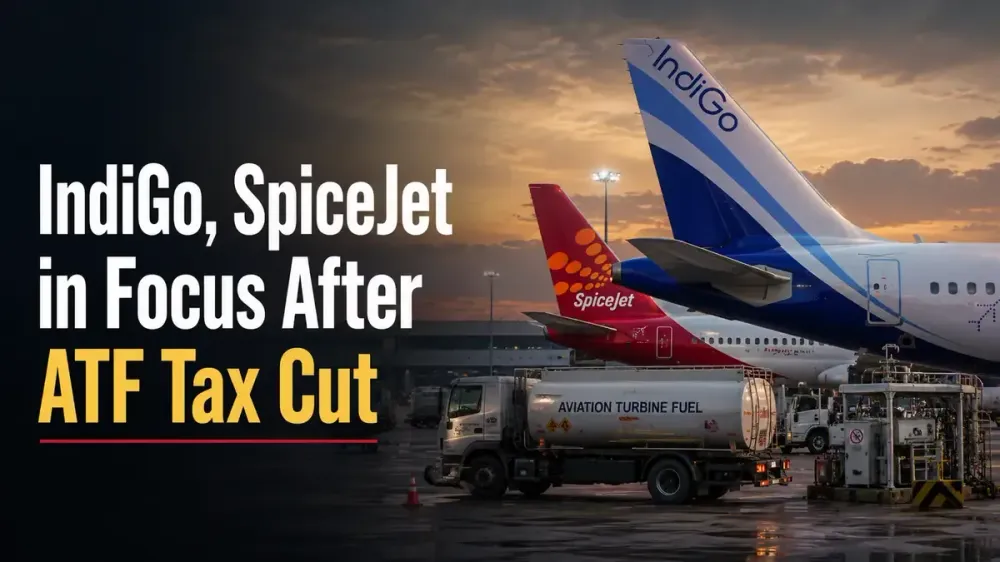
Airline stocks remained in focus after Maharashtra and Delhi reduced VAT on aviation turbine fuel (ATF), a move that could significantly lower fuel expenses for carriers. IndiGo could save up to ₹1,500 Cr annually, while SpiceJet may see savings of up to ₹200 Cr.
Aviation stocks were being closely watched on 19 May after Maharashtra and Delhi announced sharp cuts in value-added tax (VAT) on aviation turbine fuel (ATF), offering relief to airlines battling elevated fuel costs.
The latest tax reduction could materially lower fuel costs for airlines because the affected airports account for nearly 37% of India’s domestic aviation traffic.
-
IndiGo could save ₹1,200–1,500 Cr.
-
Air India may benefit by ₹800–1,000 Cr.
-
Akasa Air could see savings of ₹200–300 Cr.
-
SpiceJet may save ₹100–200 Cr.
At 12:25 PM, InterGlobe Aviation shares, which operates IndiGo, were trading at ₹4,276.80, marginally lower by 0.03% on the day. The stock touched an intraday high of ₹4,319 and a low of ₹4,262.20 during the session.
SpiceJet shares, meanwhile, traded higher. At 12:29 PM, the stock was up 5.04% at ₹12.72.
The move comes at a time when airlines are dealing with higher ATF prices linked to geopolitical tensions in West Asia and disruptions in global aviation routes.
What Changes Have Maharashtra And Delhi Announced?
Maharashtra has reduced VAT on ATF to 7% from 18% for a six-month period starting 15 May. Delhi has also lowered VAT on ATF to 7%, from the earlier 25%.
The reduction applies to some of the country’s busiest aviation hubs, including Mumbai, Delhi and Nagpur. Together, these airports account for more than one-third of India’s domestic aviation fuel consumption.
The decision follows discussions between the centre and state governments amid rising fuel prices and pressure on airline profitability.
Maharashtra chief minister Devendra Fadnavis said the measure was aimed at offering temporary relief to the aviation industry. Civil aviation minister Kinjarapu Rammohan Naidu also welcomed the decision, saying higher ATF prices and airspace disruptions linked to the West Asia crisis had increased pressure on airlines.
According to the ministry, the tax cut could help stabilise airfares during the busy summer travel season.
Why Is ATF Tax Such A Big Issue For Airlines?
ATF is one of the biggest expenses for airlines and usually makes up around 30% to 40% of total operating costs. Tax rates on aviation turbine fuel also differ from one state to another. Because of that, airlines often decide where to refuel based on which airports offer lower fuel taxes.
The latest reduction could lower IndiGo’s FY27 fuel bill by roughly 4-5%, while SpiceJet’s fuel costs may decline by around 3-5%.
The actual savings could rise further if airlines increase fuel uplift at lower-tax airports such as Delhi and Mumbai.
The aviation industry has long pushed for bringing ATF under the Goods and Services Tax (GST) framework to create uniform taxation across states.
Industry executives believe the latest move could improve operating economics for airlines at a time when input costs remain elevated.
Also Read - India Weighs Raising Edible Oil Import Duties To Support Farmers
What Are Investors Tracking In Airline Stocks?
Investors will now watch whether the tax relief actually improves airline profitability over the next few quarters.
Fuel remains the single biggest expense for most carriers. So even a small reduction in ATF costs can make a difference to margins.
For airlines like IndiGo, the savings may help absorb some of the pressure coming from higher overseas operating costs, volatile crude oil prices and route disruptions linked to airspace restrictions in parts of West Asia.
The timing is also important. Airlines are currently managing strong summer travel demand along with elevated fuel prices.
Market participants are also keeping an eye on whether more states reduce VAT on jet fuel in the coming months. If that happens, operating costs across the sector could ease further.
For now, the tax cuts are being seen as a near-term positive for airlines, particularly those with large domestic networks and high fuel consumption.
Sources:
NDTV Profit
Times of India
This article is for informational purposes only and should not be considered investment advice from Kotak Neo. For compliance T&C and disclaimers, Visit www.kotakneo.com/disclaimer
Right Tools, Rich Insights