Medical Inflation Pushes Health Insurance Costs Higher
 Add Preferred News Source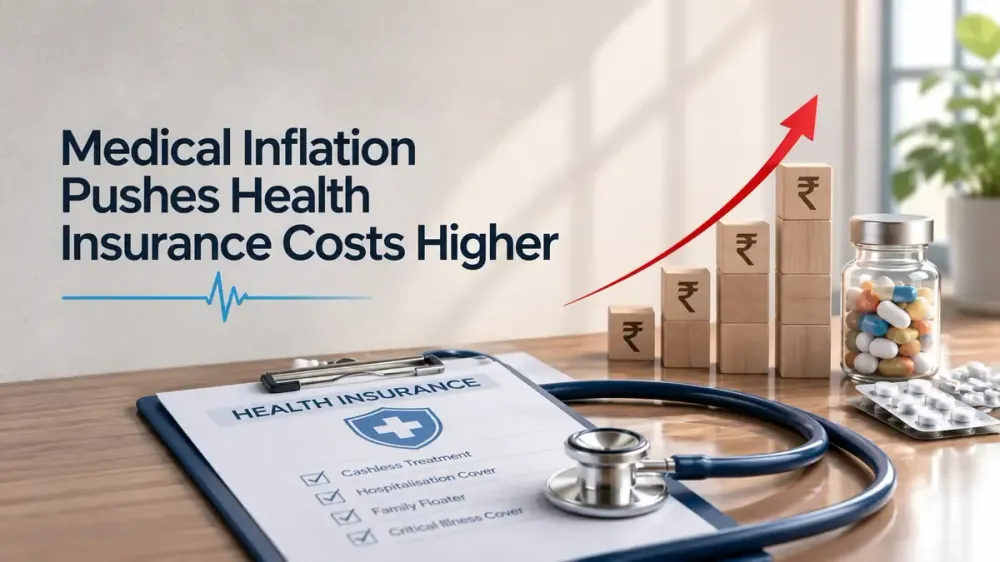
Health insurance premiums may rise 10–15% as medical inflation stays high. Family floater costs have surged 46% since 2021. Read more to understand what this means.
Health insurance in India is getting more expensive, and the numbers are starting to stack up.
Premiums are expected to rise 10-15% over the next 12–18 months as insurers deal with medical inflation of around 14-15%. At the same time, claims ratios have moved past 90%, which means a large part of what insurers earn is already being paid out.
The change already shows in recent pricing. Individual policies have become 23% costlier between FY23 and FY25. For family floater plans, the jump is sharper. What used to cost roughly ₹15,000 in 2021 was above ₹22,000 on average in 2025. This is an increase of around 46%.
Why Is This Happening Now?
Start with hospital bills. They are simply higher than before. Room charges, tests, medicines, everything has edged up. When insurers settle claims, they are paying more per case than they used to. That alone changes how premiums are set.
Then there is the type of illness people are dealing with. More cases today involve long-term conditions like heart disease or cancer. These are not one-time treatments. They often stretch over months or years, which pushes claim amounts higher.
There is also a shift in where treatment happens. A large share of patients depend on private hospitals, where costs are significantly higher. After the pandemic, many people also prefer more thorough treatment instead of basic care. That choice comes at a price.
Who Is Likely To Pay More?
The increase will not look the same for everyone. Older policyholders are expected to see steeper hikes. People living in big cities and those with higher coverage may also notice bigger changes in their renewal premiums. In some cases, especially among seniors, increases can cross 30%.
These rising costs are already affecting decisions. Some policyholders are cutting back on coverage or choosing plans with higher deductibles to keep premiums manageable. Others are exploring cheaper plans or delaying renewals.
That approach can backfire. Lower coverage means a larger share of medical expenses has to be paid out of pocket. During a serious illness, that gap can become significant.
Also Read - RBI Eases Some Rupee Trading Restrictions, Keeps Key Limits Intact
Can This Trend Slow Down?
In January 2026, gross written premium (GWP) of private insurers (for example, ICICI Lombard, Star Health, etc.) rose 17% to ₹1,740 crore. Meanwhile, public sector insurers (for example, LIC, New India Assurance, etc.) posted a 3% decline to ₹89 crore, showing differing positions in retail markets.
Insurers are trying to manage costs. They are negotiating rates with hospitals. They are also tightening underwriting. Many are pushing wellness programmes with a focus on prevention.
Technology is helping to some extent. Claims are faster now. Fraud checks are better. This cuts some unnecessary payouts. But the impact is limited.
The core problem remains. Healthcare costs are still rising.
So the direction is quite clear. Premiums are moving up. Not down. Unless medical costs ease meaningfully, this pressure can stay for the next few years.
Sources:
CNBC TV18
Insurance Business
This article is for informational purposes only and should not be considered investment advice from Kotak Neo. For compliance T&C and disclaimers, Visit www.kotakneo.com/disclaimer
Right Tools, Rich Insights