Types of Working Capital: Meaning, Forms, And Examples
- Updated: 22 May 2026, 5:17 PM IST
- | 4m
- 1,010
 Add Preferred News Source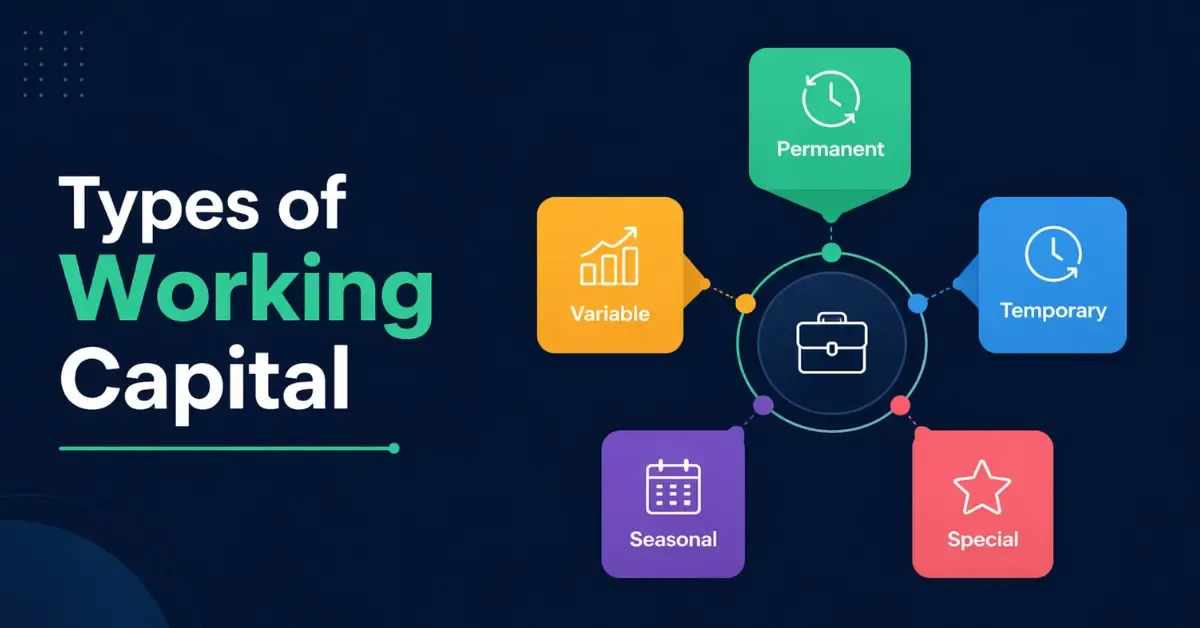
Revenue growth is often seen as the fuel that keeps a business sustainable in the long term. Besides that, another factor that matters just as much to keep business running smoothly every day is liquidity. This is where the concept of working capital comes in.
Whether it is about handling inventory or meeting short-term expenses, working capital supports every aspect of day-to-day operations. From the meaning to the types of working capital, their forms, and sources, here is everything you need to know.
What Is Working Capital?
Working capital is the amount of funds that a business requires to manage its day-to-day functioning. It is commonly understood as net working capital, which is the difference between current assets and current liabilities, and shows whether a company can meet its short-term obligations.
Current assets of a business include cash, inventories and receivables, while liabilities include payables and short-term debts. If resources are higher than the liabilities, it shows that there is enough liquidity to handle day-to-day needs.
Types Of Working Capital
Not all working capital needs are the same. A business might need a minimum amount to keep things running, and at times, extra funds may be needed during peak seasons. Businesses can have different types of working capital, based on these needs.
Permanent Working Capital
This is a certain minimum level of working capital that is required for every business just to keep things running.
It is the base requirement to maintain inventory, pay regular expenses, and keep operations going regardless of demand. Since this need is fairly stable, it is usually funded through long-term sources.
Temporary Working Capital
There are periods when the requirement goes up. Demand may pick up, or costs increase for a while. That is where temporary working capital comes in. It covers these short-term spikes like seasonal demand, higher production, or any sudden increase in operating expenses.
Unlike permanent working capital, this is temporary in nature and changes with the business activity. Most firms rely on short-term sources to meet such requirements.
Gross Working Capital
Gross working capital refers to the value of current assets in a business.
It only considers current assets, including cash, inventories and receivables, without accounting for liabilities. It gives a broad view of the resources available for daily operations.
Net Working Capital
Unlike gross working capital, net working capital looks at the full picture by considering both what the business has and what it owes. It gives a clearer idea of financial health. If the result is positive, it suggests that the business is in a good position to manage its short-term obligations.
Reserve Working Capital
Reserve working capital is the capital that is set aside to cover contingencies.
During uncertainties such as sudden demand spikes, delays in receivables, or unexpected expenses, reserved working capital acts as a safety net for the business. Like temporary working capital, this also caters to additional funding. However, it is specifically reserved for unforeseen events, whereas temporary capital is set aside for planned expenses.
Forms Of Working Capital
While types of working capital are classified based on duration or purpose, forms of working capital are simply about what shape it takes inside a business at any given point.
Working capital usually moves across three main forms:
Cash: This is what businesses rely on the most for day-to-day functioning and is the most liquid form of working capital. Cash-in-hand and bank balances are part of this category.
Inventory: A large part of the working capital in most businesses sits in the form of inventories. They include raw materials, work-in-progress, and finished goods.
Receivables: This comes from credit sales. It is when the business has earned the revenue, but the cash has not come in yet. Receivables are not as liquid as cash, but they are more liquid than inventory.
These forms do not stay still for long. Cash moves into inventory, inventory turns into sales, and depending on the transaction, it either comes back as cash or shows up as receivables. Once collections are made, it all flows back into cash again, keeping day-to-day operations efficient.
Sources Of Working Capital
There is no one-size-fits-all approach when it comes to funding working capital. Based on how long they need the funds for, businesses have different sources to choose from.
Long-Term Sources
In case of ongoing or permanent needs, businesses choose long-term sources of working capital such as equity, retained earnings, or long-term loans. Such sources are relatively stable and give the business some breathing room when it comes to repayments.
Short-Term Sources
Bank overdrafts, trade credits, and short-term loans are some options for businesses during their short-term needs. These are easier to access and help manage temporary gaps, especially when demand fluctuates. However, the repayment window for these sources is usually short. Hence, businesses will have to plan their finances accordingly.
In reality, businesses do not just depend on one source for financing their working capital requirement. Based on the need, duration, and urgency, they usually rely on a combination of these sources.
Example Of Working Capital
Imagine a bakery. It runs its day-to-day operations with different types of working capital.
It has around ₹2,00,000 in current assets, including cash, ingredients, and receivables. The current liabilities include supplier payments and other short-term obligations that come up to ₹1,20,000. As the festive season approaches, demand goes up, and the bakery ends up spending another ₹50,000 on raw materials to keep up.
-
Here, the gross working capital of the bakery is ₹2,00,000.
-
The net working capital comes to ₹80,000 after accounting for liabilities.
-
₹50,000 is the temporary working capital that the bakery needs to handle the increase in demand during the festive season.
Source:
The Economic Times
FAQs On Types Of Working Capital
Gross working capital tells you how much a business has in terms of current assets, but net working capital goes a step further by factoring in liabilities. Together, they give a clearer idea of how well the business can manage its short-term obligations.
Sources of working capital include long-term and short-term instruments. For long-term working capital, businesses typically rely on equity and retained earnings. When the need is short-term, they look at options like bank overdrafts, trade credit, or short-term loans.
To keep things running smoothly, businesses rely on working capital. It covers everyday needs like paying suppliers, managing inventory, and handling salaries.
With insufficient capital, payments get delayed, operations lose pace, and customer trust can weaken. In tougher situations, businesses may end up borrowing at a higher cost just to continue operating.
The content in this blog is intended purely for educational purposes. Any securities or mutual funds referenced are illustrative in nature and do not constitute a recommendation or endorsement by Kotak Neo. Investors are encouraged to assess their own financial situation and seek professional advice before making any investment decisions. For compliance T&C and disclaimers, Visit https://www.kotakneo.com/disclaimer/
0 people liked this article.

Kotak Neo (Kotak Neo) is India's venerable stockbroking company with a rich legacy. It offers comprehensive investment services across asset classes, prioritising a technology-first approach for a seamless experience. Trusted by 5 million+ customers, it guides you toward financial success with ease of investment and speed of trade.
Note: The opinions expressed in this blog are personal viewpoints and should not be construed as recommendations.