Buy Now Pay Later (BNPL): Meaning, How It Works, Benefits & Risks
- 6 min read
- 1,049
- Published 07 May 2026
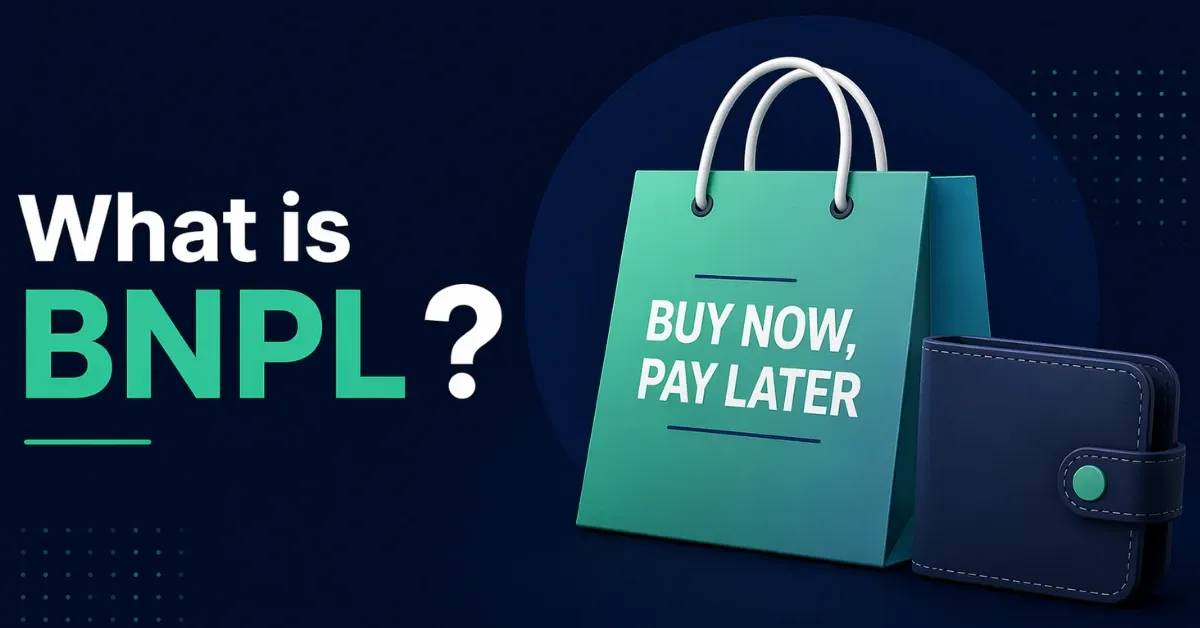
Picture this: a product sitting on a favourite shopping app for weeks. When the sale finally arrives, the price drops though it remains steep. Then at the checkout, an option appears; to split the payment rather than pay everything at once. That option is Buy Now Pay Later, commonly known as BNPL. This blog breaks down what is BNPL, how it actually works, and the aspects that are not always disclosed upfront.
What Is BNPL?
Buy Now Pay Later (BNPL) is a short-term credit arrangement that allows the buyer to acquire a product immediately and settle the cost in smaller instalments over a defined period. The full form states it plainly: Buy Now Pay Later the purchase comes first, and payment follows. Rather than clearing the full price in one go, the amount is broken into fixed instalments across a few weeks or months. Most BNPL plans tend to work along similar lines: approval takes minutes, paperwork is minimal, and interest does not apply as long as payments are made on time. Repayment windows are short and the schedule is fixed, so there is not much ambiguity about what is due and when.
The mechanics behind it are straightforward. The BNPL provider pays the merchant directly. The buyer then settles that amount with the provider, in parts or sometimes as a single deferred payment at the end of the window.
How Buy Now Pay Later Works
The process begins the moment you select BNPL at checkout. The provider steps in and pays the merchant, and you repay the provider on a schedule agreed to beforehand. Simple enough in theory, here is how it works in practice:
-
Pick a product and choose BNPL as the payment method.
-
Basic details are submitted for a quick verification.
-
Approval is typically granted within minutes.
-
The merchant is paid by the BNPL provider.
-
You repay the amount in instalments or by an agreed date.
Buy Now Pay Later payments are not one-size-fits-all. Depending on the provider, one may pay in three or four equal parts over consecutive months, clear the full balance after a short interest-free window, or convert the purchase into longer monthly EMIs.
Many providers offer an interest-free window as the headline feature, and it is genuinely useful if you pay on time. Miss an instalment, though, and late fees or interest can apply. The terms around this how long the free period runs, what the charges look like, and which repayment structures are available differ considerably from one provider to the next. Reading the fine print before committing is not optional. What looks simple on the surface sometimes carries conditions that change the total cost.
BNPL Services And Companies
BNPL services are offered by a mix of fintech platforms, Non-Banking Financial Companies (NBFCs), and select banks. Most work by partnering with merchants, both online and offline, to make the option available at checkout.
In India, some of the more recognisable BNPL companies include Simple, LazyPay, and Amazon Pay Later. Each has its own structure. Credit limits vary. Repayment timelines are not the same across providers. Late payment charges exist on most platforms, though how they are calculated differs.
Before selecting a BNPL service, the following are worth examining:
-
Are there fees that are not immediately apparent?
-
How long does the interest-free period run?
-
What happens, specifically, if a payment is delayed?
Since no two BNPL companies operate identically, taking a few minutes to compare before committing can prevent unexpected costs later.
Benefits Of BNPL
BNPL has steadily gained users, and the reasons are not difficult to identify.
The most apparent benefit is, no upfront payment. You make the purchase without having to clear the full amount immediately, which is particularly useful when funds are committed elsewhere. Instalments are spread across a fixed timeline, which makes it easier to account for in a monthly budget. Access is quick too; unlike traditional credit products, most BNPL plans require very little documentation, and the approval process is fast.
Then there is the interest angle. Many plans carry no interest at all, provided you pay within the defined window. This is a meaningful advantage for short-term purchases where repayment is demonstrably manageable.
For planned, near-term expenses, BNPL can be a practical tool, one that supports cash flow without drawing on savings, provided the repayment timeline remains realistic.
Risks Of BNPL
Convenient as it is, BNPL comes with risks that are easy to overlook in the moment.
The first is how quietly expenses pile up. Using BNPL across multiple platforms at the same time means several repayment schedules running in parallel. Losing track of the total outstanding amounts is more common than one might expect, and overextension can happen without a single large purchase triggering it.
Payment delays carry a cost. Even a short gap in repayment can bring late fees or interest, adding to the original purchase cost in a manner that was not anticipated. Credit records can also be affected some BNPL providers share repayment data with credit bureaus, and missed payments leave a mark. This is not always disclosed at sign-up, making it worth clarifying before opting in. Finally, terms are not uniform. Each BNPL service runs on its own conditions, some of which are not prominently presented when you sign up. The discipline required extends beyond paying on time it involves fully understanding the terms agreed to.
BNPL Vs. Credit Card
Both BNPL and credit cards extend credit, but they do so in markedly different ways.
Approval Process | Quick approval, often within minutes | Formal application and approval process required |
Where You Can Use It | Tied to specific purchases or partner platforms | Accepted widely, online and offline |
Repayment Structure | Fixed schedule. Set amount due on a set date | Flexible. Pay the minimum due or the full balance |
Interest | Often interest-free if paid within the defined period | Applies if the full bill is not cleared by the due date |
Buy Now Pay Later payments are a natural fit for short-term, specific purchases. Credit cards, by contrast, are better suited to situations requiring flexibility, broader acceptance, variable repayment, and credit that functions across a wider range of contexts.
Example Of BNPL Payment
Consider a scenario in which a laptop worth ₹24,000 is purchased on an online platform using a BNPL facility. Instead of paying the full amount upfront, the cost is split into four equal parts:
-
Month 1: ₹6,000
-
Month 2: ₹6,000
-
Month 3: ₹6,000
-
Month 4: ₹6,000
If every instalment is cleared before the due date, no additional cost applies. This illustrates what makes BNPL genuinely useful when repayment is planned and realistic. Should a payment be missed, a late fee or interest charge may apply, subject to the provider's terms.
Sources:
Reserve Bank Of India
Business Standard
FAQs On BNPL
The answer varies by provider. Some BNPL companies report repayment behaviour to credit bureaus; others do not. Where they do, paying on time is unlikely to cause any issues and may, in some cases, reflect positively on your record. Missed payments are a different matter. Those can leave a mark that takes time to recover from. It is worth confirming with the provider before signing up.
Within the interest-free period, there are generally no charges that is the primary appeal. Miss a payment, however, and late fees or interest can apply. Some providers also charge separately if you wish to convert your repayment into a longer EMI structure. The key is reading the terms before opting in, not after.
The answer depends entirely on the intended use case. BNPL is fast to access, works well for planned purchases, and keeps things simple. Credit cards offer more flexibility, wider acceptance, variable repayments, and longer credit cycles. The trade-off is that credit cards require more active management. Allowing interest to accumulate, however, causes costs to rise quickly.
This article is for informational purposes only and does not constitute financial advice. It is not produced by the desk of the Kotak Securities Research Team, nor is it a report published by the Kotak Securities Research Team. The information presented is compiled from several secondary sources available on the internet and may change over time. Investors should conduct their own research and consult with financial professionals before making any investment decisions. Read the full disclaimer here.
Investments in securities market are subject to market risks, read all the related documents carefully before investing. Brokerage will not exceed SEBI prescribed limit. The securities are quoted as an example and not as a recommendation. SEBI Registration No-INZ000200137 Member Id NSE-08081; BSE-673; MSE-1024, MCX-56285, NCDEX-1262.
0 people liked this article.