Samsung Shares Crash As Labour Strike Threatens Chip Supply Chain; What It Means For Indian Investors
 Add Preferred News Source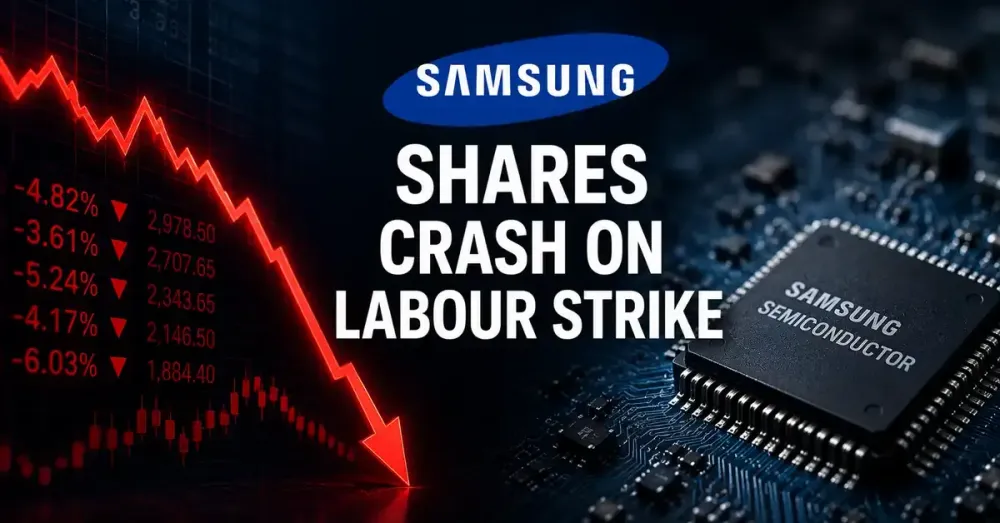
Samsung shares plunged amid labour strike fears, raising concerns over global chip supplies and impacts on Indian technology sectors.
Shares of Samsung Electronics witnessed a sharp sell-off this week after labour tensions in South Korea escalated into the threat of a large-scale strike that could disrupt global semiconductor supplies. The development has triggered concerns across global equity markets, especially in technology and electronics-related sectors.
Samsung Electronics shares fell as much as 9.3% on Korea Exchange (KRX) during recent trading sessions after the company’s largest labour union confirmed plans for an 18-day strike beginning May 21. The strike threat emerged after wage and bonus negotiations between Samsung management and the National Samsung Electronics Union failed to reach an agreement.
According to reports, the union warned that more than 50,000 workers could participate in the strike if Samsung does not revise its compensation structure. Workers are demanding the removal of bonus caps and a profit-sharing model linked to operating profits, similar to arrangements adopted by rival chipmaker SK Hynix.
The sharp market reaction reflects growing investor anxiety over possible disruptions in semiconductor production. Samsung is the world’s largest memory chipmaker and plays a critical role in the global supply chain for DRAM and NAND memory chips used in smartphones, servers, laptops, AI infrastructure and consumer electronics.
Analysts estimate that the strike could potentially lead to operating profit losses ranging between 21 trillion won and 31 trillion won, equivalent to nearly $14 billion to $20.8 billion. JPMorgan also projected that sales losses could reach around 4.5 trillion won if production disruptions intensify.
Why Are Global Markets Worried?
The concern is not only about Samsung’s earnings. Investors fear that any prolonged disruption in chip production could impact the broader technology ecosystem. Samsung supplies memory chips to several global technology companies involved in artificial intelligence, cloud computing and consumer electronics manufacturing.
The strike threat comes at a time when demand for AI chips and advanced semiconductors is already rising rapidly. Market experts believe even a short-term production slowdown could tighten global chip supplies and increase semiconductor prices.
South Korean government officials, including the country’s prime minister and industry ministry, have publicly urged both sides to continue negotiations because semiconductors accounted for nearly 37% of South Korea’s exports in April 2026.
What Does This Mean For Indian Stock Market Investors?
For Indian investors, the Samsung labour crisis serves as an important reminder of how global supply chain events can influence domestic markets. India may not directly depend on Samsung’s South Korean operations, but many Indian listed companies are connected to the global electronics and semiconductor ecosystem.
Positive Signals For Some Indian Stocks
If the strike disrupts memory chip production, semiconductor prices could rise globally. This may benefit Indian electronics manufacturing and semiconductor-linked firms that are expanding their domestic capabilities under the government’s semiconductor mission.
Companies involved in electronics manufacturing services, chip packaging, data centres and telecom infrastructure could attract investor attention if global players look to diversify supply chains outside South Korea.
Indian firms such as Tata Electronics, Dixon Technologies and Kaynes Technology may remain on investors’ radar as India continues positioning itself as an alternative manufacturing destination.
Also Read - Wipro, Bajaj Auto, Cyient, And Other Companies Announce Share Buyback In May 2026
Risks For Technology And Electronics Stocks
At the same time, rising chip prices may increase input costs for Indian smartphone makers, consumer durable companies and auto manufacturers that rely heavily on semiconductors.
Sectors such as consumer electronics, electric vehicles and IT hardware manufacturing could witness temporary margin pressure if component costs rise sharply. Companies dependent on imported semiconductors may also face supply delays if the strike becomes prolonged.
Sources
Reuters
The Economic Times
Reuters
This article is for informational purposes only and should not be considered investment advice from Kotak Neo. For compliance T&C and disclaimers, Visit www.kotakneo.com/disclaimer
Right Tools, Rich Insights