DuPont Analysis: Meaning, Formula, Components & Example
- Updated: 22 May 2026, 5:17 PM IST
- | 4m
- 1,002
 Add Preferred News Source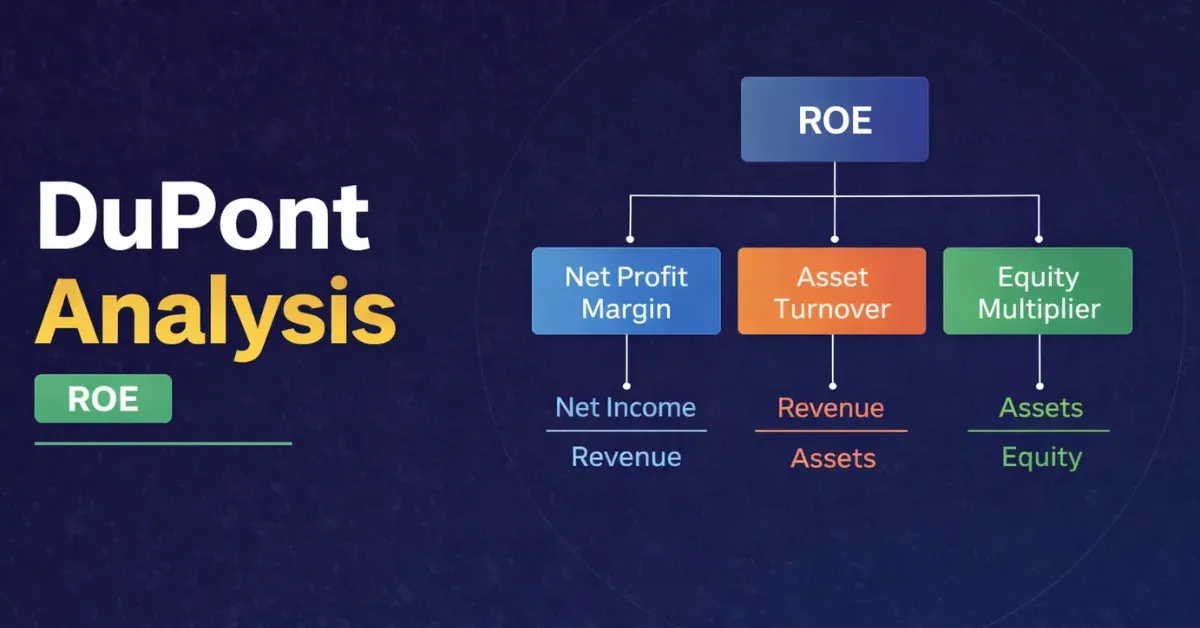
Measuring a company’s financial health requires more than just looking at its bottom line. Investors often use Return on Equity (ROE) to judge performance. However, ROE alone does not tell the full story of how a firm generates its returns. Du Pont analysis solves this problem by breaking ROE into three distinct parts. But what is DuPont analysis? It is a deep-dive method that helps you see if a business is growing through efficiency, high margins, or simply by taking on more debt.
What Is DuPont Analysis?
The Du Pont analysis meaning focuses on deconstructing the Return on Equity (ROE) ratio to understand the true drivers of profitability. It was developed by the DuPont Corporation in the early 1920s. Instead of viewing ROE as a single percentage, this framework splits it into three key financial metrics.
When you ask what is DuPont analysis, you are looking for a way to evaluate management’s effectiveness. It helps analysts identify the specific strengths and weaknesses of a business. By using this method, you can determine if a company is truly efficient or if it is masking poor operations with high financial leverage. It provides a much clearer picture for long-term investment decisions.
DuPont Analysis Formula
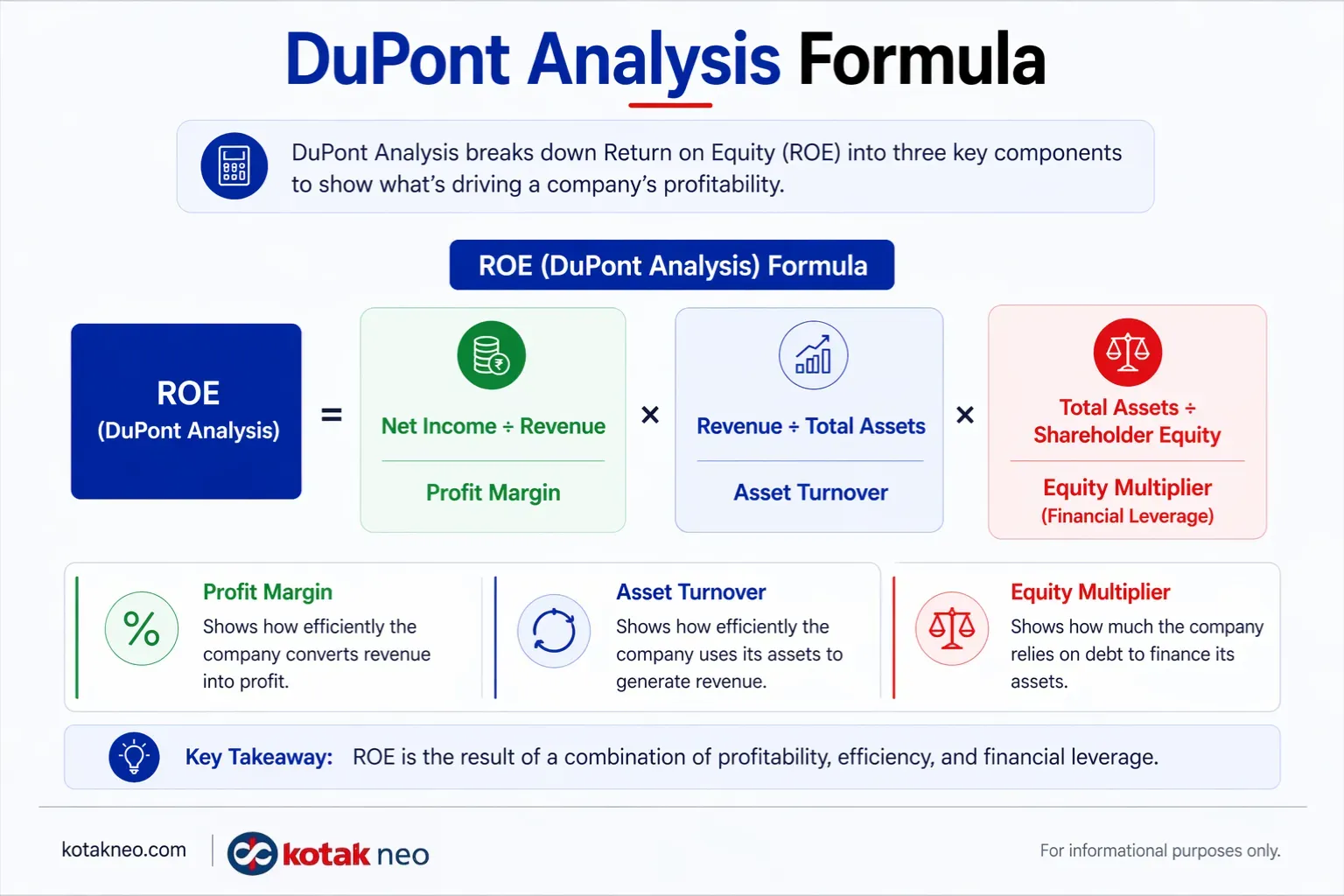
The standard ROE is calculated by dividing net income by shareholders equity. However, the du point analysis formula expands this calculation into three specific ratios. This expanded version provides a more granular view of the company's financial mechanics.
The formula is as follows:
ROE (DuPont Analysis) = (Net Income ÷ Revenue) × (Revenue ÷ Total Assets) × (Total Assets ÷ Shareholder Equity)
Each part of this formula highlights a different side of the business. Net profit margin focuses on profitability. The asset turnover ratio shows how efficiently assets are used. Equity multiplier reflects the use of borrowed funds.
When these three are combined, they explain how a company generates returns for its shareholders. This makes the analysis more detailed compared to looking at ROE alone.
Components Of DuPont Analysis
To master du point analysis, you must understand the three individual components that make up the final result. Each one tracks a different area of the business.
Net Profit Margin
This ratio indicates how efficiently a company turns its sales into profit. It shows how much remains from each rupee of revenue after meeting all costs and taxes. A higher figure usually points to tighter cost control or the ability to sell at better prices.
Asset Turnover Ratio
This component tracks asset use efficiency. It reveals how many sales a company generates for every rupee of assets it owns. For example, a retail store with high foot traffic usually has a high asset turnover. It shows how effectively management is using the company's "tools" to create revenue.
Equity Multiplier
This ratio looks at the use of borrowed funds. It compares how much of the company’s assets come from owners’ capital and how much comes from debt. Borrowing can lift returns, but it also adds risk. A higher figure usually means the company relies more on loans to support its growth.
How DuPont Analysis Works?
This approach lets you compare two companies that report similar ROE but operate in very different ways. For instance, a luxury brand might have a high ROE because of its massive profit margins, even if it sells fewer items. On the other hand, a discount grocery chain might have the same ROE despite thin margins because it moves its inventory extremely fast.
The analysis highlights where management should focus its efforts. If the ROE is falling because the asset turnover is dropping, management knows they need to utilise their equipment or inventory better. If the profit margin is the problem, they may need to cut costs. It turns a vague percentage into an actionable plan for improvement.
Example Of DuPont Analysis
Let us take a simple example. Suppose Company A reports an ROE of 15%. Using the DuPont method, it is found that the company's net profit margin is 10%, asset turnover ratio is 0.75, and the equity multiplier is 2.0.
Now look at Company B, which also shows a 15% ROE. However, its equity multiplier is 5.0 and its net profit margin is only 3%. This indicates that its returns depend more on borrowing. In contrast, Company A appears more balanced and efficient.
Source:
Investopedia
FAQs On DuPont Analysis
It is vital because it explains the "why" behind the numbers. It prevents investors from being misled by a high ROE that is actually caused by dangerous levels of debt rather than good business performance.
ROE is just the final destination. DuPont analysis is the map that shows the path the company took to get there. It breaks one simple number into three detailed parts for better clarity.
The main limitation is that it relies entirely on accounting data, which can sometimes be manipulated. It also does not account for the quality of the assets or the specific industry context in which the company operates.
The content in this blog is intended purely for educational purposes. Any securities or mutual funds referenced are illustrative in nature and do not constitute a recommendation or endorsement by Kotak Neo. Investors are encouraged to assess their own financial situation and seek professional advice before making any investment decisions. For compliance T&C and disclaimers, Visit https://www.kotakneo.com/disclaimer/
0 people liked this article.

Kotak Neo (Kotak Neo) is India's venerable stockbroking company with a rich legacy. It offers comprehensive investment services across asset classes, prioritising a technology-first approach for a seamless experience. Trusted by 5 million+ customers, it guides you toward financial success with ease of investment and speed of trade.
Note: The opinions expressed in this blog are personal viewpoints and should not be construed as recommendations.