India's Fertiliser Subsidy Bill May Cross ₹3 Lakh Crore In FY27, Here’s Why
 Add Preferred News Source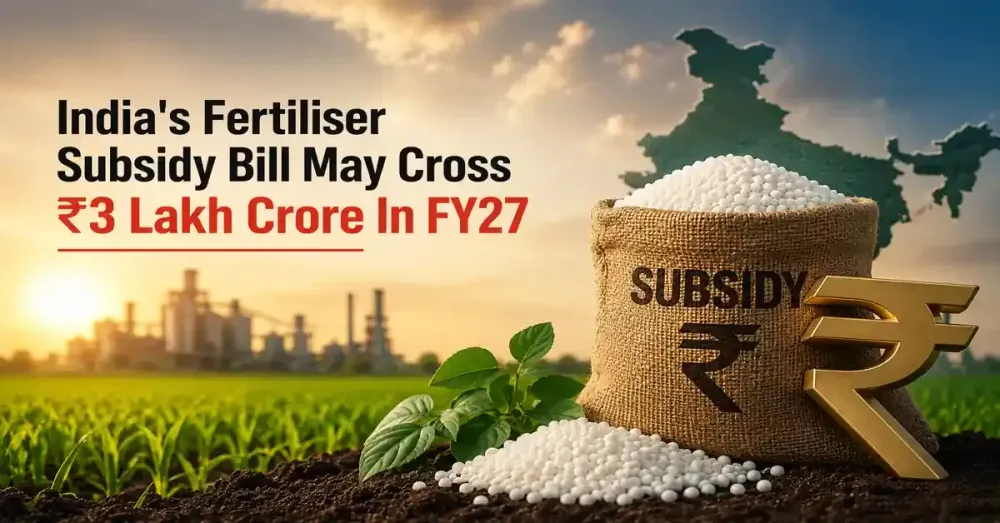
India's fertiliser subsidy could exceed ₹3 lakh crore in FY27, nearly double the budget estimate, as global urea prices surge 65% and West Asian conflict disrupts key supply chains.
India's fertiliser subsidy could more than double the budgeted estimate for FY27 and potentially exceed ₹3 lakh crore if the West Asia crisis continues to disrupt supply chains and keep global input prices elevated, a senior government official said on Monday.
Krishna Kant Pathak, Joint Secretary in the Department of Fertilisers, said the subsidy bill, which was expected to come in below ₹2 lakh crore before the geopolitical situation deteriorated, has ballooned significantly as global urea, liquefied natural gas and phosphate prices have surged.
He said the number could climb past ₹3 lakh crore, and if elevated prices and supply disruptions persist into the Rabi season, it may even touch ₹3.5 lakh crore. The FY27 budget had allocated ₹1.7 lakh crore for fertiliser subsidies, comprising ₹1.16 lakh crore for the urea sector and ₹54,000 crore for phosphorus and potash.
How Much Prices Have Moved
The scale of the price shock across fertiliser inputs since the conflict began is striking:
-
Global urea prices: Rose nearly 65% from around $482 per tonne in late February 2026 to nearly $795 per tonne in early April. A recent Indian urea import tender found prices jumping further to $935 to $959 per tonne.
-
Liquefied natural gas, the principal feedstock for urea production: Rose from nearly $10.4 per million British thermal units in late February to around $17.4 by early May, after peaking at nearly $25.4 during early March.
India consumes around 70 million tonnes of fertilisers annually, with urea accounting for roughly 40 million tonnes, diammonium phosphate at 10 million tonnes and nitrogen-phosphorus-potassium-sulphur compounds at 15 million tonnes.
Fertiliser Sector Likely To Stay On Radar
Chambal Fertilisers and Chemicals, Coromandel International, Fertilizers & Chemicals Travancore and Rashtriya Chemicals and Fertilizers and other fertiliser and agrochemical stocks are likely to stay in focus in the coming sessions. The sector is under watch as fertiliser subsidy costs continue to rise. This is pushing overall fiscal pressure higher and keeping policy response in focus.
Also Read - SpaceX IPO Buzz Pushes Indian Investors Towards Global Space ETFs
At the same time, input costs remain elevated with no clear sign of easing. That keeps margin pressure intact for companies in this space. Market participants are expected to track the entire fertiliser and agrochemical pack, not just these names, as cost and subsidy trends evolve.
Sources:
Business Standard
The Hindu Businessline
This article is for informational purposes only and should not be considered investment advice from Kotak Neo. For compliance T&C and disclaimers, Visit www.kotakneo.com/disclaimer
Right Tools, Rich Insights