Interest Coverage Ratio: A Complete Guide
- Updated: 22 May 2026, 5:17 PM IST
- | 9 minutes read
- 1,002
 Add Preferred News Source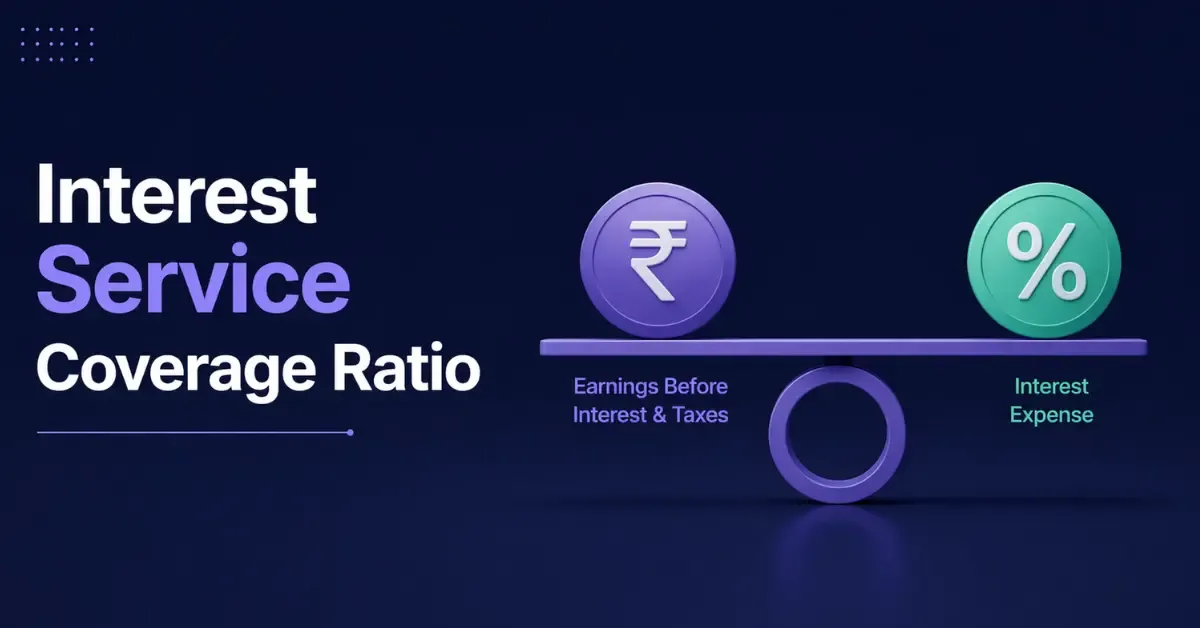
Interest Coverage Ratio (ICR)
A company’s capacity to repay what it owes is judged through several financial metrics. One of the most popular ones is the Interest Coverage Ratio (ICR), also known as the Times Interest Earned (TIE) ratio. By using it, businesses, investors, and financial analysts determine a company’s ability to pay off its interest obligations on debt using its operating earnings.
A strong interest coverage ratio indicates that the company is financially strong, whereas a weak ratio indicates potential risk. In this blog, you will gain complete knowledge about this ratio. Let’s first understand what the interest service coverage ratio is.
What Is The Interest Coverage Ratio?
The interest coverage ratio is a way to evaluate financial strength; it indicates how many times interest expenses can be paid through earnings before interest and taxes (EBIT).
It basically indicates how well a company stays on top of interest payments tied to its debt. This ratio is also known as the “interest service coverage ratio.”
Interest Coverage Ratio Formula
In order to calculate this ratio, you will need to know the interest coverage ratio formula. The standard formula is as follows:
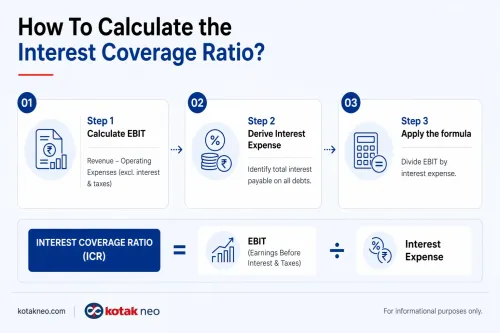
Interest Coverage Ratio = EBIT ÷ Interest Expense
Where:
-
EBIT (Earnings Before Interest and Taxes) = Operating profit of the company.
-
Interest Expense = Total interest payable on debt.
How To Calculate the Interest Coverage Ratio?
Here are the steps that you need to follow to calculate the interest service coverage ratio:
Step 1: Calculate EBIT
First of all, you need to derive EBIT. This has to be done by deducting operating expenses (excluding interest & taxes) from total revenue.
Step 2: Derive Interest Expense
Go through the total outstanding debts and determine the total interest payable on all debts.
Step 3: Apply the formula
Divide EBIT by interest expense. The resulting figure shows how many times the company can cover its interest obligations.
Example Of Interest Coverage Ratio Calculation
Let’s understand this calculation with an example:
-
EBIT = ₹9,00,000
-
Interest Expense = ₹3,00,000
-
ICR = 9,00,000 ÷ 3,00,000 = 3
This means the company can cover its interest expense 3 times, which is generally considered financially comfortable, although the interpretation depends on the industry.
Importance Of Interest Coverage Ratio
The interest coverage ratio is very important in the financial world. Here is why:
-
Measures Financial Stability
A higher interest coverage ratio means that the company has good earnings for paying off the interest obligations. This gives a better idea of the company’s stability.
-
Helpful For Investors
Investors use the ratio to check the risk associated with investing in a company’s debt or equity. A higher ratio often means low investment risk.
-
Useful For Lenders
Lenders make use of this ratio to assess the creditworthiness of the company before approving loans. They prefer to give loans to companies with higher ICR.
-
Default Chances
A lower ICR means a company is having a tough time fulfilling its interest payments. This indicates high risks of default in future.
-
Helps Company Comparison
This ratio can be used to compare various companies in the same industry. This helps in understanding which businesses are stronger and which are not.
Factors Affecting Interest Coverage Ratio
Here are the factors affecting the interest coverage ratio:
-
Earnings (EBIT)
A company’s profitability has a direct impact on ICR. Higher earnings mean better ability to cover interest, whereas declining profits will weaken financial stability.
-
Interest Rates
When interest rates increase, the borrowing cost also increases. This results in higher interest expenses, which reduces the ICR.
-
Debt Levels
More debt leads to higher interest payments. This will lower the ratio.
-
Economic Conditions
During economic slowdowns, revenue and profits can decrease. This makes it difficult for companies to meet their interest payments. It will have a negative impact on the ratio.
-
Cost Structure
Higher operating costs reduce the earnings of the company. This will lower the ratio.
Conclusion
The interest coverage ratio helps in understanding whether a company can comfortably pay the interest on its borrowings. It gives a simple idea of the company’s financial condition, the risk involved, and how well it is handling its debt. A high ratio often points to financial stability. It suggests the company carries lower risk. A low ratio, though, may hint at underlying financial stress.
This ratio shouldn’t be viewed by itself. It’s influenced by earnings, overall debt, interest expenses, and even shifts in market conditions. Because of that, investors, lenders, and businesses need to look at it in context, alongside other financial indicators, before moving forward.
FAQs On Interest Coverage Ratio
ICR shows investors if a company actually earns enough to cover its interest payments. When the ratio is higher, the risk tends to drop, and financial stability improves. Because of that, the company often appears more appealing as an investment.
A negative ICR can happen when EBIT is negative. That simply means the business is running at a loss. It shows that interest expenses can’t be covered by current earnings, something investors and lenders tend to see as a warning sign.
The content in this blog is intended purely for educational purposes. Any securities or mutual funds referenced are illustrative in nature and do not constitute a recommendation or endorsement by Kotak Neo. Investors are encouraged to assess their own financial situation and seek professional advice before making any investment decisions. For compliance T&C and disclaimers, Visit https://www.kotakneo.com/disclaimer/
0 people liked this article.

Kotak Neo (Kotak Neo) is India's venerable stockbroking company with a rich legacy. It offers comprehensive investment services across asset classes, prioritising a technology-first approach for a seamless experience. Trusted by 5 million+ customers, it guides you toward financial success with ease of investment and speed of trade.
Note: The opinions expressed in this blog are personal viewpoints and should not be construed as recommendations.