ESG ETFs Explained: A Beginner’s Guide to Sustainable Investing
- Updated: 22 May 2026, 5:17 PM IST
- | 9 minutes read
- 1,002
 Add Preferred News Source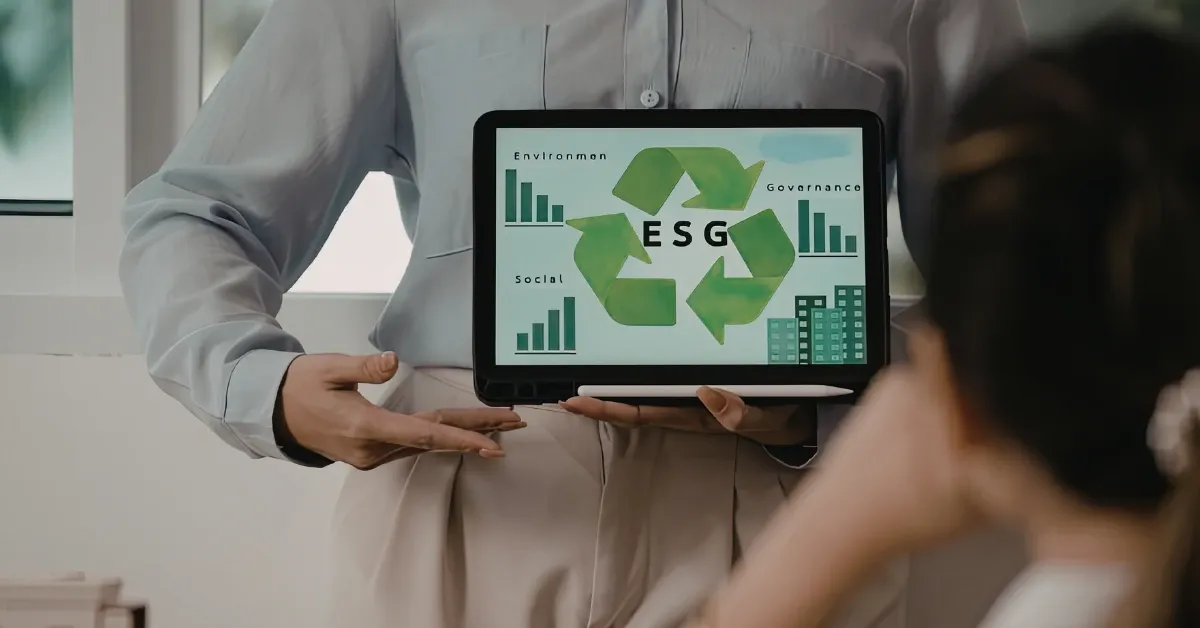
How do you choose a brand of tea or a local store for groceries? You might want to check for quality and ethics when making your decision.
You might choose paper straws to reduce plastic waste. You might prefer buying from local artisans to support the community. These are modern priorities that go beyond product pricing.
Similarly, the financial ecosystem is shifting towards responsibility. So, what is an ESG ETF? Here is the concept of ESG ETFs for investors who want their wealth to reflect their values without sacrificing on growth potential.
How ESG ETFs Work?
ESG (Environmental, Social, and Governance), when associated with an ETF (Exchange-Traded Fund), can lead you to many investment options.
But what is an ESG ETF as a concept? Funds which, apart from evaluating the financial profile, also consider how a business impacts the planet and people fall within ESG ETFs.
ESG Screening and Selection Process
The decision to include a company in a fund’s portfolio involves specific filters.
With negative screening, fund managers remove "sin stocks" like tobacco, weapons, or heavy polluters. So, a fund might exclude a coal power plant that contributes to the smog in the National Capital Region (NCR).
Similarly, with positive screening, they select sustainability leaders. For example, a company that builds large solar parks in Rajasthan.
For best-in-class selection, managers need to identify the most ethical companies within every sector. Thus, you might still hold some traditional industries, but only through their most responsible representatives.
Index-Based vs Actively Managed ESG ETFs
What is an ESG ETF, conceptually? To answer this question, let us look at index-based funds.
Passive funds mirror a specific list, such as the Nifty 100 ESG Index. They also require less daily intervention. But active funds need professional team management for constant research. They usually cost more but offer the chance to avoid companies that might soon fail an ethical test.
Portfolio Construction and Rebalancing
After stock selection, the fund constructs a portfolio mirroring the desired risk level. Over time, some companies might lose their ethical standards or grow too large for the basket.
Usually, funds rebalance every six months or once a year. Thus, they keep the investment mix fresh and aligned with the original ESG goals.
Key Features of ESG ETFs
You might find many traits that differentiate ESG ETFs from traditional index funds. Let us look at what an ESG ETF features.
Sustainable and Responsible Investing Focus
The main fund goal is to support businesses acting as good global citizens. ESG ETFs focus on carbon footprints, water usage, and waste management.
They might also look for social factors such as fair wages for workers in a textile factory or gender diversity in an IT firm’s boardroom.
Diversification Across Sectors and Companies
There is a common myth around ethical funds only investing in green energy. But in reality, a well-constructed fund can offer a diverse mix. You might find technology giants, banks with strong governance, and healthcare companies alongside wind energy firms.
Liquidity and Exchange Trading
You can trade ETF units on major stock exchanges (NSE and BSE). With this liquidity, you can buy or sell them throughout the trading day at the current market price.
Cost Efficiency and Transparency
ESG ETFs can offer a transparent view of their holdings. You can see every company in the basket. Their expense ratios also stay on the lower side than those of traditional thematic mutual funds.
Types of ESG ETFs
ESG ETFS do not have a single "correct" version. You can choose a category as per your financial goals.
Broad Market ESG ETFs
You can gain the widest exposure possible with them. They take a large index like the Nifty 50 and leave out the lowest ESG performers.
Environmental or Climate-Focused ETFs
ESG ETFs often target specific ecological goals, such as renewable energy, electric vehicle infrastructure, or clean water technology.
Social Impact ETFs
Socially focused funds pick companies with human rights and community relations specialities. These ETFs prioritise firms with high employee satisfaction scores or those that provide essential services to underserved populations.
Governance-Focused ETFs
If you believe that a well-run company is a profitable company, you can check these ETFs. They select for businesses with diverse boards, transparent accounting, and fair executive pay.
Benefits of Investing in ESG ETFs
As an investor, you need to understand that profit and purpose can go hand-in-hand. The growth of ESG proves that there can be potentially rewarding balances between the two.
Alignment with Ethical and Sustainability Goals
With ESG ETFS, your money can support the world you want to see. If you care about climate change or worker rights, with these funds, you can invest your money where your values are.
Long-Term Risk Management
Poor ESG practices might lead to companies facing heavy fines, lawsuits, or reputational damage. For example, an oil company with a history of leaks or a tech firm that ignores data privacy carries hidden risks. But you can avoid these with ESG funds.
Competitive Risk-Adjusted Returns
Efficient resource usage can result in lower costs and higher margins.
Risks and Limitations of ESG ETFs
Like every investment, even ESG ETF investing has its limitations. To ensure transparency, fund houses need to have an honest look at these challenges.
ESG Rating Inconsistencies
Different agencies might give a different ESG rating. For example, one agency might rank a company as "Great" while another might call it "Average."
With such inconsistencies in place, it can be hard to know which fund truly holds the "best" companies. Thus, investors need to look closely at the methodology of the fund they choose.
Limited Exposure to Certain Sectors
Can you imagine a particular sector like oil and gas or tobacco entering a milestone bull run? What do you think can happen to the ESG fund? In certain cases, your ESG fund might underperform.
Meaning, with the exclusion of certain industries, you can miss out on their specific gains. In an ESG ETF, diversification can be slightly narrower than a total market index.
Greenwashing Concerns
Another concerning term is "Greenwashing." It means that companies or funds claiming to be sustainable might actually not change their behaviour. For example, a few funds might include questionable companies under a "Transition" label.
Therefore, you fund managers need to choose analytically to find if a company’s work is truly as green as the marketing suggests.
Who Should Invest in ESG ETFs?
If you have the timeline and the temperament to invest in ethically-rich companies, you can look at ESG ETFs. These funds can offer specific investment advantages.
Long-Term and Values-Based Investors
Are you planning to hold your investments for ten years or more? ESG ETF funds might seem to be better.
These funds capture long-term structural transformations in the global economy. They can also be better for investors feeling uncomfortable profiting from industries that harm the environment.
Institutional and Retail Investors
Large pension funds lead the way. But retail investors in India now have easy access to ESG-related ETFs. Investors can buy a few units of an ESG fund with the same ease as buying a single company share.
Portfolio Diversification Seekers
Does your current portfolio consist only of one particular type of investment? ESG ETFs can add a layer of protection against the specific risks that unethical companies might face.
ESG ETFs vs Other ESG Investment Options
Are you wondering how ESG funds compare to other "green" ways to invest? Let us find out.
ESG ETFs vs ESG Mutual Funds
ESG ETFs and ESG mutual funds majorly differ in the way you trade them. ETFs trade on the exchange like stocks. But mutual funds usually process orders at the end of the day based on the NAV (Net Asset Value). ETFs can have lower management fees because they mostly follow a fixed index.
ESG ETFs vs Individual ESG Stocks
Buying a single "green" stock might be risky. But an ESG ETF scheme can offer a safety net. It spreads your money across numerous companies, reducing the impact if one company underperforms.
How to Choose the Right ESG ETF
Investors looking for ESG ETFs for portfolio addition can follow a disciplined approach. They need to look for funds matching their expectations and risk appetite.
Evaluating ESG Criteria and Methodology
Investors need to read the fund’s factsheet. Does it use negative or positive screening? Does it focus more on the "E" or the "G"? It is important to check if their definition of "Sustainable" aligns with your own.
Expense Ratio and Tracking Error
You need to also check how much the fund charges you. A high TER (Total Expense Ratio) can reduce your profits over time.
Also, looking at the tracking error can show how closely the fund follows its target index.
Fund Performance and Holdings
It is a well-known fact that a fund’s past performance does not guarantee future results. IT instead shows how the fund manager handles different market cycles. You can check the top ten holdings to see if you recognise and trust those companies.
An ESG ETF chooses businesses that respect the planet and their people. You can contribute to a better world and build your own financial security by investing in them.
Sources:
JP Morgan
ETF Database
FAQs on ESG ETFs
Yes, ESG ETFs can have potential for returns. As per studies, companies with higher ESG scores might also demonstrate strong financial health. They might lag during events like an oil boom. However, in the long run, as consumer preferences and government regulations shift, they can get back on track.
They differ from traditional funds in terms of their sustainability objective. However, "true" sustainability is subjective. Some investors can find any inclusion of a bank or a miner unacceptable, while others see it as part of a necessary transition.
Mostly, ETFs rebalance semi-annually or annually. Thus, they stay aligned with its ESG mandate as company scores and market values change.
In India, ESG ETFs can include leading IT firms, pharmaceutical companies, and banks with strong governance structures.
Yes. Indian investors can access global markets through the LRS (Liberalised Remittance Scheme). You can use international brokerage platforms or look for an Indian "Fund of Funds" that invests in global ESG products.
The content in this blog is intended purely for educational purposes. Any securities or mutual funds referenced are illustrative in nature and do not constitute a recommendation or endorsement by Kotak Neo. Investors are encouraged to assess their own financial situation and seek professional advice before making any investment decisions. For compliance T&C and disclaimers, Visit https://www.kotakneo.com/disclaimer/
0 people liked this article.

Kotak Neo (Kotak Neo) is India's venerable stockbroking company with a rich legacy. It offers comprehensive investment services across asset classes, prioritising a technology-first approach for a seamless experience. Trusted by 5 million+ customers, it guides you toward financial success with ease of investment and speed of trade.
Note: The opinions expressed in this blog are personal viewpoints and should not be construed as recommendations.