Recommended Articles

NCD stands for Non-Convertible Debenture. It is a debt instrument issued by companies to raise funds from the public. Unlike convertible debentures, NCDs cannot be converted into equity shares. NCDs typically offer a fixed interest rate and have a specified maturity date, making them an attractive investment option for investors seeking fixed-income instruments.

An option chain is a listing of all available options contracts for a particular underlying asset, typically a stock or an index. It provides detailed information about various option contracts, including strike prices, expiration dates, option types (call or put), and their corresponding prices (premiums). The option chain allows traders and investors to analyze the available options and make informed decisions based on their trading strategies, risk appetite, and market expectations.
FII (Foreign Institutional Investor) refers to institutional investors based outside India that invest in the Indian financial markets, while DII (Domestic Institutional Investor) refers to institutional investors within India that invest in domestic financial markets. FIIs bring in foreign capital, while DIIs represent domestic investment activity.

Exponential Moving Average (EMA) is a popular technical analysis indicator used in stock trading. It calculates the average price of a stock over a specified period, giving more weight to recent prices. EMA responds quicker to price changes compared to the Simple Moving Average (SMA), making it useful for identifying short-term trends.
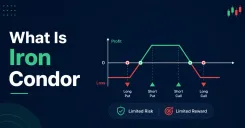
An Iron Condor is a popular options trading strategy that involves selling a combination of both a bear call spread and a bull put spread. It aims to profit from a stable market with limited price movement. Traders establish the strategy by selling out-of-the-money call options and put options, while simultaneously buying further out-of-the-money call options and put options as a hedge.

The Put Call Ratio (PCR) is a popular options market indicator that measures the ratio of put options to call options traded. It helps gauge market sentiment and investor expectations. A high PCR suggests bearish sentiment, as more traders are buying put options to protect against potential downside.
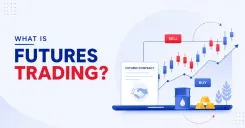
Futures trading involves buying or selling contracts that obligate traders to purchase or sell an asset at a predetermined price and date in the future. It allows participants to speculate on the price movement of various commodities, currencies, indices, or stocks. Futures trading offers potential for profit from both rising and falling markets, provides leverage for increased exposure, and facilitates risk management through hedging.


Enjoy ₹0 Brokerage for first 30 days
Open Your Demat Account Now