Collateral Damage: How Trump’s 50% Tariff on India Reshapes Trade, MSMEs, and Geopolitical Strategy
 Add Preferred News Source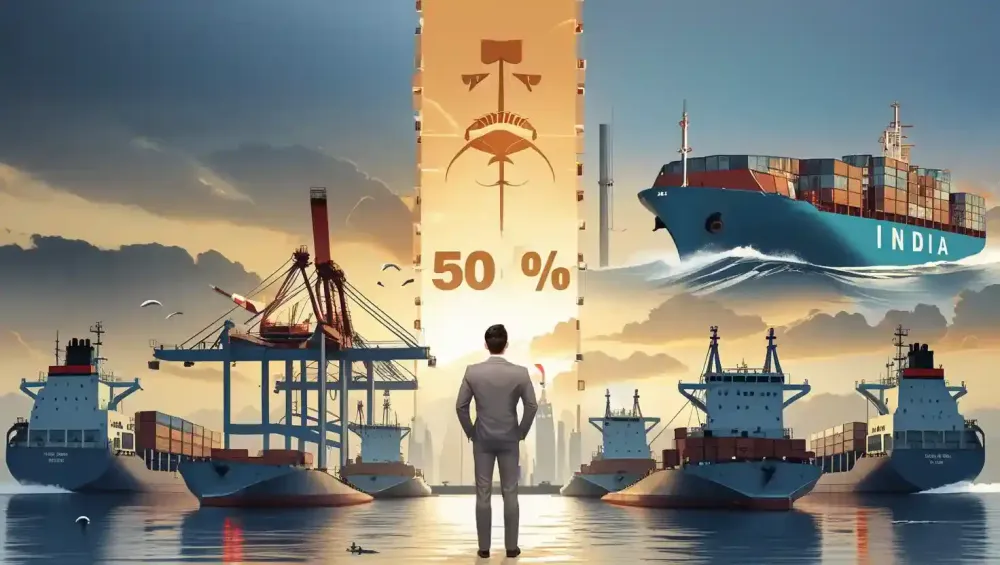
In a surprise move in early August 2025, US President Donald Trump announced a steep hike in import tariffs on Indian goods. The new duties would be rolled out in two phases—a 25% tariff effective 7 August, followed by another 25% after 21 days—taking the total import duty to 50%.
Framed as a response to India’s ongoing energy trade with Russia, the decision aims to pressure New Delhi to reduce ties with Moscow amid the continuing Ukraine conflict. The timing raised eyebrows, especially as it came just months after a high-profile visit by Prime Minister Modi to the US in February, which had signalled improving diplomatic and trade relations between the two countries.
Impact of 50% Tariff on Different Industries in India
The steep 50% import tariff announced by the US has immediate and varied implications for several key Indian industries. While the full extent will unfold over time, the following five sectors are expected to feel the impact most:
- Marine Exports (Shrimp)
India’s shrimp exports to the US totalled $2.24 billion in FY25. The sector already faced a 2.49% anti-dumping duty and a 5.77% countervailing duty. With the new 25% penalty added, the total duty now stands at 33.26% from 7 August, and will rise to 50% by 27 August. On the other hand, Ecuador, a key competitor, faces only a 15% tariff, giving it a massive pricing edge.
Several exporters warn that Indian shrimp will become unviable in the US market, especially for bulk buyers. The tariff escalation could wipe out nearly half of India’s marine exports to the US. This sharp drop would not only impact foreign exchange earnings but also disrupt rural coastal economies in Andhra Pradesh, Odisha, and Gujarat, where aquaculture is a primary livelihood. It will also result in massive inventory buildup.
- Chemicals
Organic chemical exports from India to the US, valued at $2.34 billion, now attract an effective duty of 54%. This includes dyes, pigments, and speciality chemicals used in pharmaceuticals and manufacturing. The tariff hike disrupts supply chains for US-based manufacturers reliant on Indian inputs. Exporters are exploring rerouting through third countries, but compliance and cost barriers remain high. The chemical sector, already facing EU regulatory tightening, now confronts dual pressure from its two largest markets.
- Leather and Footwear
India’s leather and footwear exports to the US, worth $1.18 billion, are now subject to a 50% tariff, up from the previous 25%. This affects finished leather goods, footwear, and accessories, with exporters warning of a 40–50% drop in shipments . Several small manufacturers report that US buyers are shifting to Vietnam and Indonesia, which face significantly lower duties. The sector, already grappling with high input costs and weak global demand, is expected to see widespread disruptions in production and employment.
- Gems and Jewellery
With $12 billion in exports to the US, India’s gems and jewellery sector now faces a 52.1% tariff, placing exporters at a 30–35% disadvantage compared to competitors from Thailand and Hong Kong. Since 55% of India’s jewellery shipments are US-bound, many orders are already on hold due to reassessed sourcing decisions. The tariff spike affects diamonds, gold products, and finished jewellery, threatening long-standing client relationships and squeezing margins in a sector dominated by MSMEs.
- Textiles and Apparel
India’s textile and clothing exports to the US, valued at $10.3 billion in FY25, now face a compounded tariff burden of up to 63.9% on knitted apparel and 60.3% on woven garments. This escalation severely undermines price competitiveness, especially against Bangladesh and Vietnam, which enjoy duty-free or low-tariff access. The Confederation of Indian Textile Industry warns that MSME-led exporters will struggle to absorb the cost shock, risking order cancellations and layoffs.
India’s Diplomatic and Trade Strategy Options
India faces a strategic inflexion point following the US’s imposition of a 50% tariff on its exports. Retaliation, while politically tempting, risks escalating tensions and undermining broader strategic ties. Instead, India is prioritising negotiation through its ongoing bilateral trade talks with the US, aiming for exemptions or phased concessions by fall 2025.
Simultaneously, diversification is gaining traction. India is accelerating trade agreements with the EU, UK, and Australia, and expanding outreach to Africa, Latin America, and ASEAN to reduce overdependence on the US. Domestically, the government is finalising a ₹20,000 crore export promotion mission to cushion MSMEs and enhance competitiveness.
These moves reflect a calibrated strategy: assertive diplomacy to protect national interests, proactive market realignment, and internal reforms to build long-term trade resilience. India’s response underscores its shift from reactive trade policy to a more adaptive and multipolar framework.
Read More: Trump Slaps 25% Tariff on Indian Imports
Conclusion
Trump’s abrupt 50% tariff on Indian imports marks a critical moment for bilateral trade, domestic industry, and broader geopolitics. MSMEs and exporters face immediate revenue shocks, while policymakers must restructure trade partnerships and reinforce financial resilience. Meanwhile, India’s diplomatic balancing will be tested, forcing recalibrations between its Western outreach and alternative alignments. As both economic and strategic dimensions collide, the fallout from this tariff move will shape the South Asian and global trade landscapes for years to come.
This article is for informational purposes only and should not be considered investment advice from Kotak Neo. For compliance T&C and disclaimers, Visit www.kotakneo.com/disclaimer
Right Tools, Rich Insights