India–US Trade Deal Updates: Sensitive Sectors of Agriculture And Dairy Have Been Excluded
 Add Preferred News Source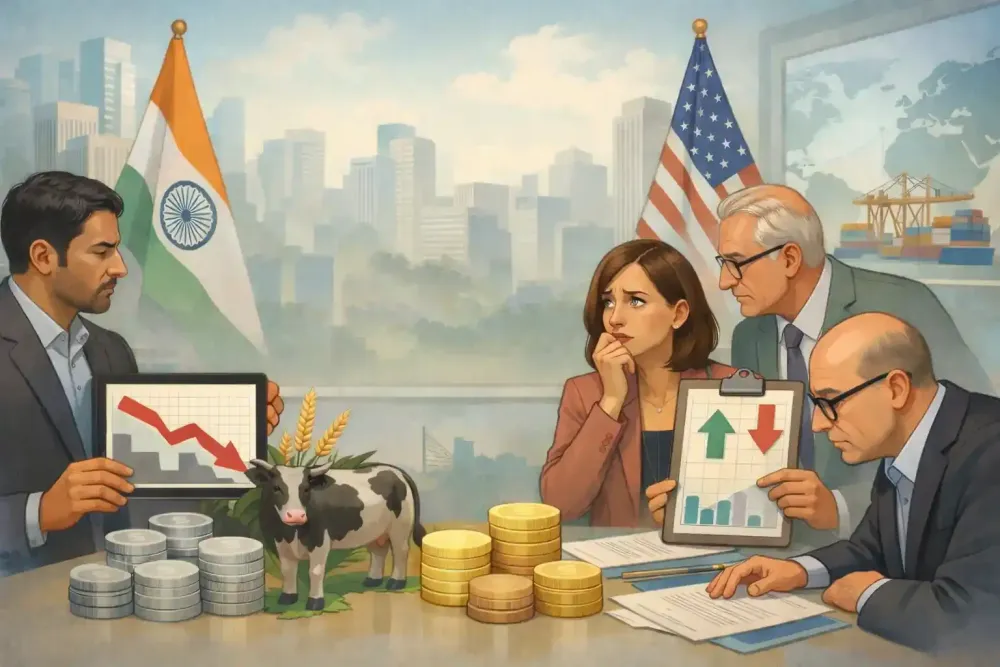
India and the United States have moved quickly to finalise the contours of a bilateral trade agreement that both sides say will deepen economic ties while protecting politically sensitive domestic sectors.
New Delhi’s negotiating team has secured explicit exclusions for a wide range of farm items, notably dairy products and selected staple crops, even as the pact promises large tariff cuts and market access in other areas. How will this balancing act shape trade flows, protect farmers, and alter the industrial and agricultural trade math between the two countries?
What Are the Exclusions and Why Were They Kept Out?
Government statements and leaks from negotiations make clear that India has kept “sensitive” agricultural and dairy products out of the deal’s liberalisation schedule. Commerce Minister Piyush Goyal said agriculture and dairy interests will be protected; official briefings and press reporting list items such as rice, wheat, dairy products, beef, and certain cereals among the goods that will remain outside the immediate tariff-cut commitments.
New Delhi’s position follows a long-standing policy to shield millions of smallholder farmers and the domestic milk sector from sudden import competition.
How Significant Are the Tariff Changes?
Although New Delhi protected sensitive farm lines, the agreement lowered barriers elsewhere. Several media houses report that the deal will eliminate or sharply reduce tariffs on many industrial goods and selected agricultural categories (tree nuts, wine, spirits, fruits and vegetables) and that the US will cut punitive or elevated tariff rates on Indian goods, bringing many US duties down to an effective 18%.
These moves are expected to boost labour-intensive Indian export sectors such as textiles, leather, and certain engineering goods.
What are the Likely Trade-Flow and Fiscal Impacts — Numbers that Matter
Early market reaction was positive: India’s benchmark Nifty 50 rose nearly 3%, and the rupee strengthened on the initial announcements, reflecting investor expectations of larger export volumes and inward investment.
Several reports suggest that India ran a goods trade surplus with the US in FY 2025. For the same period, Indian exports to the US were about $86 billion.
Separately, some reports cite a US commitment framework that could lead to up to $500 billion of incremental US sales to India spread over five years, largely in energy, defence, and high-value goods, if purchase commitments materialise.
The fiscal picture for India is mixed: tariff cuts on imports may reduce customs revenue in specific lines but could be offset by higher economic activity, increased services, and investment-led tax revenue.
What are the Political and Farmer-Level Implications?
Politically, excluding dairy and core staples reduces the immediate risk of farmer unrest and gives the government a defensible negotiating line in Parliament and state capitals. New Delhi has routinely excluded farm and dairy lines in prior deals, arguing the need to protect the livelihoods of millions of subsistence and smallholder farmers; today’s announcement fits that precedent.
For the US, selective access to horticulture, tree nuts, and processed foods offers exporters new opportunities, but US farm lobbies will press for broader openings over time. Market analysts warn that the lack of precise tariff-phaseout schedules and quota rules means implementation detail will determine winners and losers at regional and commodity levels.
Conclusion
The India–US trade agreement, as currently sketched, is deliberately uneven: aggressive liberalisation for industrial and selected agricultural lines, paired with explicit protection for dairy and other sensitive farm staples.
That compromise clears the way for faster signing and political cover at home, and it promises measurable commercial gains, but the long-term impact will depend on the technical annexes, phase-out timetables and the enforcement of sanitary-phytosanitary standards.
For farmers, protection today offers breathing room; for exporters and investors, the gains will hinge on the fine print that New Delhi and Washington still need to publish.
Sources:
This article is for informational purposes only and should not be considered investment advice from Kotak Neo. For compliance T&C and disclaimers, Visit https://www.kotakneo.com/disclaimer/
This article is for informational purposes only and should not be considered investment advice from Kotak Neo. For compliance T&C and disclaimers, Visit www.kotakneo.com/disclaimer
Right Tools, Rich Insights