India Targets Cheap Chinese Yarn Imports with New Duties
 Add Preferred News Source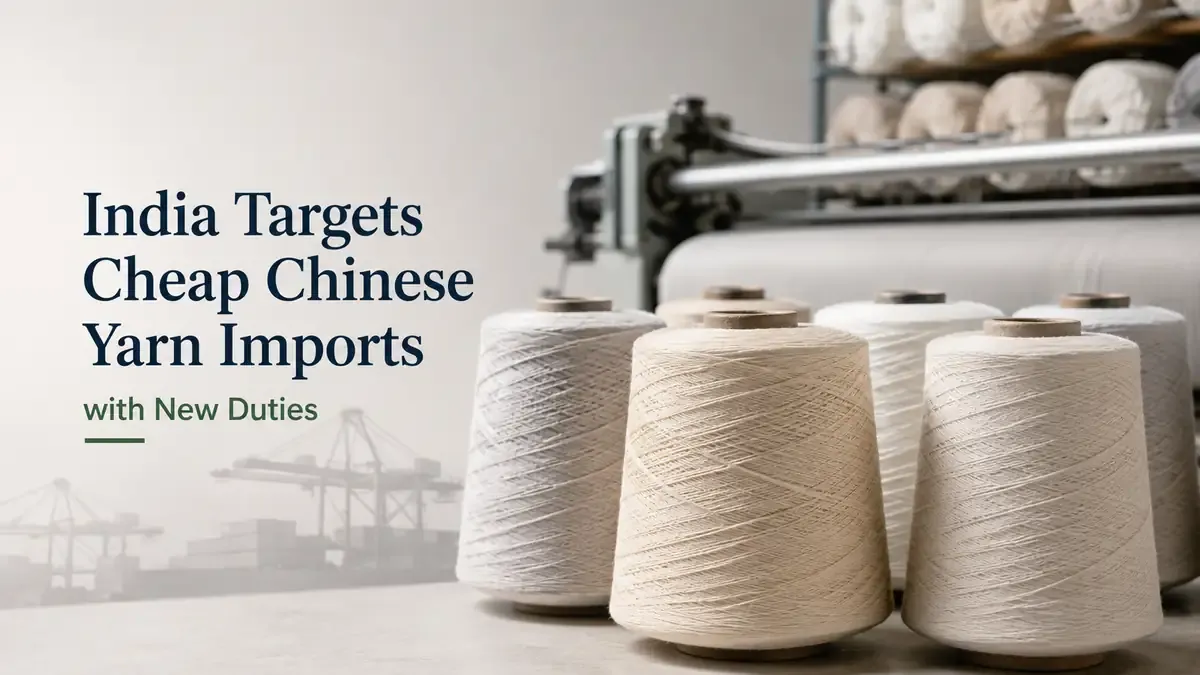
India proposes $386–$1,071/ton duty on Chinese viscose yarn, impacting Grasim and Arvind. Read more to see which stocks gain and lose.
India’s Directorate General of Trade Remedies has proposed anti-dumping duties from $386 to $1,071 per metric ton on Chinese imports of viscose rayon filament yarn, after an investigation into pricing pressure on domestic producers.
The recommendation, issued via a government notification on Monday, focuses on yarn above 75 deniers, a commonly used input in textile manufacturing.
Duty Range And Structure
The proposed duties range from $386 to $1,071 per metric ton, depending on the exporter.
-
Xinxiang Chemical Fibre Co Ltd: $386 per metric ton
-
Jilin Chemical Fiber Co Ltd: $667 per metric ton
-
Yibin Hiest Fibre Limited Corporation and related exporters: $518 per metric ton
-
Other producers: $1,071 per metric ton
If approved by the finance ministry, the levy will stay in place for five years.
What Prompted The Move?
The DGTR found that Chinese imports were being flooded into India at significantly lower rates than those offered by homegrown producers. The investigation concluded that the surge in such imports had caused material injury to Indian producers operating in the viscose segment.
China’s embassy in India has not commented on the development so far.
Stocks In Focus: Who Gains, Who Feels The Pressure?
The impact is uneven and depends on where companies sit in the value chain.
Producers May See Relief
For domestic fibre and filament producers like Grasim Industries and Century Enka, higher import costs mean that there will be less pressure on pricing. That usually creates room for:
-
Better realisation
-
Better margins
-
Better utilisation
Even for Grasim Industries, which is more focused on viscose staple fibre, pricing tends to move hand in hand with most viscose products.
Downstream Players Could Face Higher Costs
The impact of higher yarn prices will be felt by downstream players such as Vardhman Textiles Limited and Arvind Limited. Their bottom line will be impacted entirely based on their pricing power. If they’re unable to increase prices, their profit will be negatively impacted.
Also Read - Investors Rush Towards Money Market Funds Amid Rising Oil Prices
The Next Trigger
The proposal now awaits a final call from the finance ministry.
If it goes through, the immediate effect is likely to show up in pricing across the viscose chain. The bigger question is how that impact travels. Does it stop at yarn producers, or move all the way to end products?
Source:
Economic Times
This article is for informational purposes only and should not be considered investment advice from Kotak Neo. For compliance T&C and disclaimers, Visit www.kotakneo.com/disclaimer
Right Tools, Rich Insights