

Kotak
Stockshaala
Introduction to Options Trading
Learn the basics of Options Trading in this beginner-friendly course. Understand calls, puts, strike price, premiums, and how options are used for trading and hedging—explained in simple, easy-to-follow lessons.
Options Trading Explained – Calls & Puts Made Simple
New to options trading? This video explains what options are, how call and put contracts work, and where options fit in Indian markets—using simple language and real-life examples to remove confusion and jargon.

Call Options Explained – A Beginner’s Guide Using Simple Examples
Understand what a call option is, why traders pay a premium, and how strike price and expiry work. This video uses simple, real-life analogies to explain call options clearly for beginners entering options trading.

Call Option Buying Explained – Risk, Reward & Profit Calculation
Learn how call option buying works, including premium, profit and loss calculation, and risk–reward dynamics. It explains when traders buy call options, what happens across market scenarios, and why time decay matters.

Call Option Selling Explained – Premium, Risk & Payoff
Get a clear breakdown of how call option selling works, why traders earn premium upfront, and the risks involved. Learn profit and loss calculation, probability of success, and how professionals manage “unlimited risk” using stop-losses and hedging.
Put Options Explained – Hedging Risk & Trading Bearish Markets
Explore how put options work as market insurance and how traders use them during market falls. Learn how traders use put options to protect portfolios during market falls, calculate risk and reward, and trade bearish views using simple, real-life examples.
Put Option Buying Explained – Profit When Markets Fall
See how put option buying helps traders profit from falling markets using simple analogies and real trade examples. Learn how traders profit from falling markets, calculate risk and reward, manage time decay, and avoid common mistakes while trading bearish views.

Put Option Selling Explained – Understanding Premium & Risks
Understand how put option selling generates premium income and the risks involved. Learn payoff logic, real trade examples, and when selling puts makes sense—along with the dangers that can wipe out capital if misused.

Option Buying vs Option Selling – Payoff, Probability & Risk Compared
Option buying and selling differ in payoff structure, probability of profit, and time sensitivity. In this lesson, the trade-off between paying premium and collecting premium is simplified to help you understand risk exposure, win rates, and when each approach makes sense.
Delta Explained – How Option Prices Move with the Market
Delta explains how much an option’s price changes for every move in the underlying stock or index. In this lesson, Delta is broken down in simple terms to help you understand direction, price sensitivity, and risk in options trading.

Gamma Explained: How Option Price Movement Accelerates
Gamma explains how fast Delta changes as the price moves. In this lesson, Gamma is simplified to help you understand why option prices move sharply near expiry and how risk accelerates for both buyers and sellers.

Vega Explained: Why Option Premiums Change With Volatility
Vega measures how much an option’s price changes for every 1% move in implied volatility. In this lesson, Vega is simplified to help you understand why premiums rise before events, fall after outcomes, and move even when the stock price stays flat.

Theta Decay Explained – The Hidden Cost of Holding Options
Understand how Theta decay reduces option value with time, even when prices stay flat. Learn what Theta means, why decay accelerates near expiry, how it impacts buyers vs sellers, and how to calculate daily premium erosion. Also covers common expiry and weekend mistakes traders make when ignoring time decay.

ITM, ATM & OTM Explained: Understanding Option Moneyness
Moneyness shows whether an option has intrinsic value based on its strike price and the current market price. In this lesson, ITM, ATM, and OTM options are simplified to help you understand strike selection, pricing differences, and how risk changes across option types.

Payoff Diagram Explained – Visualising Risk and Reward in Options
Learn how to read and use payoff diagrams to understand option risk and reward. This lesson explains the X and Y axis, the “hockey stick” shape, how to identify max loss, max profit, and breakeven points, and why comparing stock buying vs option buying helps clarify real trade outcomes.
Call Option Payoff Explained – Limited Profit, Unlimited Loss?
Understand how call option payoff actually works for both buyers and sellers. This lesson breaks down profit, loss, breakeven, and risk using simple examples and payoff diagrams. Learn why call buying offers limited loss with upside potential, and why call selling carries limited profit but significant risk if not managed properly.
Put Option Payoff Explained – Max Profit vs Max Loss
Learn how put option payoff works for both buyers and sellers. This video explains profit, loss, breakeven, and risk using clear payoff diagrams and practical examples. Understand why put buying benefits from falling markets, how put sellers earn premium, and how to calculate maximum profit, maximum loss, and breakeven accurately before entering a trade.
Call vs Put Explained – When to Buy or Sell Options
Confused about whether to buy or sell a Call or Put? This video simplifies the decision-making process by breaking down directional bias, risk–reward, and strategy selection in a clear, structured way. Understand how profit potential differs between buyers and sellers, how the “mirror effect” works between calls and puts, and how to choose the right approach based on your market view and risk appetite.
Open Interest Explained – How to Track Smart Money in Options
Open Interest (OI) is a key tool in options trading. Learn how to read OI to spot support and resistance, decode long buildup and short covering, and understand institutional activity. We also explain OI vs Volume, price–OI combinations, and how to use OI practically instead of trading on guesswork.
Option Chain Explained – How to Read & Trade Like a Pro
Learn how to read an Option Chain with clarity. This video explains Strike Price, LTP, Delta, Gamma, Theta, Vega, and how Open Interest (OI) helps identify support and resistance. Understand price–OI logic and use real examples to turn raw option data into structured trading decisions.

Option Premium Explained – Intrinsic Value & Time Value Simplified
Understand why option prices move differently from stocks. This video breaks down Option Premium into Intrinsic Value and Time Value using simple analogies and real examples. Learn how to calculate intrinsic value for calls and puts, why it can’t be negative, and how time decay (Theta) impacts your premium.

Spot Support & Resistance Using Option Chain and OI
Learn how to identify key Support and Resistance levels using Open Interest (OI) data from the Option Chain. This video explains how option sellers influence price zones, how OI builds strong levels, and why changes in OI matter more than static numbers. Includes practical examples and common mistakes to avoid.
Option Spreads Explained: Reduce Risk and Margin
Understand how option spreads help reduce risk and lower margin requirements compared to naked trades. This video explains debit vs credit spreads, combining strikes, capped loss, and defined reward setups. Learn how multi-leg strategies turn high-risk positions into structured, manageable trades.

Net Debit Spreads: Bull Call & Bear Put Explained
Stop losing money on naked options. This video breaks down Net Debit Spreads — Bull Call Spreads and Bear Put Spreads — with real Nifty examples. Learn how to construct them, calculate Max Profit, Max Loss, and Break-even, and avoid 3 critical mistakes in options trading.

Net Credit Spreads: Earn Consistent Options Income
Smart traders don't just buy options — they sell them strategically. This video explains Net Credit Spreads, covering Bull Put and Bear Call Spreads. Learn how to collect premium upfront, use Theta to your advantage, calculate Max Profit, Max Loss, and Breakeven, and manage risk like a pro.

Credit vs. Debit Spreads: Which One Should You Pick?
Picking the wrong spread for the wrong market can cost you. This video compares Net Credit and Net Debit Spreads across all 4 strategies — Bull Put, Bear Call, Bull Call, and Bear Put. Learn how IV levels and Theta should drive your choice, with real Nifty examples to make it stick.
Implied Volatility & IV Crush: What Every Trader Must Know
Ever got the market direction right but still lost money on options? That's IV Crush. This video breaks down the difference between Historical and Implied Volatility, why IV spikes before events, and how to pick the right strategy — debit, credit, or naked — based on current IV levels.

Protect Your Portfolio From Market Crashes With Hedging
Portfolio crashes scare most traders. In this video, learn the simplest hedging strategy using protective puts as insurance for your holdings. When you buy puts, losses cap while profits stay unlimited—peace of mind without sacrificing gains.

Synthetic Options Mimic Stock Ownership Without Capital
Want stock upside without buying shares? This video shows synthetic options—call plus put combinations at same strike replicate stock ownership with lower capital and same profit potential if you master the mechanics.
Mastering IV Crush Rewards Smart Options Sellers
News events spike volatility, inflating premiums. After events, premiums collapse. In this video, learn IV crush kills option buyers but rewards sellers who understand trading event aftermath for consistent income.
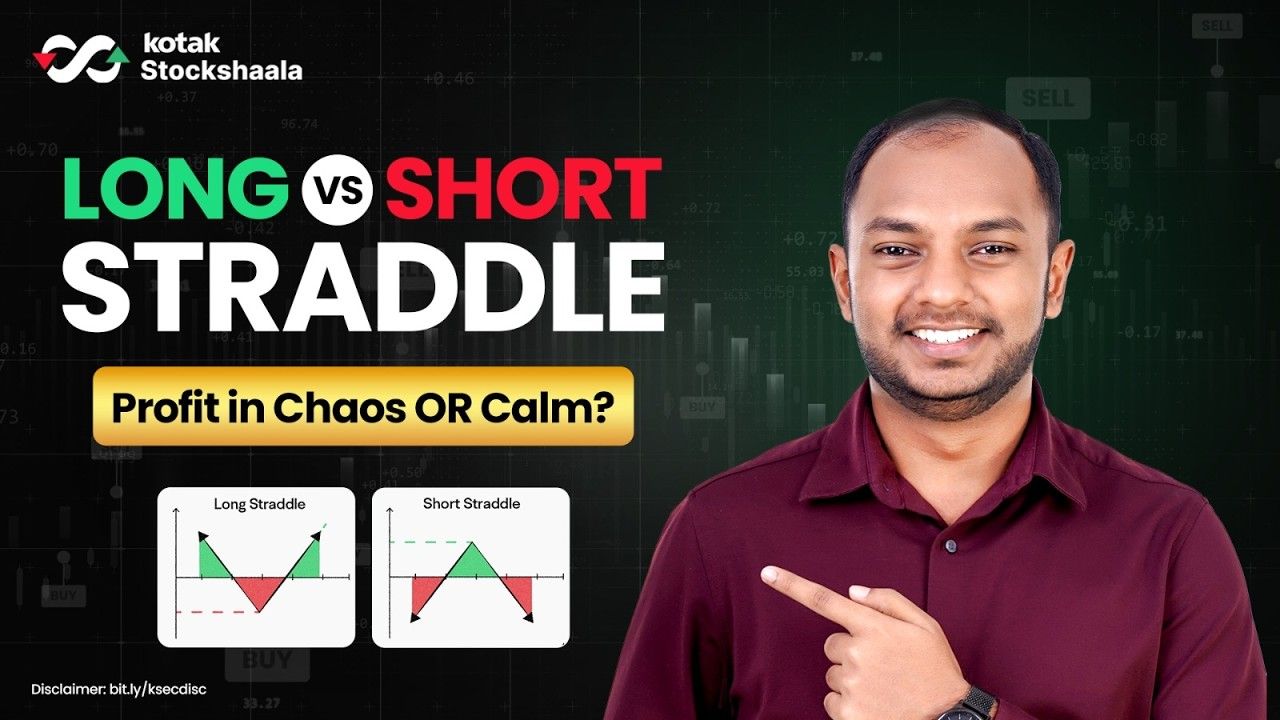
Long & Short Straddle: Profit in Any Market Move
Whether the market is about to explode or go nowhere, there's a straddle for it. This video breaks down Long and Short Straddles — how to calculate break-even points, compare risk-reward profiles, understand the role of IV and Theta, and use premium data to anticipate market direction.
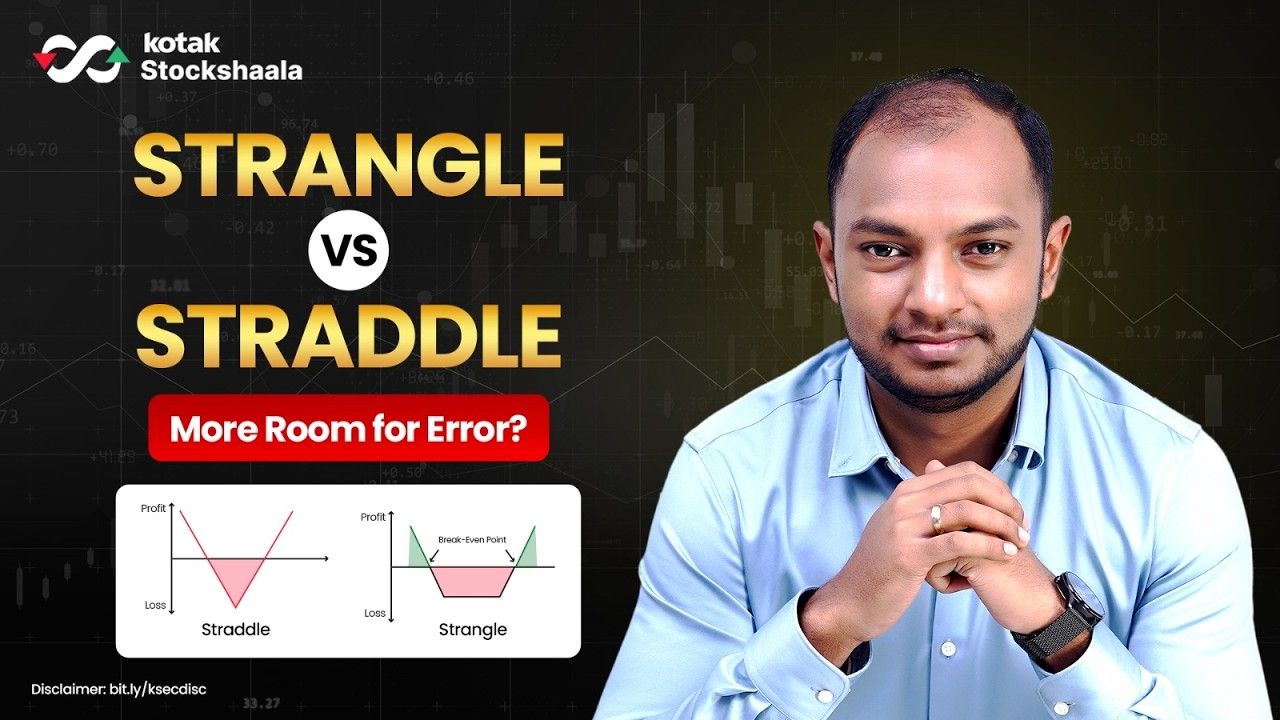
Strangles vs Straddles: Which Strategy Fits Your View?
Both strategies profit from volatility — but they're not the same. This video breaks down Long and Short Strangles, how they differ from Straddles, when to use each based on IV levels, how Theta Decay works in your favour when selling, and the probability of profit tradeoffs between the two.
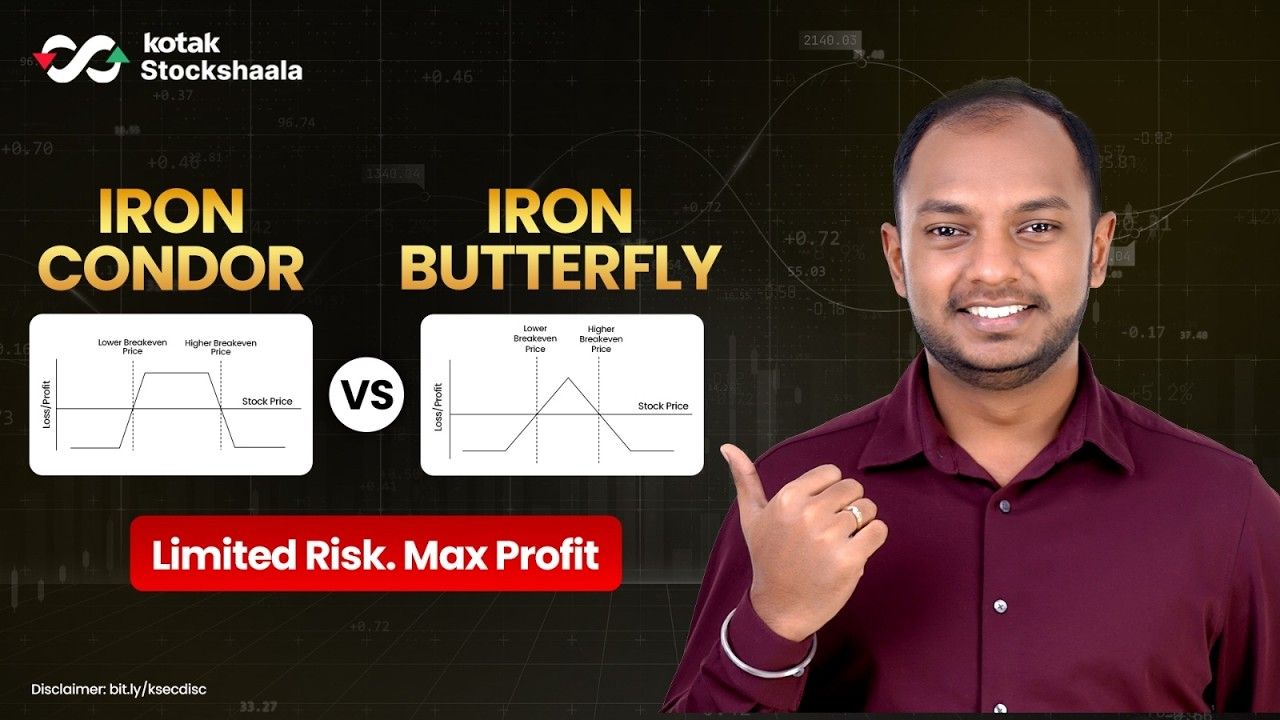
Iron Condor vs Iron Butterfly: Best Strategies for Flat Markets
Range-bound market? Don't sit out — or worse, take on unlimited risk with naked straddles. This video breaks down Iron Condors and Iron Butterflies, how adding two extra legs caps your losses, how to read payoff diagrams, and which 4-leg strategy suits your risk appetite and market outlook.

Calendar Spreads: How to Make Theta Decay Work for You
What if time passing was actually your edge? Calendar Spreads let you sell near-term options while holding longer-term ones — collecting premium as time decays. This video explains the setup, how Theta and Vega work in your favour, a real Nifty example, and key mistakes to avoid.

Put-Call Ratio: Read the Market Before It Moves
PCR tells you what the smart money is positioning for — if you know how to read it. This video explains how to calculate PCR using Open Interest, why India's neutral baseline is 0.75, how to use it as a contrarian indicator, and how to pair it with Bull Put and Bear Call Spreads on expiry days.
Weekly Expiry Survival Guide: ATM Straddles & Strangles
On expiry day, premiums collapse fast — and unprepared traders pay for it. This video covers how to execute ATM Straddles and Short Strangles, convert positions into Iron Butterflies and Iron Condors when needed, use Bull Put and Bear Call Spreads as safer alternatives, and when to book profits early.
Max Pain Theory: Why Options Expire Where They Do
Options don't expire randomly — institutions have a pin in mind. This video explains the Max Pain theory, how to identify the strike where buyers face maximum losses, the role Open Interest plays in expiry day price movement, and how to use this data to build smarter straddle and strangle setups.

Option Buyer vs Seller: Who Actually Makes Money?
Buyers chase big wins. Sellers collect consistent premium. But which approach actually fits you? This video digs into the psychology, risk-reward, and capital requirements of both sides — and helps you understand how your personality, patience, and account size should drive your trading style.
How to Fix a Losing Options Trade: 3 Rebalancing Techniques
A bad trade doesn't have to mean a blown account. This video covers three practical adjustment strategies — Shifting Strikes, Converting to Spreads, and Rollovers — the four scenarios that demand action, and critically, when you should stop adjusting and just take the loss.

Put Ratio Spread: Lower Risk, Higher Probability Bearish Trade
When simple put buying isn't enough, the Put Ratio Spread tilts the odds in your favour. This video covers the strategy structure, payoff diagram, profit zones, break-even calculations, how to manage the unlimited downside risk, and real Nifty examples with strike price calculations.

Call Ratio Spread: The Bullish Strategy for High IV Markets
When you're moderately bullish and IV is elevated, the Call Ratio Spread is your edge. This video explains the 1-buy-2-sell structure, how to identify your max profit zone and break-even, why high IV makes this strategy work, and how to convert it to a Butterfly for risk control.

Standard Deviation in Options: Pick Strikes Like Institutions
Most traders pick option strikes by gut feel. This video explains how Standard Deviation and the Bell Curve give you a statistical edge — understanding 1, 2, and 3 Sigma boundaries, overlaying them on payoff diagrams, and why this approach matters even more on high-IV event days.

Bear Call Spread Going Wrong? 3 Ways to Adjust It
When the market moves against your Bear Call Spread, panic is the worst response. This video covers three professional adjustment techniques — Rolling Up for breathing room, converting to an Iron Condor, and adding hedges — plus how to manage expiry rollovers before the loss becomes unrecoverable.

Iron Condor Adjustments: 4 Ways to Save a Losing Trade
When the market breaks your Iron Condor's range, don't exit — adjust. This video covers four adjustment techniques to reduce risk and shift break-even points, how to use IV to your advantage during volatile moves, and how to read Option Chain OI shifts to position alongside smart money.
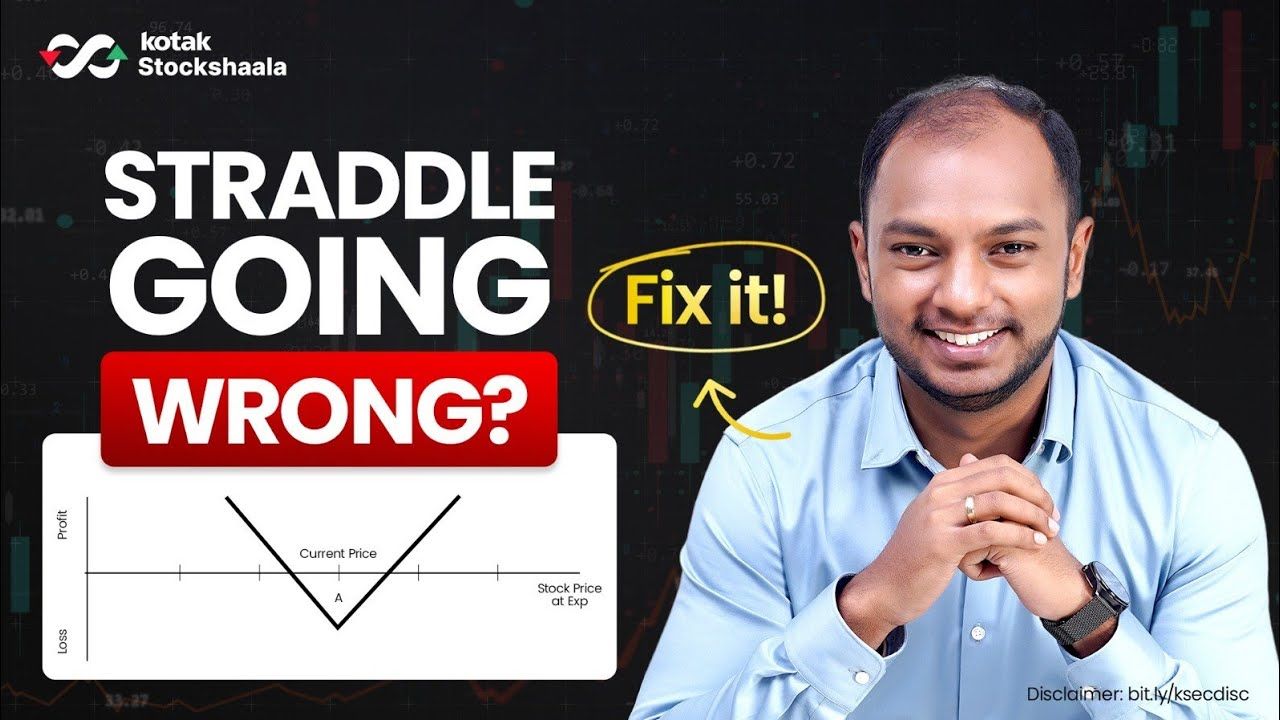
Short Straddle Going Wrong? 3 Ways to Defend It
A one-sided trending market can turn a profitable straddle into a bleeding position fast. This video explains when and why to adjust a short straddle, the Shift the Profitable Side technique, how to convert it into a Call or Put Ratio Spread, and the golden rules to avoid over-adjusting.
Strangle Adjustment: 4 Ways to Fix a Trade Under Pressure
The market shoots 200 points and your strangle is under threat — now what? This video breaks down four practical adjustments: shifting the untested side, converting to a Broken Wing Condor, rolling the tested side for time and recovery, and adding directional bias using futures or debit spreads.
Recommended Courses for you















Learn, Invest, and Grow with Kotak Videos
Explore our comprehensive video library that blends expert market insights with Kotak's innovative financial solutions to support your goals.

Trading with collateral as margin with Kotak Neo

How India is Redefining Space Exploration