India Sources 60% Crude Beyond Hormuz, Govt Allays Shortage Fears
 Add Preferred News Source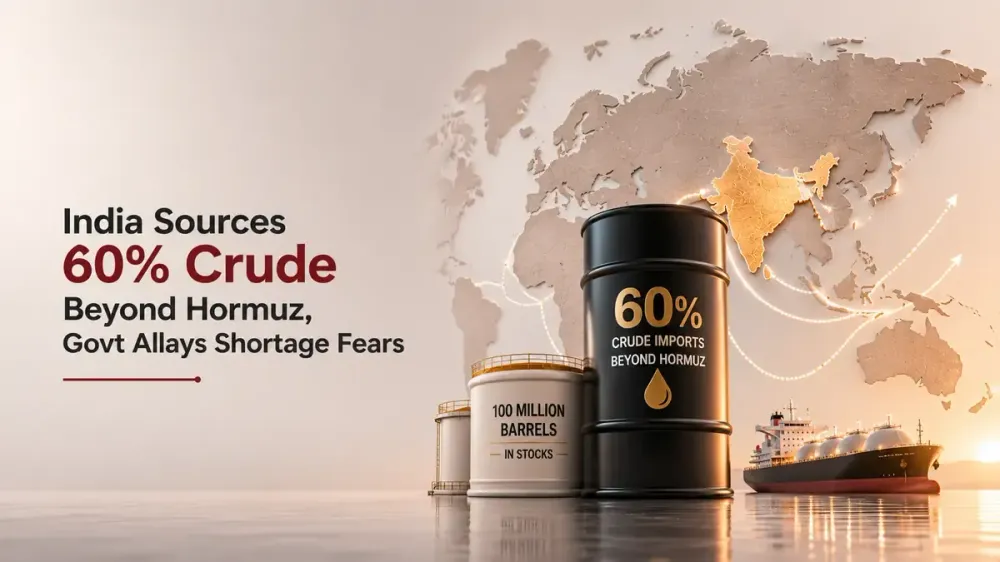
Government sources say 60% of India’s crude imports now avoid the Strait of Hormuz, backed by diversified suppliers and 100 million barrels in stocks, easing immediate shortage concerns amid regional tensions.
India has moved quickly to reassure markets after disruptions in the Middle East raised fears over oil supplies, with government sources saying the country now sources about 60% of its crude via routes that do not require transiting the Strait of Hormuz. Officials and state refiners told reporters this week that a combination of alternate shipping lanes, diversified supplier mixes, and on-shore stocks means there is no immediate shortage risk, but how robust is that claim?
How Much Of India's Crude Bypasses The Strait Of Hormuz?
Government briefings and market reports indicate a shifting pattern in sourcing. Roughly 40% of India’s crude imports historically transited the Strait of Hormuz, implying that the remaining 60% arrives via other choke points, overland sources or longer sea routes such as around the Cape of Good Hope.
Independent reporting shows, however, that India still imports the bulk of its crude from West Asia and remains exposed to disruptions through the Gulf. That exposure reflects continued dependence on Iraq, Saudi Arabia, the UAE and Kuwait for large volumes of seaborne crude.
Are Fuel Stocks And Alternate Routes Adequate To Prevent Shortages?
Officials point to national stocks and strategic reserves to underline buffer capacity. Government figures and media reporting place India’s total crude and product stocks at roughly 100 million barrels held across commercial and strategic storage, a level that industry analysis and some news outlets calculate could cover about 40–45 days of consumption in a worst-case stoppage through Hormuz.
In parallel, refiners have been exploring two operational responses:
(1) Rerouting shipments through the alternative routes, which raises freight and insurance costs and adds days to voyages, depending on origin, and
(2) Accelerating purchases from alternative suppliers, including Russia, the US, and African producers.
Media reports also indicate that the government has signalled contingency arrangements such as temporary curbs on exports of petrol and diesel and adjustments to LPG allocations if disruptions persist.
Also Read - Pre-Market, 4 March 2026: Markets Likely To See Another Volatile Session
What Are The Immediate Market And Policy Responses?
Markets reacted swiftly. Freight rates for Very Large Crude Carriers (VLCCs) and war risk insurance spiked, while Brent crude rose following shipping disruption headlines. Policymakers in New Delhi held meetings with state refiners to coordinate supply swaps and to evaluate whether to allow increased purchases of Russian seaborne crude under specific commercial and diplomatic constraints.
Analysts view India as among the more vulnerable large consumers if disruption becomes prolonged, chiefly because of relatively smaller strategic storage compared with other major economies.
On the policy side, the petroleum ministry has said contingency plans are in place and that supply chains are being monitored 24/7. Steps that are being discussed include targeted import diversification, temporary export curbs and tactical use of strategic petroleum reserves. Industry sources told reporters that refiners were already rescheduling shipments and opening dialogue with alternative suppliers to smooth flows.
Sources
Mint
NDTV Profit
Reuters
Autocarpo
This article is for informational purposes only and should not be considered investment advice from Kotak Neo. For compliance T&C and disclaimers, Visit www.kotakneo.com/disclaimer
Right Tools, Rich Insights