Supertankers Lift Venezuela Crude Exports
- By Kotak News Desk
- 26 Feb 2026 at 1:26 PM IST
- Market News
- 4 min read
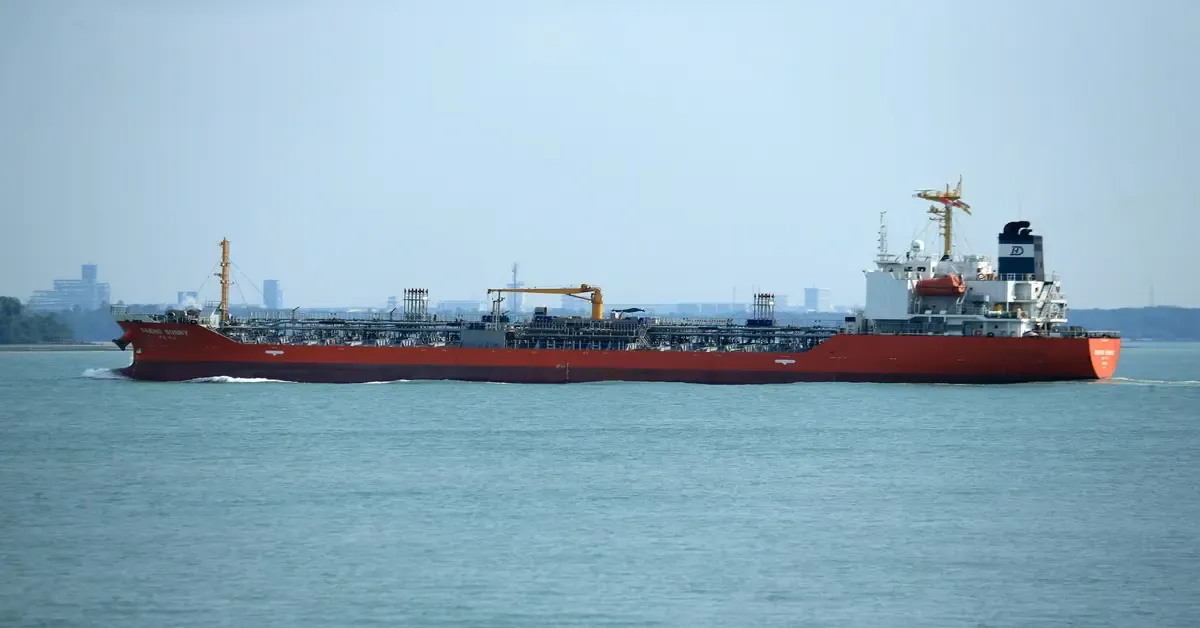
Venezuela’s oil exports are surging on bigger tankers with India emerging as a key buyer, but what does this shift mean for crude prices and energy security? Read more to find out.
Venezuela's oil trade is on the cusp of a new chapter with the beginning of exports from larger vessels to India and the United States. A new oil deal between Caracas and Washington is changing the pace and scale of oil exports from Venezuela after a series of sanctions and export restrictions.
Why Are Supertankers Returning To Venezuela?
For the first time since the recent Caracas-Washington supply understanding began, trading houses have chartered very large crude carriers, or VLCCs, to load oil from Venezuela. These vessels can carry up to 2 million barrels each, far more than the Aframax and Panamax tankers that have dominated shipments in recent months.
March loading slots have been assigned to at least three VLCCs chartered by Vitol and Trafigura at the Jose terminal, which is operated by state energy firm PDVSA. The cargoes are expected to head to India. Shipping data also shows another supertanker, Olympic Lion, signalling Venezuela as its next destination.
Until now, most crude was shipped in smaller vessels to US refineries or to Caribbean storage hubs before being resold. The move to VLCCs signals confidence that larger volumes can now move directly to end buyers.
Bigger ships usually mean lower freight costs per barrel. Traders have complained that discounts of around 15 dollars per barrel to Brent for Venezuela’s Merey heavy crude have become less attractive in a backwardated market, where future deliveries are cheaper than near-term supplies. Larger cargoes could help protect margins.
How Is India Increasing Its Purchases?
India is emerging as a key beneficiary of this shift. A cargo of Venezuelan oil sold by Chevron to Reliance Industries is the first since December 2023. The shipment includes Boscan heavy crude and marks the first sale of that grade in about six years.
Reliance has also bought a 2-million-barrel cargo from Vitol for March loading and is reportedly exploring direct purchases from PDVSA. Public sector refiners have also resumed buying Venezuelan barrels. Buyers include:
Before US sanctions in 2019, India was the third-largest buyer of Venezuelan crude. Now, with India planning to reduce its dependence on Russian oil and diversify its purchases, Venezuelan oil is making a comeback into India's oil basket.
Will Exports To The US Also Rise?
The revival is not limited to Asia. Chevron and US refiners, including Valero Energy, Phillips 66 and Citgo Petroleum, are preparing to process more Venezuelan crude. Several Aframax and Panamax vessels have been hired under time charter contracts dedicated to lifting oil from Venezuela.
Venezuela’s crude exports rose to about 8,00,000 barrels per day in January, up from roughly 5,00,000 barrels per day in December. The sharp jump has left millions of barrels in storage, originally intended for US and European buyers. The use of larger tankers could help clear that backlog more quickly.
In late January, the US Treasury issued a general licence broadly allowing oil exports, expanding the pool of potential buyers and destinations. If shipments continue to scale up, Venezuela could steadily reclaim lost ground in global oil trade, with India once again playing a central role.
Investor Takeaway
This trend, if it continues, can have a significant impact on the oil market, especially if shipments continue and exports remain at current levels. To traders across the world, this can be a welcome trend, given that it can help reduce freight costs and Venezuelan crude can be cleared from storage, which is a welcome trend in a backwardated market where heavy crude is a problem.
To India, it can provide access to cheap heavy crude supplies, which can be beneficial for operating margins to private and state refineries and can help break dependence on a single source.
Sources
Economic Times
Financial Express

Since its incorporation on 20 July 1994, Kotak Neo has grown into one of India’s most trusted brokerage houses - backed by over 30 years of expertise across stocks, funds, IPOs, and full-service investing.
With a pan-India footprint of 145+ branches, 1000+ franchises and presence across 310+ cities, Kotak Neo serves 5 million+ customers nationwide.
From equities and IPOs to mutual funds and derivatives, Kotak offers comprehensive, research-backed investment solutions - simplifying wealth management for retail and institutional clients alike.
Kotak News Desk brings you latest updates, expert insights, and market-ready ideas - helping you stay informed and invest smarter.
Connect on: Linkedin
0 people liked this article.