Steel Shares Advance Up To 2% As Demand, Price Cues Lift Sector
- By Kotak News Desk
- 19 Feb 2026 at 9:02 PM IST
- Market News
- 4 minutes read
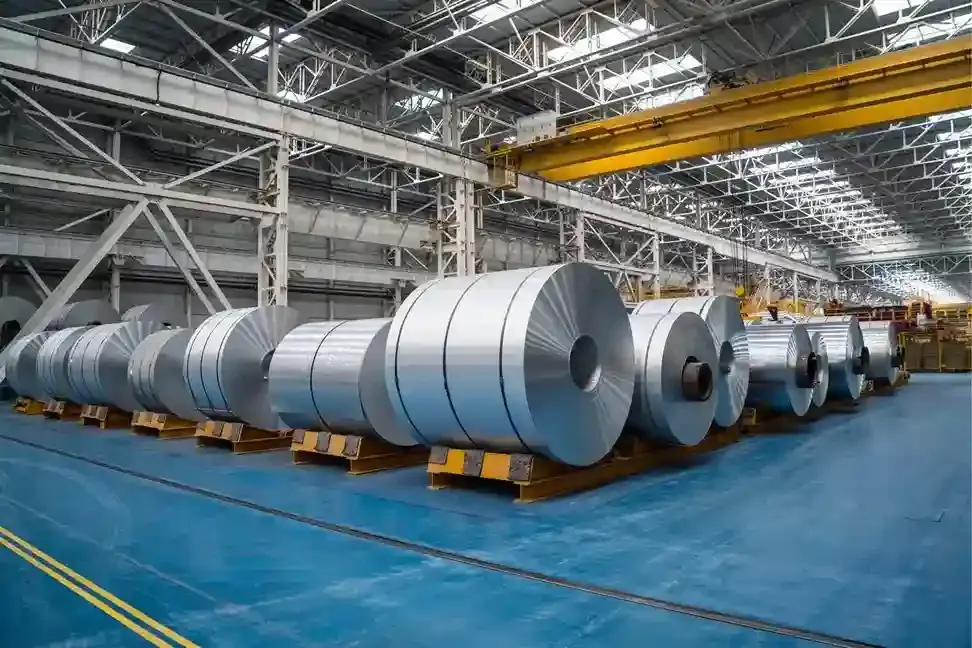
Steel stocks, including Tata Steel, Jindal Steel & Power and JSW Steel, rose up to about 2%, driven by expectations of improving demand, restocking by consumers, and supportive macro cues in the domestic and global markets.
Shares of leading steelmakers were in demand on Wednesday, rising 2% in intraday trade on the Bombay Stock Exchange (BSE), supported by improved business sentiment and better visibility for the sector.
Tata Steel, Steel Authority of India (SAIL), JSW Steel and Jindal Steel are some of the stocks that went up by between 1 and 2 per cent, and the majority of the stocks were trading around their 52-week peak. In comparison, the BSE Sensex was flat, up just 0.01% at 83,461 around 9:41 AM.
Over the past month, these four steel stocks have outperformed the broader market, rising between 7% and 16%, while the Sensex gained only 0.25% and the BSE Metal index advanced 3.5% during the same period.
Among individual stocks, Jindal Steel hit an all-time high of ₹1,230, up 2% intraday. The stock has rallied 16% in the last month.
Why Are Steel Stocks Rising?
The steel stocks are rising because:
-
Role As A Strategic Commodity: Steel holds a key place in the economy because so many essential sectors depend on it. Construction, infrastructure, transport, energy and defence all rely on steel in some form. From roads and bridges to rail tracks, power plants, cars, ships and military equipment, most large projects cannot move forward without it. It remains a basic building block of development.
-
Importance Of Domestic Steel Capacity: A country that produces enough steel at home can deal better with supply disruptions and global tensions. When imports become uncertain or expensive, local capacity provides stability. That is why many governments now treat steel production as a long-term priority within their industrial plans, instead of seeing it only as a commodity that moves up and down with economic cycles.
-
Policy Support Driving Sector Visibility: According to analysts at InCred Equities, rising global protectionism is insulating domestic steel producers, and India is seeing similar trends through policy support, safeguard measures, and likely regulatory adjustments. The brokerage said these factors are improving long-term visibility for the sector and supporting a structural re-rating similar to past commodity cycles, such as cement.
-
Global Trade Barriers And Protectionism Trends: InCred Equities has also pointed out that the trend of trade barriers by major economies has become more pronounced to counter Chinese overcapacity, which has become the structural support of domestic pricing. In India, protectionist taxes, quality checks, and anti-dumping are assisting in protecting local manufacturers and enhancing their case for investment in the industry.
-
MMDR Act Amendments And Iron Ore Linkages: The brokerage added that expectations around amendments to the Mines and Minerals (Development and Regulation Act) (MMDR Act), aimed at preserving captive iron ore linkages, could strengthen the structural re-rating case for Indian steel companies.
What Did Q3 Results Show?
Domestic steel companies indicated that realisations decreased sequentially in Q3 FY26 at the rate of between ₹2,500-₹3,000 per tonne due to surplus supply and increasing low-cost imports, which was a strain on domestic prices.
Operating performance was also impacted by higher coking coal costs, which rose by $4–$5 per tonne. Despite these pressures, most steel companies limited the decline in earnings before interest, taxes, depreciation, and amortisation (EBITDA) per tonne to around ₹1,800 quarter-on-quarter (QoQ), supported by a better product mix and cost optimisation.
What’s The Outlook For Q4 FY26?
The government’s decision to impose a 12% safeguard duty in mid-December 2025 has supported domestic steel prices, which have risen by around ₹3,500 per tonne QoQ.
At the same time, a $15–$20 per tonne increase in coking coal prices QoQ could limit margin expansion.
In general, ICICI Securities expects domestic steel producers to see an improvement in EBITDA per tonne of around ₹1,500–₹2,000 in Q4 FY26.
Also Read - Copper Slips 20% From Peak
What Does This Mean For Investors?
The recent performance of the steel stocks is an indication of the confidence in the long-term and medium-term performance of the sector, with the backing of the policy protection, increasing global trade barriers, and stable domestic demand.
Policies like safeguard obligations and anti-dumping have been assisting in curbing price risks of downside in steel prices, which would be beneficial in maintaining the stability of earnings among steel producers. Moreover, anticipation of regulatory assistance regarding iron ore ties under the MMDR Act can further enhance cost transparency among the local players.
Nevertheless, investors must still monitor major risks such as raw material costs, global pricing, and import pressures, as they can still affect margins and stock volatility.
Sources:
Business Standard
MSN

Since its incorporation on 20 July 1994, Kotak Neo has grown into one of India’s most trusted brokerage houses - backed by over 30 years of expertise across stocks, funds, IPOs, and full-service investing.
With a pan-India footprint of 145+ branches, 1000+ franchises and presence across 310+ cities, Kotak Neo serves 5 million+ customers nationwide.
From equities and IPOs to mutual funds and derivatives, Kotak offers comprehensive, research-backed investment solutions - simplifying wealth management for retail and institutional clients alike.
Kotak News Desk brings you latest updates, expert insights, and market-ready ideas - helping you stay informed and invest smarter.
Connect on: Linkedin
0 people liked this article.