India Eyes APAC Data Centre Leadership, Bets On Renewable Power
- By Kotak News Desk
- 23 Feb 2026 at 12:41 PM IST
- Market News
- 4m
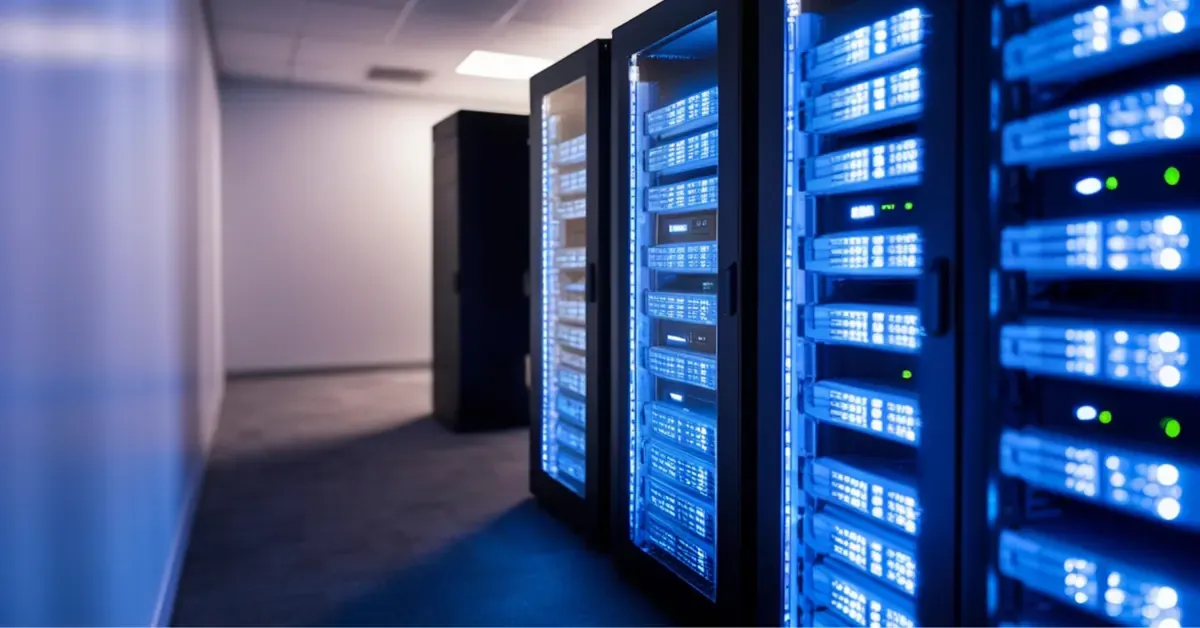
India can become a key APAC data hub if it leverages its large market, growing digital economy, and abundant renewable energy, according to Deloitte.
India has the potential to become a major data centre hub in the Asia Pacific (APAC) region. However, this will depend on how effectively it addresses power and grid-related challenges. It must also align renewable energy integration with its digital expansion, according to a Deloitte report released at the India Artificial Intelligence (AI) Impact Summit.
India accounts for nearly 20% of global data consumption. Yet, it hosts less than 5% of the world’s data centres. This gap highlights significant room for expansion. Debasish Mishra, Chief Growth Officer at Deloitte South Asia, called this a “rare structural opportunity”. He said India is well-positioned to become one of the world’s leading data centre hubs.
What Makes India Well-Positioned For Growth?
India is a good market for a data centre with growth because of:
-
Lower land acquisition and construction costs make large-scale data centre projects more financially viable than in many global hubs.
-
The Union Budget 2026-27 proposed a tax holiday until 2047 for foreign companies offering global cloud services from India. It also comes with preferential tax treatment to encourage data centre investments.
-
Asia Pacific is expected to attract around $800 billion in data centre investments by 2030, raising its global capacity share to 40% and making it the largest market outside North America. India is regarded as a great competitor to capture a large share of this growth.
-
It is estimated that India will continue to increase its installed data centre capacity to approximately 1.5 GW in 2025, which will increase to 8-10 GW by 2030, and this is mainly because of the demand for AI.
All these structural capabilities make India a top candidate to win a large portion of the next generation of global data centres.
What Are The Key Challenges?
Some of the challenges that can hinder the path of this growth are:
1. Increasing Power Requirement Of AI Growth
The utilisation of electricity is expected to increase exponentially due to the development of AI.
The rise of AI-related data centres can potentially push an additional 40-45 terawatt hours (TWh) of power by 2030, as compared to 10-15 TWh in 2024.
This would raise the sector’s share of national electricity consumption from about 0.8% to 2.5–3%.
AI-focused racks consume 10–15 times as much power as traditional racks. This greatly increases the general energy demands.
2. Risk Of Supply Gaps And Grid Pressure
Although India benefits from relatively low electricity costs and a modern grid, rapid capacity addition could create supply gaps.
This may happen if the generation and transmission infrastructure do not expand at the same pace.
Large cities like Maharashtra, Tamil Nadu, Uttar Pradesh, Karnataka, Telangana and Andhra Pradesh may experience an additional 2-3 GW of peak demand in 2030.
This equals 5–20% of their current peak load and could strain state grids.
3. Structural And Regulatory Bottlenecks
The power generation is not scaling in line with data centre growth. The stability of the grids and the lack of substations' capacity in rapidly developing corridors are issues.
The bottlenecks are that the upgrades of the transmission usually require more time compared to the renewable energy projects.
Regulatory differences across states in renewable banking rules, tariffs and incentives add uncertainty for operators.
There is also no unified national framework to support the integration of renewable energy into data centres.
Since data centres require uninterrupted power with minimal transmission losses, strengthening grid readiness is critical for sustainable expansion.
What Are The Possible Solutions?
To address these challenges, Deloitte recommends the following solutions based on the report of the AI Summit:
-
Accelerating renewable integration through solar-wind hybrid models with storage for round-the-clock reliability,
-
Expanding long-term green power purchase agreements (PPAs), group captive and captive renewable models.
-
Upgrading transmission networks and expanding high-capacity substations near growth clusters.
-
Creating power-ready Data Centre Economic Zones with pre-built substations and standardised grid timelines.
-
Standardising renewable banking policies across states.
-
Using AI to shift non-urgent computing tasks to periods of high renewable availability.
-
Promoting decentralised renewable models with co-located solar and storage.
According to Mishra, with the right policy alignment and infrastructure development, India could position itself at the centre of sustainable AI-driven digital growth.
Also Read - Can AI Be Left To Billionaires? UN Pushes $3 Billion Fund For Access
What Does This Mean For Investors?
To investors, the push of India into a major hub of APAC data centres can be a structural growth opportunity over the long term with respect to AI, cloud computing and digital infrastructure. The estimated capacity and electricity demand increase imply that capital expenditure might continue throughout data centres, renewables, transmission networks, storage and power equipment.
However, this may not be a uniform opportunity. The returns will be strongly related to the execution strength, access to the good green power and clarity of the state-level policy. Companies with proven infrastructure delivery capability and renewable integration strategies may be better positioned to benefit.
At the same time, delays in grid upgrades or regulatory alignment could slow project rollouts. Hence, close monitoring of policy support, power readiness and capital deployment trends remains important taking exposure.
Sources
Business Standard
Business Line
Kotak Neo News Desk is a team of enthusiastic market observers backed by Kotak’s 30+ years of legacy, working round the clock to bring the latest news about equities, IPOs, corporate developments, commodities, and economic trends from the financial world.
This article is for informational purposes only and does not constitute financial advice. It is not produced by the desk of the Kotak Securities Research Team, nor is it a report published by the Kotak Securities Research Team. The information presented is compiled from several secondary sources available on the internet and may change over time. Investors should conduct their own research and consult with financial professionals before making any investment decisions. Read the full disclaimer here.
Investments in the securities market are subject to market risks, read all the related documents carefully before investing. Brokerage will not exceed SEBI prescribed limit. The securities are quoted as an example and not as a recommendation. SEBI Registration No-INZ000200137 Member Id NSE-08081; BSE-673; MSE-1024, MCX-56285, NCDEX-1262.
Kotak News Desk brings you latest updates, expert insights, and market-ready ideas - helping you stay informed and invest smarter.
Connect on: Linkedin
0 people liked this article.