India and Canada Seal C$2.6 Billion Uranium Deal, Sign Critical Minerals MoU
- By Kotak News Desk
- 02 Mar 2026 at 5:35 PM IST
- Market News
- 4m
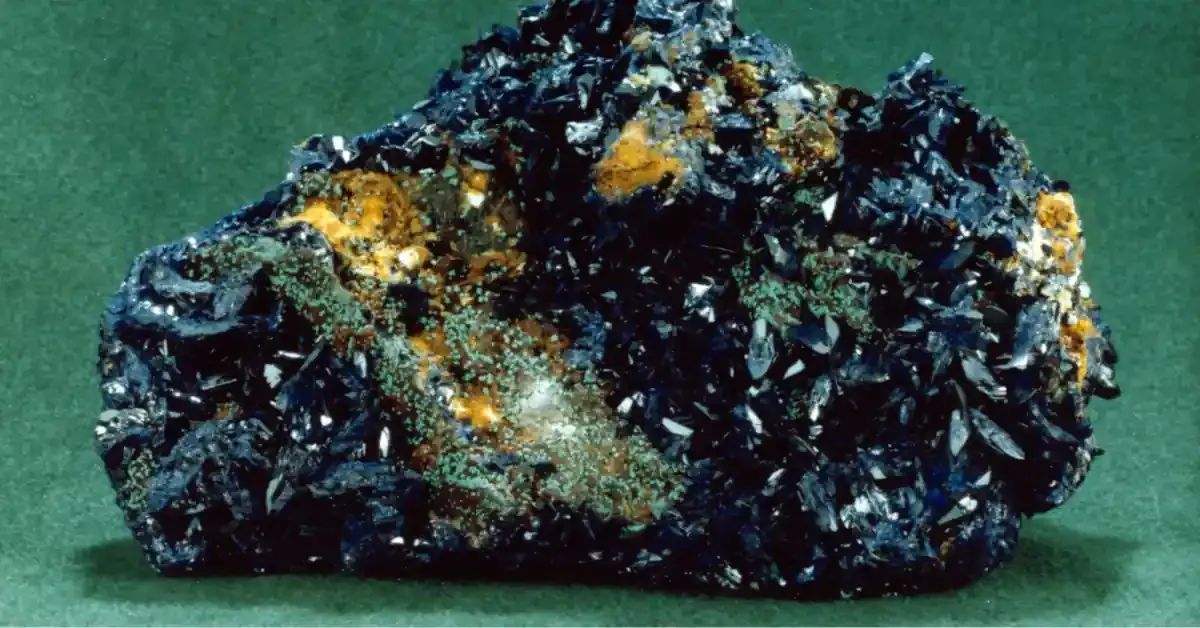
India and Canada signed a critical minerals MoU and concluded a C$2.6 billion long-term uranium supply agreement during Canadian PM Mark Carney’s visit to New Delhi. The deals support India’s nuclear expansion plans.
India and Canada on Monday signed a Memorandum of Understanding (MoU) on critical minerals cooperation and concluded a long-term uranium supply agreement during Canadian Prime Minister Mark Carney’s first official visit to India. The agreements were finalised in New Delhi in the presence of Prime Minister Narendra Modi.
Uranium Deal Anchors Energy Reset
The uranium pact is positioned as a central pillar of renewed energy cooperation between the two countries. Canadian uranium producer Cameco Corp. signed a C$2.6 billion ($1.9 billion) agreement to supply 22 million pounds (about 11,000 tonnes) of uranium to India between 2027 and 2035, according to a statement from the Canadian Prime Minister’s Office.
The deal supports India’s plan to expand nuclear generation capacity to 100 gigawatts by 2047, up from its current installed capacity of 8.8 gigawatts, which accounts for less than 2% of total power capacity. With domestic uranium reserves limited, long-term import arrangements are viewed as essential for scaling nuclear output.
Nuclear cooperation between India and Canada dates back to the 1950s. It was disrupted after India’s 1974 nuclear test, resumed under the post-2008 civil nuclear framework, and formalised through a bilateral pact in 2010. An earlier uranium supply agreement signed in 2015 has since expired.
Canada is the world’s second-largest uranium producer, accounting for roughly 13–15% of global output, and exports the bulk of its production to the United States, Europe, and Asia.
Expanding Energy And Critical Minerals Cooperation
India and Canada signed an MoU on key minerals in addition to the uranium supply arrangement. The MoU is expected to make it easier for companies to get the materials they need to create renewable energy systems and advanced manufacturing facilities. The framework includes cooperation on exploration, processing, research, and getting private companies involved.
The two sides also agreed to deepen engagement across conventional and renewable energy segments, including:
-
Liquefied natural gas
-
Solar power
-
Green hydrogen
-
Energy storage
An India–Canada Renewable Energy and Storage Summit will be held later this year to advance clean energy partnerships.
In civil nuclear energy, the leaders said they would explore collaboration on small modular reactors and advanced reactor technologies. Canada also announced its decision to join the International Solar Alliance and the Global Biofuel Alliance, aligning more closely with India’s multilateral clean energy initiatives.
Technology, Trade, And Strategic Reset
Beyond the energy sector, the visit expanded into emerging technology and strategic cooperation.
The two governments committed to broadening collaboration in:
-
Artificial intelligence
-
Quantum computing
-
Supercomputing
-
Semiconductors
An initial pact under the Australia–Canada–India Technology and Innovation Partnership was signed to support AI development and deployment.
In the space sector, both countries agreed to connect startups and industry participants to encourage collaboration. HCL Technologies Ltd. announced plans to expand its Canadian operations, with potential workforce growth of 75% by 2030.
The visit signals that relations between the two countries are stabilising after diplomatic tensions in 2023. Both sides indicated that negotiations toward a Comprehensive Economic Partnership Agreement could conclude this year, with the aim of doubling bilateral trade by 2030.
Also Read - India Manufacturing Growth Hits Four-Month High In February
Investors’ Takeaway
The uranium supply agreement gives India a clear picture of how much fuel it will need for its nuclear expansion plans in the long term. The critical minerals MoU, on the other hand, increases collaboration in renewable energy and cutting-edge technology. For investors, the deals show that India and Canada are getting closer in the areas of nuclear energy, renewable energy, strategic minerals, and high-tech. Over the next ten years, these changes could affect energy security, supply chains, and industrial investment.
Source:
Money Control

Since its incorporation on 20 July 1994, Kotak Neo has grown into one of India’s most trusted brokerage houses - backed by over 30 years of expertise across stocks, funds, IPOs, and full-service investing.
With a pan-India footprint of 145+ branches, 1000+ franchises and presence across 310+ cities, Kotak Neo serves 5 million+ customers nationwide.
From equities and IPOs to mutual funds and derivatives, Kotak offers comprehensive, research-backed investment solutions - simplifying wealth management for retail and institutional clients alike.
Kotak News Desk brings you latest updates, expert insights, and market-ready ideas - helping you stay informed and invest smarter.
Connect on: Linkedin
0 people liked this article.