Will Geopolitical Risks Keep Gold & Silver Prices Afloat?
- By Kotak News Desk
- 19 Feb 2026 at 4:54 PM IST
- Market News
- 4 min read
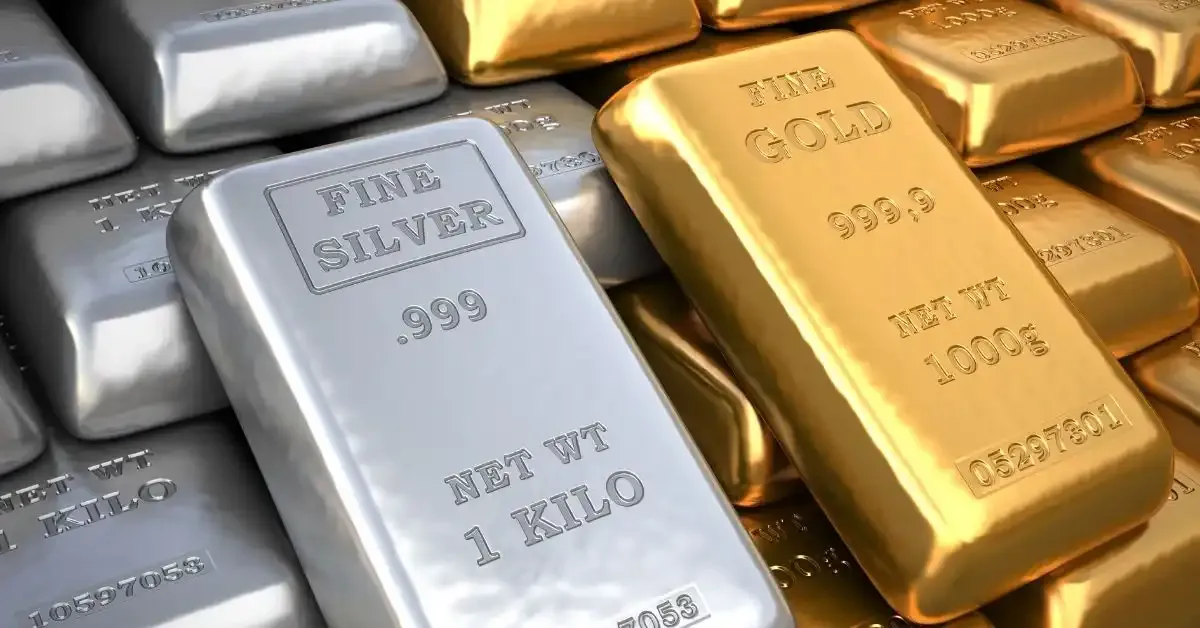
Gold and silver prices remain stable as markets weigh escalating US-Iran tensions against Federal Reserve policy uncertainty. Read how the geopolitical risks, a strong dollar and hawkish central bank signals impact safe haven metals prices.
On 19 February 2026, the Multi Commodity Exchange of India Ltd. (MCX) Gold futures for April delivery were quoted lower by ₹271 (0.14%), settling at ₹1,55,544/10 grams. Silver futures for March delivery followed suit. March delivery silver futures dropped ₹8,166 (0.33%), to ₹2,43,452/kg. Globally, spot gold fell 0.4% to $4,961.57/ounce, and spot silver slipped 0.5% to $76.83/ounce.
Interestingly, both MCX and the National Stock Exchange (NSE) announced the withdrawal of additional margins, to be effective from 19 February 2026. These were specifically 3% for gold and 7% for silver. Investors seem to be balancing the "safe haven" demand triggered by a geopolitical crisis against the "opportunity cost" of holding non-yielding assets in a high-interest-rate environment.
Now, an important question for the investors is: what is leading to the sideways movement in precious metals?
How Geopolitical Uncertainties Impact Gold & Silver Prices?
In commodities, price volatility is mainly driven by "geopolitics." Currently, the market is closely monitoring the escalating friction between the United States and Iran. Here is how the geopolitical uncertainties impact gold and silver prices.
Prolonged Campaign - Any potential strike between the US and Iran could turn into a prolonged campaign. For investors, this can create a "risk-off" environment. Meaning, there can be a period where investors flee from volatile assets like stocks. As a result, they move towards stable assets that have historically held their value during wartime or civil unrest.
Seeking Shelter In Hard Assets - Global investors are also witnessing a stalemate in Eastern Europe. As per recent reports, the peace talks between Russia and Ukraine were concluded in Geneva without a breakthrough. Investors also seem concerned about the stability of energy infrastructure. When diplomacy fails, the market's first instinct is to seek shelter in hard assets (gold/silver).
Inverse Relation Between US Dollar & Gold/Silver - Globally, gold and silver are denominated in dollars. So, a stronger dollar can make these metals more expensive for holders of other currencies like the Rupee. This inverse relationship can act as a natural brake on bullion price rallies.
Bullion Trap - The lack of progress in international geopolitical negotiations could lead to a "bullion trap." Meaning, gold/silver prices spike on headlines only to retreat as the dollar gains strength.
Tug-Of-War - Globally, traders seem to be currently navigating a "tug-of-war." Meaning, every headline regarding Middle East tensions seems to be immediately countered by data showing a resilient US economy.
All these factors have resulted in the current state where silver and gold rates are waiting for a definitive market trigger to break the deadlock.
How Are Safe Havens Challenged By The FOMC Stance?
Precious metals like gold and silver have earned the title of "safe haven," because they lack credit risk. Meaning, their value is not connected with the health of a specific government or corporation.
The recent minutes from the Federal Open Market Committee (FOMC) meeting have provided a "hawkish" signal to the markets. A "hawkish" stance means the central bank is more concerned about fighting inflation than stimulating growth. Such an approach can usually lead to higher interest rates.
Gold and silver do not pay monthly interest or dividends. So, holding them can become more "expensive" for an investor. They look at the “opportunity cost” where they could instead put their money into government bonds that offer a high and fixed yield.
When the Fed signals that it might raise or hold rates steady, the "opportunity cost" of holding gold rises. This could cause some investors to shift their investments back into the dollar. Currently, this is why we could be witnessing the "safe haven" demand being capped.
Also Read - MCX Gold Down ₹1,000; Silver Slips 3%
Investor Takeaway
This margin withdrawal move is intended to provide relief to clearing members and improve liquidity in the derivatives segment. However, the underlying market sentiment is fragile.
On one side, we have the "safe haven" demand driven by global instability and diplomatic failures. On the other hand, we have a "hawkish" central bank and a resilient dollar capping the upside. It would be interesting to observe the bullion price movements in the coming days as the market balances these two aspects.
Source:
Economic Times
FX Street
Kotak Neo News Desk is a team of enthusiastic market observers backed by Kotak’s 30+ years of legacy, working round the clock to bring the latest news about equities, IPOs, corporate developments, commodities, and economic trends from the financial world.
This article is for informational purposes only and does not constitute financial advice. It is not produced by the desk of the Kotak Securities Research Team, nor is it a report published by the Kotak Securities Research Team. The information presented is compiled from several secondary sources available on the internet and may change over time. Investors should conduct their own research and consult with financial professionals before making any investment decisions. Read the full disclaimer here.
Investments in securities market are subject to market risks, read all the related documents carefully before investing. Brokerage will not exceed SEBI prescribed limit. The securities are quoted as an example and not as a recommendation. SEBI Registration No-INZ000200137 Member Id NSE-08081; BSE-673; MSE-1024, MCX-56285, NCDEX-1262

Kotak News Desk brings you latest updates, expert insights, and market-ready ideas - helping you stay informed and invest smarter.
Connect on: Linkedin
0 people liked this article.