What is High-Frequency Trading?
- Updated: 22 May 2026, 5:11 PM IST
- | 4 min
- 5,151
 Add Preferred News Source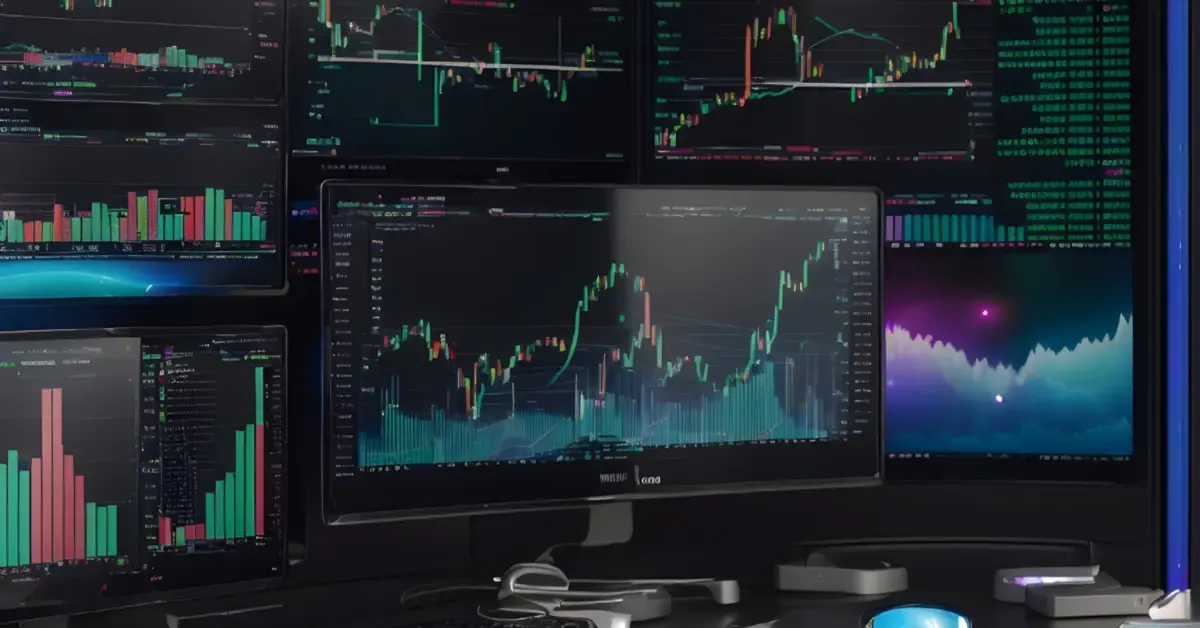
In high-frequency trading (HFT), trades are executed at high speeds, and a large number of transactions are executed in a short time frame. Specialised high-performance computing systems are used to execute trades quickly, and due to their complexity, it is usually used by large institutional investors like hedge funds and investment banks.
In HFT, complex algorithms analyse individual stocks to spot emerging trends in milliseconds. If the analysis finds a trigger, hundreds of buy orders will be sent out in seconds.
Key Features Of High-Frequency Trading
The main quality that defines HFT is speed. The speed, however, depends on several features adding value in the background.
-
Execution occurs nearly immediately, with orders being placed in microseconds or milliseconds as prices fluctuate.
-
Once the rules are set, manual order placement isn't needed. The software automatically reacts to market changes, executing trades when the market moves as expected.
-
A single trading opportunity can easily spawn multiple orders, particularly when minor price discrepancies persist throughout the day.
-
Trades often have a fleeting existence, with certain positions closing in a matter of seconds.
What Is Algorithmic Trading?
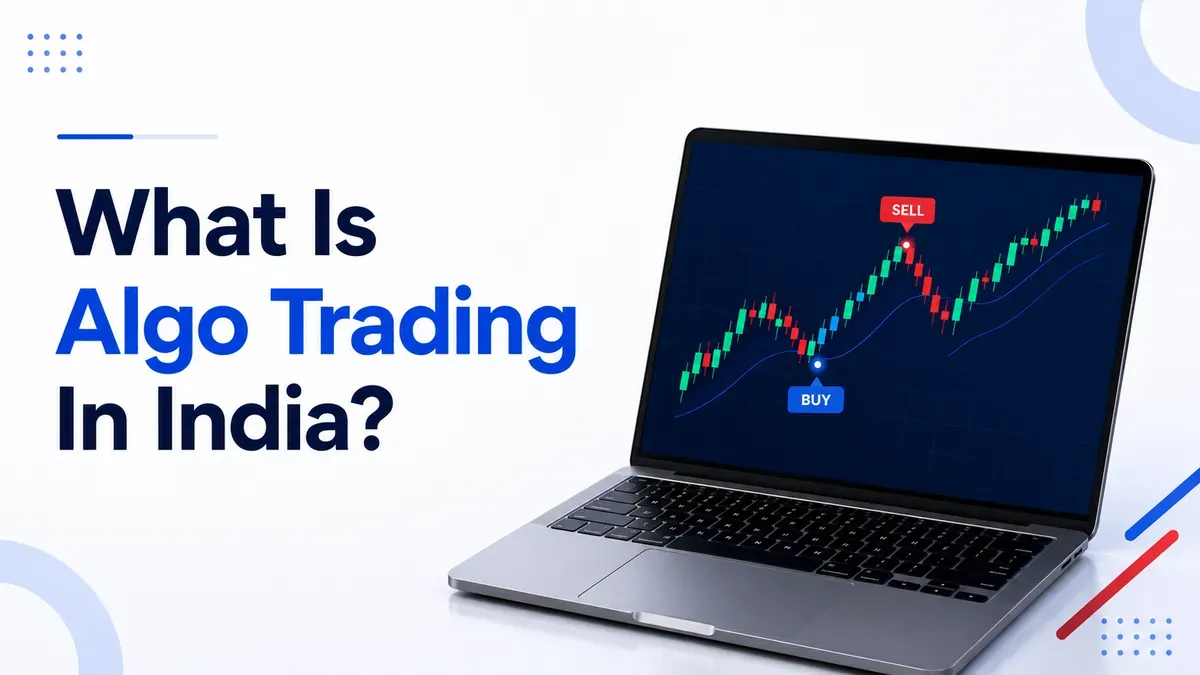
Algorithmic trading involves using pre-programmed trading instructions to execute trading orders quickly in the financial market. Traders and investors use trading software to feed instructions based on time, volume, and price. As soon as the set instructions trigger in the market, the trading software executes the investor's orders.
The main purpose of algorithmic trading is to execute a large number of high-volume trades that would otherwise be impossible for humans to execute. This trading is commonly used by mutual funds, hedge funds, insurance companies, banks, etc. Algorithmic trading allows investors to make more trades in less time without being affected by human emotions.
How Does High-Frequency Trading Work?
It is fairly simple to understand how HFT works. The more trades traders do to capture every small price difference, the higher their profits. For someone engaged in HFT, even extremely small price fluctuations make the trade profitable.
A quantitative model determines all portfolio allocation decisions. Traders feed models specific information, and their success depends on their ability to process huge amounts of data, which is impossible for human investors.
High-frequency traders compete by executing the most trades in the shortest amount of time. Those who succeed in achieving that objective make the most money.
How Fast Is A High-Frequency Trade?
A high-frequency trade may take only microseconds from start to finish. During that time, the system watches live price movements, and if a small gap appears that matches the trading setup, the order is pushed through at once.
From spotting the signal to executing trades at the exchange, the whole process happens so quickly to avoid even the tiniest of delays, since they can have a significant impact on profits.
How Does High-Frequency Trading Differ from Algorithmic Trading?
High-Frequency Trading is a type of algorithmic trading built around speed and high trade volume. The main difference is in how quickly trades are executed. Algorithmic trading can use slower strategies, while high-frequency trading focuses on placing orders very quickly.
Scope | A broad category of automated trading strategies | A specialised type of algorithmic trading |
Speed | Can operate for seconds, minutes, or longer | Operates in microseconds or milliseconds |
Trade Volume | Moderate to high, depending on strategy | Extremely high volume within short intervals |
Holding Period | Can range from minutes to days | Usually held for a few seconds or less |
Infrastructure | Standard automated trading systems | Requires ultra-low latency infrastructure and co-located servers |
Users | Used by institutions and some advanced traders | Mostly used by large institutions and specialised firms |
High-Frequency Trading Vs. Traditional Trading: Key Differences
Execution Speed | Trades are executed in microseconds or milliseconds | Orders may take seconds, minutes, or longer |
Decision-Making | Driven by algorithms and preset instructions | Based on human judgment and market analysis |
Trade Volume | A very high number of trades in a short period | Fewer trades, often held longer |
Holding Period | Positions may last only seconds | Positions can be held for days, months, or years |
Infrastructure | Requires advanced technology and low-latency systems | Can be done through standard trading platforms |
Strategies For High-Frequency Trading
The following are some HFT strategies:
Market Making: It involves continuously placing buy and sell orders for a security to profit from the difference between bid and ask prices. Many high-frequency trading firms use automated systems to place large numbers of limit orders within milliseconds. Their goal is to capture small spreads repeatedly while helping maintain market liquidity.
Quote Stuffing: It involves buying and selling a lot of orders fast to create confusion in the market. Due to this confusion, the trading volume rises, giving high-frequency traders profitable trading opportunities that they use to start multiple trades.
Tick Trading: In tick trading, powerful computers watch the flow of quotes, and the market information embedded in the market data. In tick trading, one needs to look for when HFT traders are starting to place huge orders.
Statistical Arbitrage: It is a way to identify price differences between securities on different exchanges or markets. Statistical arbitrage is used in liquid markets like bonds, equities, currencies, futures, etc. An HFT strategy can also include traditional arbitrage strategies like interest rate parity.
Advantages Of High-Frequency Trading
HFT has the following advantages:
Quick Profits: By executing a lot of trades, high-frequency traders can make quick profits. Even if there are small price fluctuations, investors can make hefty profits using HFT strategies through the bid-ask spreads.
Increased Opportunities: High-frequency trading involves powerful computers and software that can scan and analyse multiple markets simultaneously. As a result, investors can find arbitrage opportunities and profit by buying on one exchange and quickly selling on the other.
Enhances Liquidity: HFT enhances liquidity in the market. By increasing competition and trade volume, HFT results in a decline in bid-ask spreads, resulting in more efficient prices. Additionally, as liquidity increases, the market becomes more transparent and flexible, making it less risky for other investors.
Human Error Is Reduced: With less direct human involvement, HFT may help reduce some execution errors seen in manual trading. When trading, humans are prone to making mistakes or entering or exiting at the wrong time. Moreover, humans are not capable of executing such a high volume of orders at such a rapid pace.
Disadvantages Of High-Frequency Trading
HFT trading has a few downsides. Some of these are:
Lack of Regulation: Since high-frequency trading involves complex algorithms and software, it is difficult to monitor and regulate. Scholars and finance professionals disagree about HFT, making it a controversial topic.
Replacement: The rise of HFT has reduced the role of traditional brokers, replacing many functions with algorithms. While this has improved scale and execution efficiency, it has also sparked debate about whether human judgment is essential, especially in situations where market context and qualitative factors matter.
One-Sided Profits: High-frequency trading is not possible for retail investors due to their lack of infrastructure. Due to this, only large companies with the required infrastructure can profit from the strategy, and retail investors lose out. Hence, the liquidity that arises is called 'ghost liquidity'.
Market Volatility: HFT can contribute to excessive market volatility. Algorithms can trigger massive buy or sell orders within milliseconds, which may result in sudden price swings and flash crashes, unsettling the broader market.
Risks Involved In High-Frequency Trading
Technological Failures: HFT systems rely on advanced software and infrastructure. Any glitch, coding error, or hardware failure can lead to instant and large-scale financial losses.
Amplified Market Volatility: The rapid pace of trade execution can exacerbate market swings, especially during periods of uncertainty, increasing the chances of flash crashes.
Over-Optimisation Risks: Algorithms may be optimised for historical data but may fail under live market conditions due to changing patterns or unforeseen scenarios.
Front-Running Concerns: HFT firms may exploit millisecond-level advantages to act ahead of other investors, raising questions about market fairness and integrity.
Regulatory Uncertainty: With growing scrutiny, regulatory changes could impose restrictions or compliance costs on HFT operations, impacting profitability.
Neglect of Long-Term Strategy: The focus on speed over substance can sideline sound investment principles, contributing to short-termism and potential systemic risks.
High Infrastructure Costs: Maintaining ultra-low latency systems is expensive, limiting access to large firms and excluding smaller players.
Ethics And Market Impact
HFT raises ethical concerns and questions about its impact on market integrity. While it adds liquidity, critics argue that the liquidity is often shallow and fleeting, which disappears in volatile times. HFT firms may also gain unfair advantages through access to privileged infrastructure, undermining the principle of a level playing field.
The focus on speed over value can distort true price discovery and promote near-term thinking in markets. Additionally, aggressive strategies like quote stuffing or spoofing can manipulate prices and mislead other investors, leading to trust issues and potential long-term harm to market efficiency.
Conclusion
High-frequency trading has become a key part of modern market structure, mainly because it speeds up execution and increases activity across different exchanges. While this offers advantages for companies with advanced technology, it also raises questions about fairness, market stability, and how markets behave.
For retail investors, the value lies less in using HFT directly and more in understanding how it influences price movement behind the scenes.
FAQs on High-Frequency Trading
Yes, high-frequency trading is legal in India and is regulated by the Securities and Exchange Board of India (SEBI). However, SEBI closely monitors such activity due to concerns around market manipulation, unfair access, and systemic risk. Firms must follow stringent rules related to co-location services, latency, and order-to-trade ratios.
Regulators like SEBI use surveillance systems that monitor order patterns, execution speeds, and trader behaviour. In India, there are also requirements like order-to-trade ratio limits, and periodic audits of algorithmic systems by exchanges or independent agencies.
Realistically, no. Retail investors typically lack access to the sophisticated infrastructure, high-speed data feeds, and co-location servers that are essential for HFT. The costs and technical complexity act as high entry barriers.
Latency refers to the delay between the moment market data is generated and when it is acted upon. In HFT, even microseconds of delay can affect profitability, so firms invest heavily in low-latency networks and servers located physically closer to exchange data centres.
Moving average (MA), Exponential moving average (EMA), Stochastic oscillator, and Moving average convergence divergence (MACD) are the best indicators for high-frequency trading.
The content in this blog is intended purely for educational purposes. Any securities or mutual funds referenced are illustrative in nature and do not constitute a recommendation or endorsement by Kotak Neo. Investors are encouraged to assess their own financial situation and seek professional advice before making any investment decisions. For compliance T&C and disclaimers, Visit https://www.kotakneo.com/disclaimer/
0 people liked this article.

Kotak Neo (Kotak Neo) is India's venerable stockbroking company with a rich legacy. It offers comprehensive investment services across asset classes, prioritising a technology-first approach for a seamless experience. Trusted by 5 million+ customers, it guides you toward financial success with ease of investment and speed of trade.
Note: The opinions expressed in this blog are personal viewpoints and should not be construed as recommendations.