What is Promoter Holding in a Company?
- Updated: 22 May 2026, 5:16 PM IST
- | 4 min read
- 1,015
 Add Preferred News Source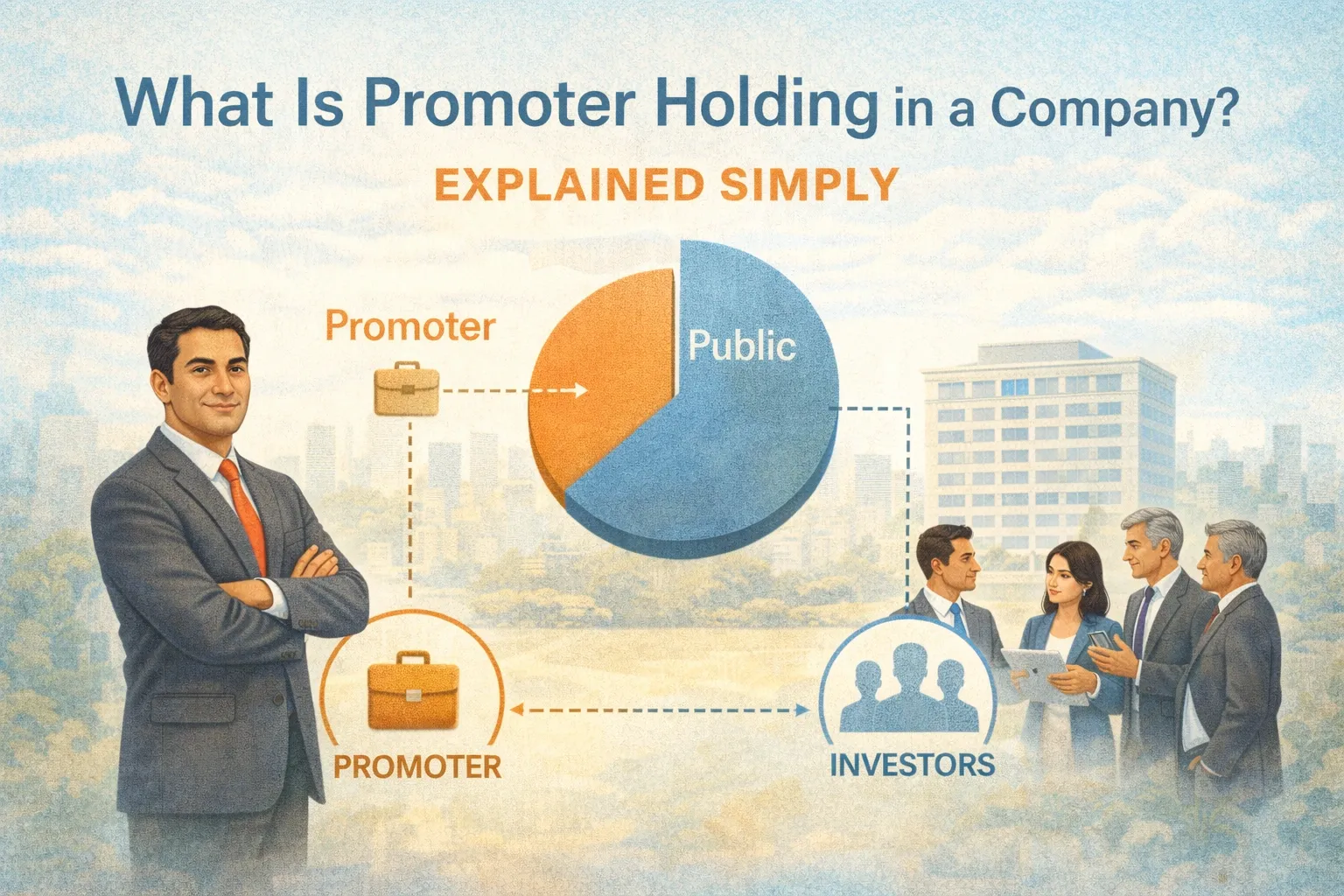
If you truly believed in your company’s future, how much of it would you sell when it goes public? This question looms in the background of the promoter holding. In the case of an IPO, promoters determine the extent of dilution that they desire as well as the retention. To investors, such a move can be more meaningful than profit projections or optimistic growth scenarios.
Holding promoters in large numbers can be an indicator of confidence and long-term commitment, whereas a steep decline in ownership can raise questions about control or motive. This is why promoter holding is so scrutinised during IPOs - it indicates how committed promoters are to the business, despite the invitation of public investors.
So, what is the promoter holding? Promoter holding will inform you of the percentage of the company that the founders and original backers will have after listing. The higher that number, the more it suggests that promoters are willing to stick around and share in the company’s fortunes (or risks) alongside you.
Why Promoter Holding Matters to Investors
Promoter holding is important to investors for various reasons, and it is not only about promoters controlling the boardroom.
Here’s why it’s important:
1. Indicator of Promoter Confidence
When promoters do not sell off a large percentage of their stakes in an IPO, it usually denotes that they believe in the long-term prospects of a company. A high holding can be a comfort to investors, as promoters tend to understand more about the business than any other party involved, including its strengths, risks, and the future of the business.
Unlike the US, where promoters typically hold around 5%, India’s market remains structurally skewed towards promoters, with average promoter ownership still close to 50%.
2. Alignment of Interests
High promotion holding implies that your interest as a stockholder could be more in line with that of the promoters. When promoters have an incentive to perform well in the long term, they tend to be perceived as more devoted to long-term growth as opposed to short-term interests.
3. Signal of Stability
Stable companies are those whose promoter holdings are either stable or high. Significant changes, be it expansion or even the recruitment of a new employee, can be indicative of a long-term plan and not short-term benefits.
But significantly high promoter holding also has its own drawbacks, especially where it restricts public float (shares on trade) or lowers liquidity.
4. Impact on Control and Corporate Decisions
High-ownership promoters can influence key decisions, such as the choice of management, the decision to acquire, or strategic priorities. This may be desirable when there is good governance, and undesirable when there are weak checks and balances.
5. Influence on IPO Valuation and Perception
Promoter holding is looked at by institutional investors, which are also likely to influence the price of an IPO. Greater promoter ownership can result in greater trust in management continuity, which helps justify the valuation.
Types of Promoter Holding
Promoter holding is not a single number- there are various types of holding shares based on the mode of holding or pledging shares. Being aware of these subtleties can provide more depth to your interpretation of the number.
Direct Holding – Shares Owned Directly by Promoters
Direct holding refers to the shares held directly by the promoters, that is, in their own name. This type of holding provides a direct picture of the extent of equity the founders hold without intermediaries.
The most open aspect of promoter holding is typically the direct shares. These are the founders' or members' personal participation in the promoter groups.
Indirect Holding – Shares Owned Through Group Companies or Trusts
The term indirect holding defines the shares owned by entities that are related to promoters, such as holding companies, trusts, or subsidiaries that belong to the promoter group. These shares are not owned in the personal name of the promoters, yet they are used in promoter holding.
Common Indirect holdings are those in which promoters employ separate entities in their operations or in taxation. They continue to be successfully controlled by promoters, but you must examine disclosures closely to observe the complete picture.
Pledged vs Unpledged Promoter Shares
The other key dimension is whether promoter shares are pledged or not.
-
Unpledged Shares: These are not bound by any security or the confidence of the promoters.
-
Pledged Shares: These are guaranteed as security to obtain loans or financing. A high share pledging percentage does not necessarily indicate trouble, but a high promoter pledging percentage will cause concern. Promoter pledging that exceeds 15-20 per cent of promoter holding is something many analysts advise looking at with caution because it could be an indicator of stress or leverage on the promoter side of the deal.
In extreme cases, some companies have even reported 100% of promoter shares pledged, which can pose a significant risk if obligations cannot be met.
Importance of Promoter Holding
1. Confidence of Long-Term Commitment
When promoters have a high holding percentage, it is an indication that they are long-term holders. This can be comforting in the face of market volatility or during strategic decision-making.
2. Better Governance Signal
The presence of high promoter skin-in-the-game is usually associated with improved governance behaviour, especially when the level of pledging is low, and promoters do not conduct regular offloading of shares.
3. Impact on Share Price and Volatility
Promoters buying and selling off holdings typically have an impact on the market sentiment and volatility of share prices.
E.g., it can cause sentiment in the market wherein investors would negatively react to promoters going so far as to reduce stake without clearly explained reasons.
On the other hand, promoters who add their stakes can be a good indication of confidence. At one market weak point, holdings in promoters of a few companies increased in a series, implying further faith in the business despite the external forces.
Changes in Promoter Holding
Purchaser holding is not fixed, but it varies with time due to various factors, and it is significant to monitor such variation among investors. The reasons are listed below:
1. Buybacks and Fresh Allocations
Promoters can accumulate their stake through direct acquisitions, rights issues, or buybacks. This is usually an indication of faith in the company’s future development.
2. Selling or Dilution at IPO
During an IPO, promoters usually dilute their shareholding to enable others to participate. The extent to which they remember what they have listed provides indications concerning confidence and future intentions.
3. Strategic Reductions
Promoters may sell in order to diversify, do estate planning, or pay down debts. Not all these moves are negative, but having reasons is central.
4. Monitoring Pledge Levels
Promoter pledging of shares (as a security to loans) may have an indirect impact on promoter holding and investor sentiment. An increase in the pledge percentage that is not clearly justified by business considerations could be a warning.
Monitoring these changes across several quarters might provide an idea of promoter confidence and behaviour.
How to Check Promoter Holding
Promoter holding is comparatively simple to check, and no special tools are required. Promoter holding information can be found in:
- On official stock exchange websites (NSE, BSE), in the disclosures of shareholding patterns.
- Financial websites such as Moneycontrol, Screener.in, or TickerTape.
- Shareholding patterns are released in quarterly or annual reports of the company.
- Investment applications that indicate the promoter and shareholders in the stock information area.
Look for two key numbers:
A. Total promoter holding (% of shares)
B. Pledged promoter shares (% pledged as loan collateral)
It is particularly helpful to track quarterly trends, which indicate whether promoters' confidence is increasing or decreasing.
Conclusion
Promoter holding can be considered as an extra percentage on the shareholding pattern of a company, but there is more to it than that. It displays confidence of the promoters, control, long-term intentions, and even risk exposure.
A holistic perspective of a company as an investor can be achieved when you consider promoter holding and core financials, growth indicators, and market trends. Promoter holding is a pointer to be observed, not in isolation, but as part of a larger picture, whether you are examining an IPO or a stock on a post-listing basis.
Sources:
Frequently Asked Questions
Promoters holding cannot be classified under a single safe figure applicable across all companies or industries. Investors are happy with a promoter holding of 20-30%, particularly when there is institutional interest. Some people prefer promoters with more than 50%, which implies good control and alignment with long-term objectives.
Not necessarily. Promoters may have low promoter holding, which implies that institutional and retail investors will have more shares, and this enhances liquidity. But it can also mean poor commitment or confidence by the promoters, depending on the situation.
Yes. Promoter pledging may be of concern when it is high and signifies financial stress or over-leverage. An increase in the pledging percentage has also been associated with stock price volatility; it is important to be aware of such a trend.
Absolutely. Promoter holding helps you assess the degree of confidence promoters have in the company's future, the extent of their control, and whether a change of ownership will affect the government or the stock price. To the retail investor, this background enhances investment decision-making.
The content in this blog is intended purely for educational purposes. Any securities or mutual funds referenced are illustrative in nature and do not constitute a recommendation or endorsement by Kotak Neo. Investors are encouraged to assess their own financial situation and seek professional advice before making any investment decisions. For compliance T&C and disclaimers, Visit https://www.kotakneo.com/disclaimer/
0 people liked this article.

Kotak Neo (Kotak Neo) is India's venerable stockbroking company with a rich legacy. It offers comprehensive investment services across asset classes, prioritising a technology-first approach for a seamless experience. Trusted by 5 million+ customers, it guides you toward financial success with ease of investment and speed of trade.
Note: The opinions expressed in this blog are personal viewpoints and should not be construed as recommendations.