Understanding Drawdown: Calculation & Risks
- Updated: 22 May 2026, 5:11 PM IST
- | 5 min read
- 3,121
 Add Preferred News Source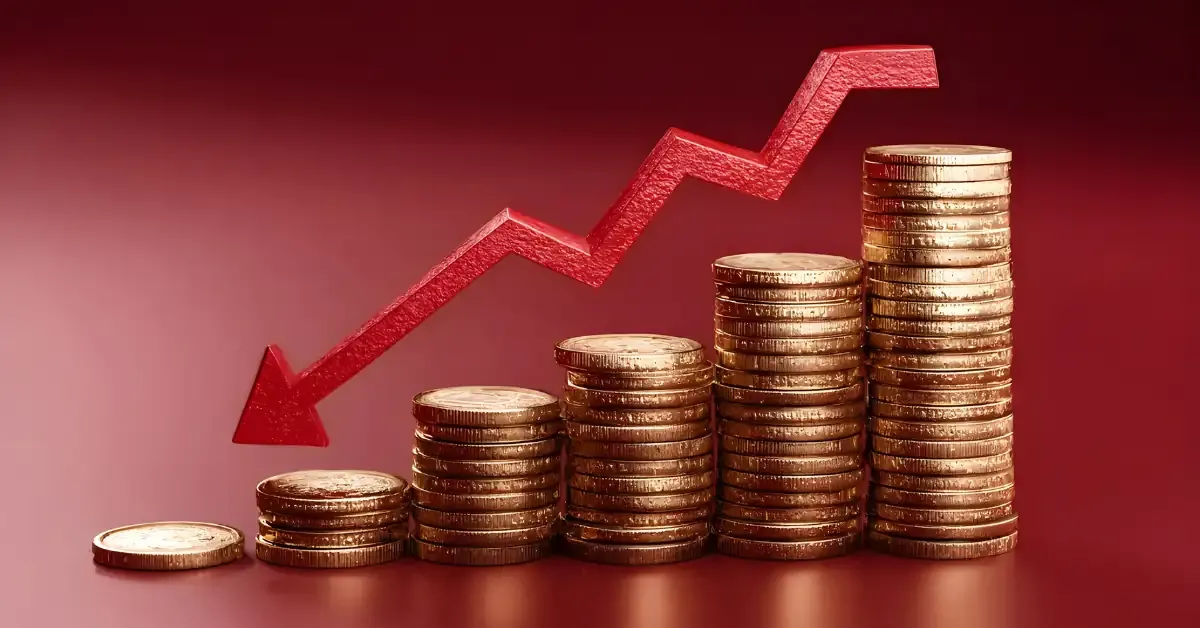
Key Highlights
-
Drawdown in trading is a crucial concept that measures the decline in the value of an investment or trading account from its peak to its lowest point.
-
It helps traders understand and manage risks effectively.
-
The risk is lower and the drawdown is lower, which suggests a more reliable investment.
-
The amount of time it takes to recover from a drawdown varies based on the asset and the market.
-
Understanding drawdown is essential for developing trading strategies, reducing losses, and making wise investing decisions.
-
It is a helpful tool for navigating the unpredictable trading environment.
Drawdown Meaning
When an investment declines from its top value, that drop is called drawdown. It compares the highest point to the lowest level reached over a period. The result shows how severe the setback actually is.
Drawdown is used to assess historical risk and monitor the performance of an investment over time. It can also be used to compare the performance of different funds or stocks. If an investment remains below its previous peak for a long period, it indicates that its value has not yet recovered, and the investor continues to face a notional loss.
To make drawdown clearer, think of this situation. You start with ₹2000 invested. At some point in the year, it climbs up to ₹2500. Then the market turns, and the value slips down sharply to ₹1500. That drop from the peak is what we measure as drawdown.
₹2500 − ₹1500 = ₹1000
This represents the absolute drawdown.
The drawdown percentage is calculated as:
(Highest value − Lowest value) ÷ Highest value × 100
So, in this case:
(₹2500 − ₹1500) ÷ ₹2500 × 100 = 40%
Key Characteristics of Drawdown
The key characteristics of drawdown for investors are as follows:
-
Understanding Investment Decline: Drawdown reflects how far value slips after a peak, tracing the fall to the lowest point in that cycle. The calculation simply compares the highest achieved level with the lowest level recorded before the next upward breakthrough.
-
Highlights Risk: Drawdown measures how much value has been erased after a peak. When those drops are large, it’s usually a sign that the investment behaves unpredictably.
-
Time-Based View: The length of a drawdown varies widely depending on how you observe it. It could appear brief when viewed daily, yet seem prolonged over a yearly scale. Some resolve fast. Others don’t.
Types of Drawdown
There are four types of drawdowns with different insights into investment performance.
-
Maximum Drawdown - It captures the largest drop in value an investment experiences over a period. The focus is on the worst decline, not average performance. For those putting their money into something, it's a useful tool for gauging the level of risk associated with a fund or portfolio.
-
Absolute Drawdown - It looks at how far your investment slips beneath where it began. Not the peaks, not the recoveries. Just that drop below your starting capital. Any gains above the original amount are left out of the picture entirely. What matters here is simple: did your money ever fall under what you first put in, and by how much.
-
Relative Drawdown - It gauges the distance from a peak to the subsequent low. It's expressed as a percentage, not in absolute numbers. This makes it easier to compare different cases without bias. And beyond comparison, it reveals how deep the fall really went when viewed against the peak.
-
Average Drawdown - All declines over a period are taken into account and averaged out. Some are small, others larger. Together, they create a picture of what “normal” downside looks like. It offers perspective on consistency, not just extremes.
Drawdown Calculation
The formula to calculate drawdown in percentage terms is as follows:
Percentage Drawdown = ((Highest Peak Value - Lowest Trough Value) / Highest Peak Value)) * 100
Here, the terms are defined as:
Lowest Trough Value (Pmin): This refers to the historically lowest price point reached by the stock.
Highest Peak Value (Pmax): This represents the highest point the stock price has reached. Drawdowns signify a reduction in a trader's capital account, specifically denoting the shift in the value of their financial portfolio from its highest point to a specific low point.
Why Drawdown Matter?
Drawdowns matter more than most people realise. They force you to confront losses early and get mentally ready for rough patches in the market. With a clear plan in place, your decisions improve, and your portfolio tends to stay under better control over time.
An 80% win rate might sound strong, but it doesn’t mean every trade will make money. Some will fail. That’s unavoidable. And that’s exactly why drawdown matters more than most people think.
Every trader faces drawdowns at some point. It’s just part of the game. When you learn to control their impact, the risk of heavy losses drops, and your investment approach becomes far more resilient.
Drawdown Essentials
The following are some crucial details about the drawdowns:
-
In the stock market, drawdown can be expressed as a percentage or as a monetary number.
-
It keeps tabs on the percentage of harm or impact caused by a drawdown.
-
The risk that your trading account is exposed to can be tracked.
-
A drawdown risk can be expressed as a drawdown of 20%, which translates to a drawdown risk of 25%; if the proportion is near 50%, the drawdown risk is 100%.
Drawdown Across Various Investment Options
Drawdown can occur across various investment options. This will help you understand the right investment options based on their risk tolerance and goals.
-
Stocks- Stock prices tend to fall more frequently because the stock market is inherently volatile. However, over the long term, many fundamentally strong stocks and indices have historically recovered from market declines, although recovery is not guaranteed for every stock.
-
Real Estate - Compared to equities, property markets rarely see sharp, frequent declines. The pace of transactions slows everything down. But when a downturn finally arrives, it often lingers. And in tougher economic climates (higher borrowing costs or weakened buyer interest) the impact can be deep.
-
Bonds - Investments in bonds can be more stable than stocks. Bonds have smaller drawdowns, though factors such as changes in interest rates or credit risk can affect their prices.
-
Crypto - Cryptocurrency can be highly volatile and can experience large, sudden drawdowns. Its prices depend heavily on the news, speculation, and investor sentiment. Investors should be ready for a big price swing with higher risk.
Way to Reduce or Manage Drawdown
You can use the following strategies to reduce or manage drawdown during the investments.
-
Diversification and Asset Allocation - You must invest across different asset classes, such as equities, bonds, and cash. This can reduce the risk of loss in any one investment. You can also divide your money based on your risk tolerance and financial goals. A balanced allocation can also help manage loss during market downturns.
-
Use Proper Position Sizing - Don’t go all in on one trade. That’s a quick way to burn capital. Most experienced investors stick to risking just 1–2% per position to keep losses under control.
-
Stop Loss Orders - A stop-loss order is designed to sell once prices fall to a specified mark. Its purpose is protection, cutting losses before they grow. Yet in volatile markets, prices can move too quickly, leading to execution at levels below what was anticipated.
-
Review Portfolio Regularly- Checking your portfolio regularly can help you ensure your goals for the future. This allows for making necessary changes when needed.
Risks Associated with Drawdown
Here are some of the risks associated with drawdown:
Understanding Drawdown Significance:
Understanding what drawdown involves gives you a critical understanding of the dangers connected to your investments. It gives a precise picture of future value declines in your portfolio.
Enhancing Trading Strategy:
You can improve your trading success by modifying your strategy with the help of drawdown analysis. Making informed investing decisions results in reduced losses in the long run.
Predicting Future Market Movements:
By using drawdown analysis, you can forecast price changes and maximize your investment returns.This insight is extremely helpful in reducing the effects of market turbulence or asset depreciation.
Drawdown and Risk Assessment:
An asset's lower drawdown value denotes lower risk, making it a more reliable investment option. In contrast, a higher drawdown figure denotes a higher level of risk, which may result in higher returns for investors who are willing to take on more risk.
Tailoring Investment Preferences:
For investors that place a higher importance on stability than larger profits, selecting an asset with a low drawdown value makes sense.Investors looking for possibly better returns, albeit with higher risk, could pick an asset with a higher drawdown value.
Consideration of Recovery Time:
When analyzing drawdown, one must also consider how long it could take to recover from a particular situation.Depending on the type of asset, the length of the recovery might range from protracted durations to a quick comeback that exceeds previous peak prices.
Conclusion
The secret to mastering stock market trading is patience, education, and experience, all of which you should possess. The market is a highly volatile environment where bull and bear markets exist. It is crucial for them to have a solid understanding of these strategy formulas and the meaning of drawdown as a novice investor in the stock market. The secret to developing and making your investment soar and shine like the sun is knowing where your financial portfolio is and where it will go in the future. These techniques can be used in several asset classes and will help you trade stocks more successfully.
FAQs
Drawdown measures the decline in the value of an investment from its peak to its trough. To interpret a drawdown, you can look at the size of the drawdown. A larger drawdown indicates a greater loss and higher risk, while a smaller drawdown suggests lower risk and more stability.
A lower maximum drawdown is moreover better than a higher one because it means the investment has experienced only a smaller loss during its peak value. But the higher one shows historical losses with higher risk. You can compare these two drawdowns to determine which investment is better during a market decline.
A good maximum drawdown depends on the type of investment and the risk tolerance. Different investment strategies experience different levels of decline during a market fall. Like conservative investors, take on risks of up to 10-15%. But aggressive investors are willing to take up to 30% of risk in their investment portfolio.
The content in this blog is intended purely for educational purposes. Any securities or mutual funds referenced are illustrative in nature and do not constitute a recommendation or endorsement by Kotak Neo. Investors are encouraged to assess their own financial situation and seek professional advice before making any investment decisions. For compliance T&C and disclaimers, Visit https://www.kotakneo.com/disclaimer/
0 people liked this article.

Kotak Neo (Kotak Neo) is India's venerable stockbroking company with a rich legacy. It offers comprehensive investment services across asset classes, prioritising a technology-first approach for a seamless experience. Trusted by 5 million+ customers, it guides you toward financial success with ease of investment and speed of trade.
Note: The opinions expressed in this blog are personal viewpoints and should not be construed as recommendations.