What Is a CDSL Demat Account? A Complete Guide for Investors
- 4 min read
- 1,035
- Published 03 Feb 2026

Most people open a Demat account because they have to, not because they fully understand it. You want to buy a stock, the broker asks for a Demat account, and the process moves on. Few beginners stop to ask where their shares actually sit once the trade is done.
That question matters more than it seems. The answer, in most cases, leads straight to CDSL.
Understanding CDSL
India has a simple setup for holding securities. There are only two depositories authorised to store them in electronic form. CDSL is one of them.
A depository does not help you buy or sell shares. It does not give tips or execute trades. Its role is quieter but more important, keeping a record of who owns what.
When you see shares reflected in your Demat account, they are recorded in CDSL’s system, not parked with the broker. The broker is just the middle layer you interact with.
What Is a CDSL Demat Account?
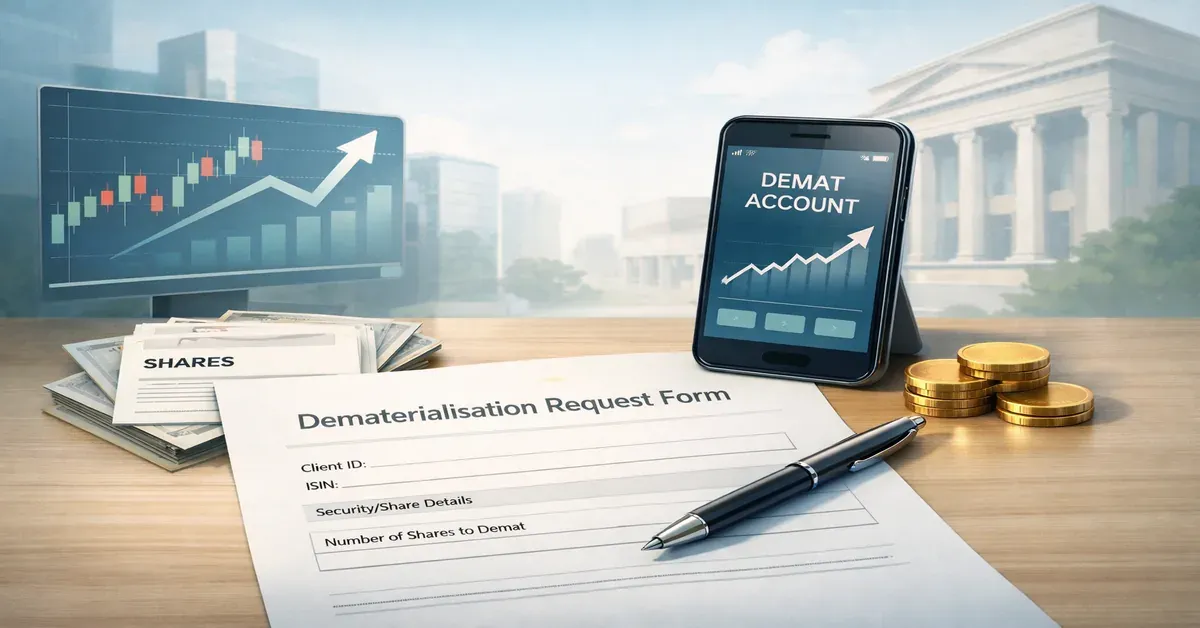
If you have ever paused to ask what a CDSL Demat account actually is, think of it as the place where your investments end up after a trade.
It is simply where your investments land once a trade goes through. Shares come in when you buy, go out when you sell, and everything in between happens without paperwork or physical certificates.
You do not open this account with CDSL directly. You open it through a broker or financial institution that is registered as a Depository Participant. For the investor, the experience feels broker-led, but the holding itself remains with CDSL.
Features of a CDSL Demat Account
The value of a CDSL Demat account becomes clearer when you look at how it simplifies ownership, access, and day-to-day management of investments.
Safe and Paperless Securities Holding
The shift from paper certificates to electronic holding removed several risks in one stroke. No misplaced documents. No forged transfers. No signature disputes years later.
Everything exists as an electronic record backed by regulation and audit trails.
Access to Stocks, Bonds, ETFs, and Mutual Funds
A Demat account is not limited to equity shares. Over time, investors usually end up holding more than just stocks.
Bonds, ETFs, and specific mutual fund units can all be held in the same CDSL Demat account. This avoids the need to track investments across different platforms and statements.
Online Tracking of Portfolio and Transactions
Your holdings and transactions are visible online at all times. In addition to your broker’s app, CDSL also offers direct access to view balances and statements.
This becomes useful if you ever change brokers or simply want an independent view of your holdings.
Fast Transfer and Settlement of Securities
Settlement today is largely invisible to the investor, and that is a good thing. Shares bought are credited automatically. Shares sold are debited automatically.
This speed and reliability are possible only because everything runs through a central depository system.
How to Open a CDSL Demat Account
The process starts with selecting a CDSL-registered broker. Most investors open a trading and a Demat account together, even though they view them as one product.
You submit basic documents like PAN, address proof, and bank details. Verification is usually done online through video or Aadhaar-based checks.
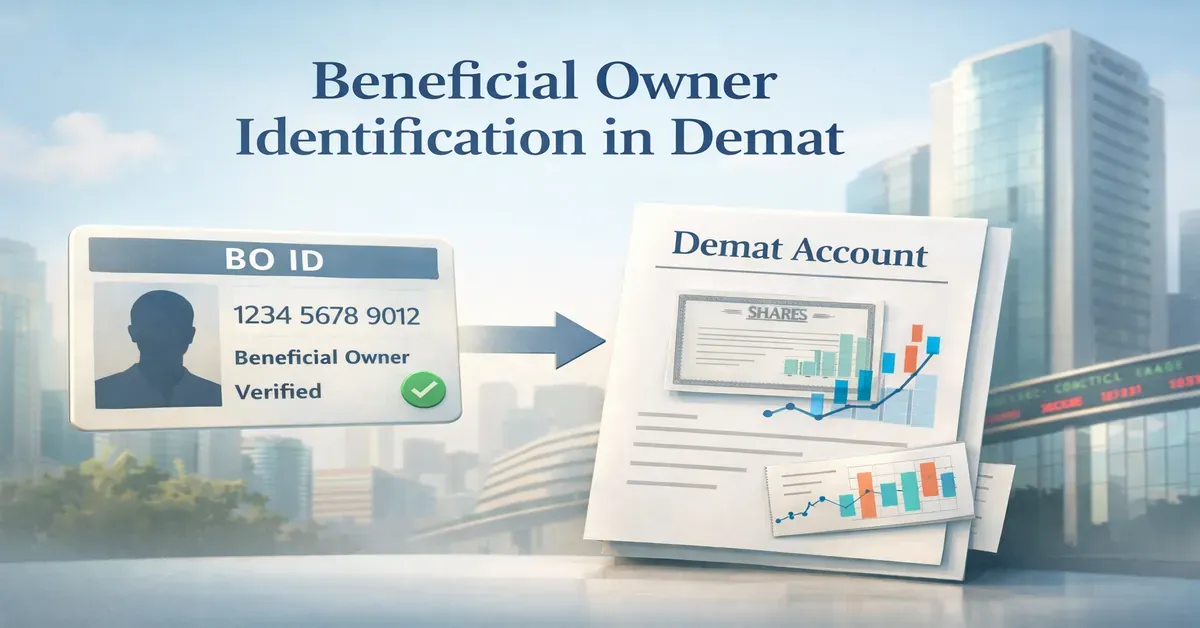
Once approved, you receive a 16-digit Beneficial Owner ID. This number identifies your Demat account within the CDSL system.
Benefits of a CDSL Demat Account
The main benefit is simplicity. Investments stay organised, up to date, and easy to track.
Corporate actions happen in the background. Dividends are credited to your bank account. Bonus shares appear automatically. There is no form-filling or follow-up required from the investor.
Over the long term, a CDSL Demat account also makes tax reporting and portfolio reviews far easier than dealing with scattered paperwork.
Charges and Fees
While CDSL maintains the infrastructure, the actual costs an investor pays depend mainly on the broker and how the account is used.
Account Opening Charges
Whether you pay to open a Demat account depends on the broker. Some charge nothing. Others charge a small one-time fee. CDSL itself does not set this price.
Annual Maintenance Fees (AMC)
Most brokers charge an annual maintenance fee to keep the Demat account active. This covers infrastructure and servicing. The amount varies and may be waived under specific plans.
Transaction Charges
Transaction charges apply when securities are sold and debited from the Demat account. These are typically small, but are worth knowing if you trade frequently.
Comparison With NSDL Account Fees
From an investor’s point of view, there is little to separate CDSL and NSDL in terms of costs. The depository rarely affects your payment. Broker pricing plays a much bigger role.
Conclusion
For most investors, a CDSL Demat account only becomes visible when something changes. A broker is switched, a statement is needed, or a holding has to be verified outside an app. Until then, it sits in the background, doing the routine work of recording ownership and movements.
Knowing where that record lives helps clear up a common misunderstanding. The broker may be the interface, but the holdings themselves are maintained at the depository level. That distinction tends to matter more with time, especially as portfolios grow and activity becomes less straightforward.
Sources:
FAQs
0 people liked this article.