Tata's Big Split: What Is The New CV Stock Worth?
- By Kotak Neo Team
- 02 Jan 2026 at 1:29 PM IST
- Market News
- 4 min read
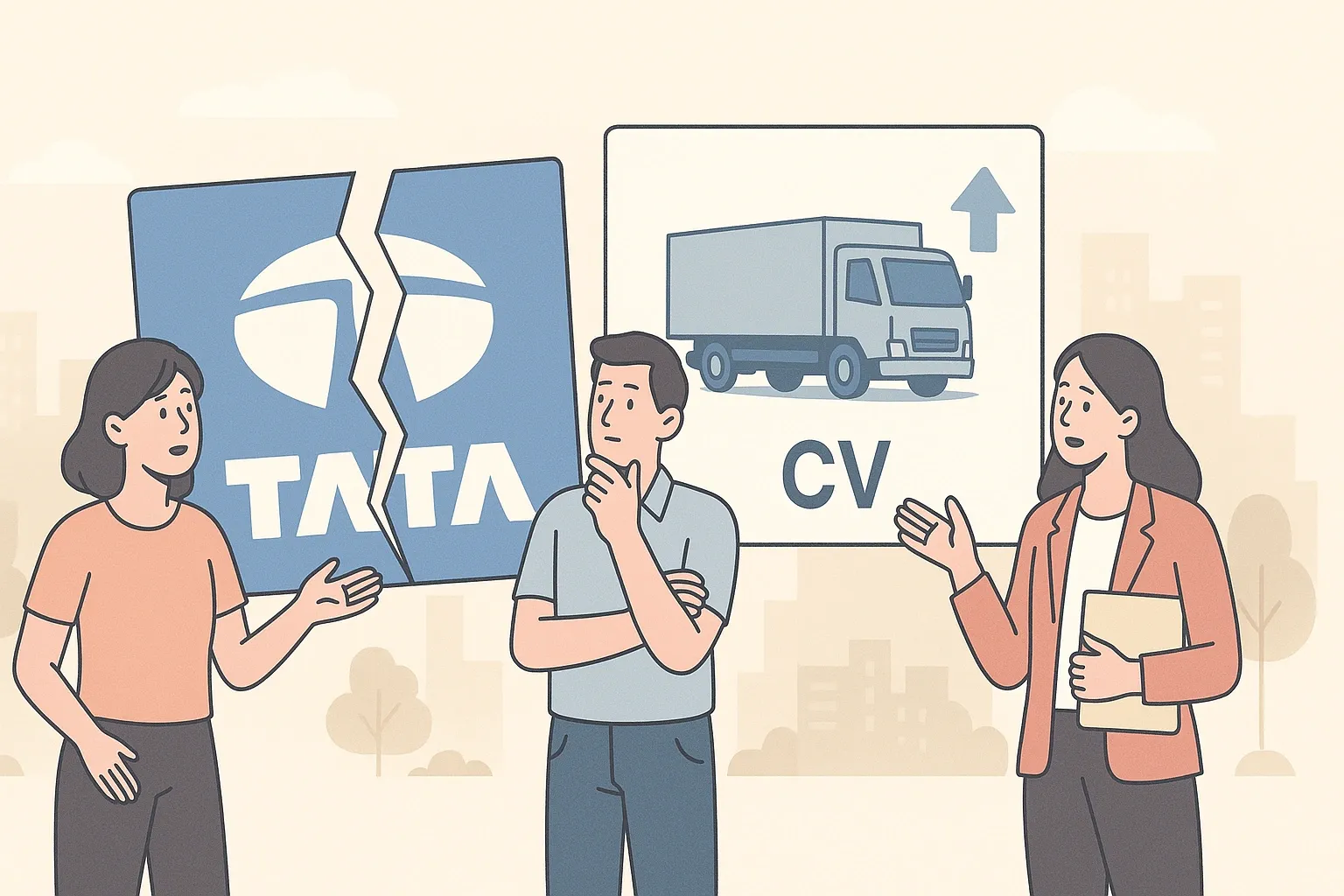
The final piece of the Tata Motors demerger puzzle is set to lock into place. The Tata Group's demerged CV (Commercial Vehicles) arm was renamed Tata Motors Ltd, post demerger. This CV arm will be listed on the stock exchanges on Nov 12, 2025. The listing will be trading under the ticker symbol TMCV, and would complete the landmark split of the auto giant into two independent, publicly traded companies.
The TMCV listing has come after the separate listing of the passenger vehicle business. The TMPVL (Tata Motors Passenger Vehicles Ltd) had begun trading on Oct 14. Shareholders who held Tata Motors on the record date of Oct 14, 2025, will receive one share of the new CV entity for every one share they held, as per the demerger plan. According to a BSE notice, >368 cr equity shares of face value ₹2 each will be admitted for trading.
When the PV (Passenger Vehicles) arm listed for around ₹400/piece, it was based on a pre-demerger closing price of ₹660.75. This had implied a residual value of around ₹260-270 for this CV business. However, analysts are projecting a much stronger debut. A few estimates place the listing range between ₹320 and ₹470. So, there is a new entity set to trade. But the crucial question for investors is: what is the strategic rationale behind this historic split, and what does this "pure-play" CV company really represent?
What Is The Strategy Behind This Demerger?
This demerger is the final and logical step in a multi-year business transformation strategy. The aim of the move is to simplify and unlock value within the Tata Motors conglomerate. The Tata Sons Chairman N. Chandrasekaran has described it as a "logical progression" of the company's plan.
The original Tata Motors was a complex and a bundled bet for many years. An investor had to be bullish on two fundamentally distinct businesses at the same time.
-
The CV Business - This is a domestic-focused, cyclical business. It is a direct proxy for the Indian economy's infrastructure and logistics sectors.
-
The PV Business - This is a high-growth, high-capital-expenditure, global-facing business. The consumer (PV), the tech revolution (EVs), and the luxury market (Jaguar Land Rover) drive this business.
This split has effectively "unbundled" these two business sets. This is to give both new entities sharper strategic focus and greater agility. Each company can now:
- Attract its own dedicated investor base
- Allocate capital more flexibly
- Be valued on its own specific merits
This is a classic move to unlock shareholder value. However, what can this mean for existing shareholders, and what can actually happen on listing day?
What Happens To Your Shares On Listing Day?
For existing shareholders, the process does not require any action or payment. The 1:1 entitlement ratio can ensure a simple transition of ownership (Financial Express).
- If you held shares of the original Tata Motors on the Oct record date, you have already received your shares in the TMPVL (PV) entity, which is already trading.
- You also received shares for the TMCV (CV) entity in your demat account around the same time.
- These TMCV shares have been frozen and untradable since they were credited. On the listing day, these frozen shares will unlock and become visible as a separate, tradable stock in your portfolio.
- As per exchange norms, the new stock will be in the "Trade-for-Trade" segment for its initial trading sessions. This is a standard procedure to prevent excessive speculation and volatility in a newly listed entity.
Investors Value the New "TMCV" Stock
The listing is creating a new, "pure-play" investment opportunity. For the first time, investors can buy into India's largest commercial vehicle manufacturer without also betting on the complex, global dynamics of Jaguar Land Rover or the high-growth, cash-burn of the EV business.
So, what are you buying when you buy "TMCV"?
- The CV business’s sales are driven by infrastructure spending, construction activity, and logistics demand.
- Analysts are bullish. They are noting that the domestic CV industry is poised for a recovery. This optimism is based on several potential tailwinds, such as replacement demand for aging fleets and a potential GST rate cut on CVs.
- The new company is already a market leader in its category, housing the stable, cash-generating industrial heart of the original Tata Motors.
The PV arm has already grabbed headlines with its EV transformation. Will this newly independent CV business represent a value-oriented investment?
Source

Kotak Neo (Kotak Neo) is India's venerable stockbroking company with a rich legacy. It offers comprehensive investment services across asset classes, prioritising a technology-first approach for a seamless experience. Trusted by 5 million+ customers, it guides you toward financial success with ease of investment and speed of trade.
Note: The opinions expressed in this blog are personal viewpoints and should not be construed as recommendations.
0 people liked this article.