
Rural Resurgence: How India’s Villages Are Powering the Microfinance Boom
- By Kotak Neo Team
- 18 Dec 2025 at 10:26 PM IST
- Market News
- 4 min read
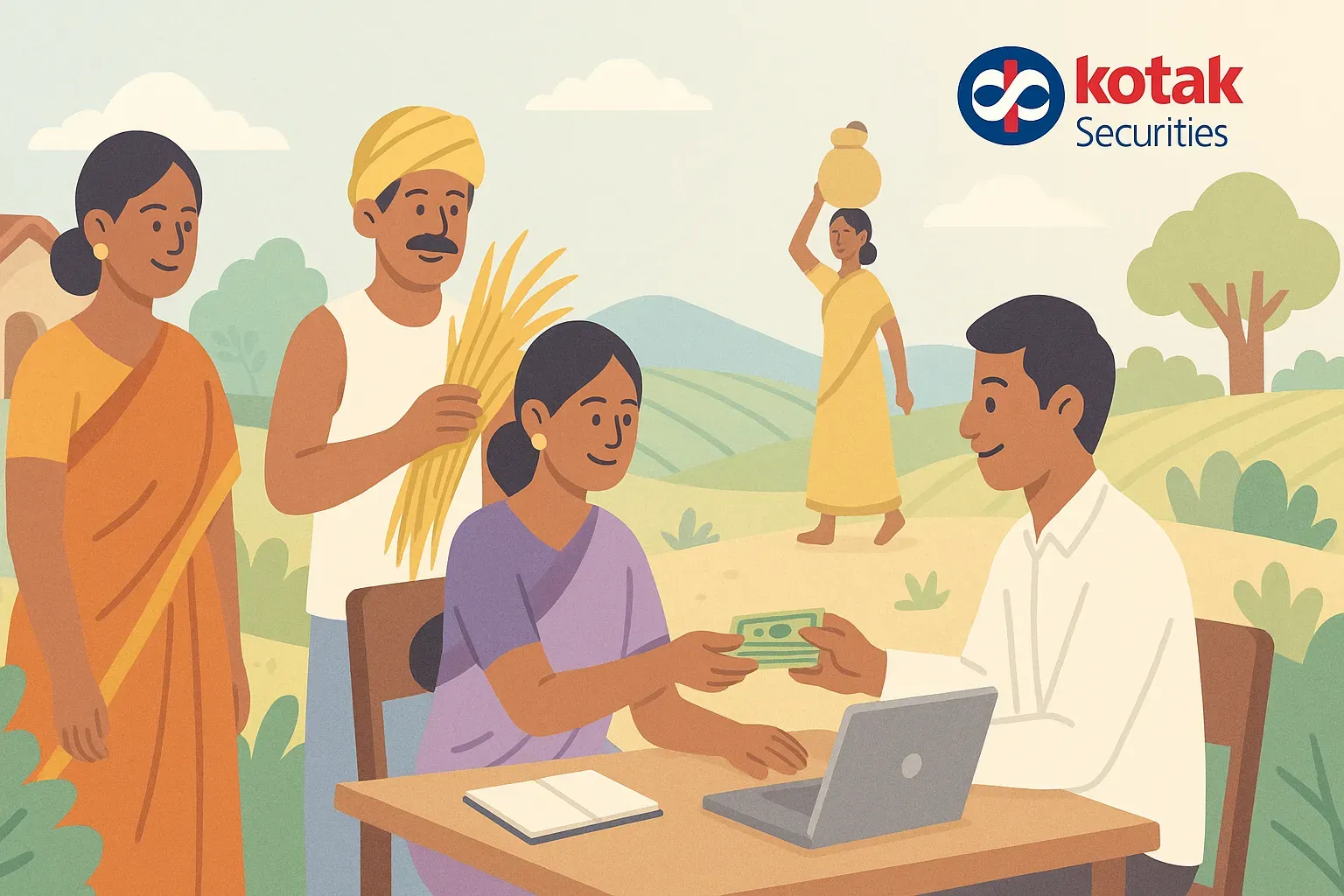
The rural economy of India is rapidly changing, and with core growth drivers located in villages, these regions have become key players in the field of microfinance. In FY 2024-25, rural areas made up around 80% of non-bank financial companies’ (NBFCs’) microfinance portfolios—the most rural share recorded since the Reserve Bank of India (RBI) began regulating microfinance in 2011.
This change highlights NBFCs’ deliberate strategy to focus on underserved rural markets in order to access growth opportunities and promote financial inclusion outside of urban markets.
Understanding How Indian Villages are Supporting Microfinance Growth
Here are the key factors that support the microfinance growth in Indian villages:
Dominance of Women Borrowers
Women constituted approximately 99% of all microfinance borrowers in FY25, and 77% of those were from rural India. This gender skew is driven by targeted SHG (Self Help Group) programs and evidence that women borrowers exhibit lower default rates. The data also shows that women-led borrowing groups have higher credit recycling rates, enabling sustained microenterprise activity in rural zones.
Rural Credit Penetration
As of Q1 FY25, microfinance institutions (MFIs) have active rural portfolios in 640 out of 766 districts, up from 589 districts in FY23. District-level saturation remains below 40%. The growth is attributed to mobile onboarding, biometric identification and satellite mapping of the underserved areas. It also notes that the saturation level at the district level is below 40% meaning there is considerable headroom for growth in the future.
Rural Repayment Rates
Repayment rates in rural areas have improved. Despite having low formal income, rural borrowers are more likely to repay their loans because of social pressure and limited access to other forms of credit.
Digital Disbursement
In FY25, digital disbursement of rural microfinance loans continued its upward trajectory, supported by UPI integration, Aadhaar-based authentication, and mobile-first onboarding. Digital disbursement lowers operational costs and increases transparency, particularly in remote districts with limited physical branches.
Rural Credit-to-GDP Ratio
India’s rural credit-to-Gross Domestic Product (GDP) ratio has risen in recent years. The improvement signifies an increased level of financial inclusion. The improvement is coinciding with behavioural changes as microfinance, cooperative lending, and government schemes focused on farmers, women, youth, and artisans gain further traction.
Increase in Average Loan Size
In FY24, the average size of a microfinance loan in rural India was ₹37,445. Trends in the sector appear to suggest that the average loan size may increase due to greater borrower confidence, improved repayment rates, and increased costs of inputs in agriculture and rural enterprise. These factors may lead to higher working capital cycles and encourage lenders to provide larger average loan sizes.
Challenges in Microfinance Growth
As referenced in Sa-Dhan’s Bharat Microfinance Report 2025, portfolio at risk (PAR 30+) increased to 6.2% in FY25, versus 2.1% in FY24. Over 90 days overdue loans, or Non-Performing Assets (NPAs), increased to 4.8%, from 1.6%. NPAs, the percentage of loans overdue by more than 90 days, went from 1.6% to 4.8%. This will raise concerns with stress pockets emerging in climate-volatile areas with crop failures.
Conclusion
The rural microfinance industry presents growth potential with caution for investors and traders in the Indian stock exchange. The remarkable expansion of rural portfolios by non-banking financial companies (NBFCs) is an impressive factor; about 80% of microfinance loans are now allocated in the rural space, signalling an opportunity for growth in these less-developed markets.
The high percentage of women borrowers, steadily improving repayment rates, the growth of digital loan-disbursals, and average loan size are clear indicators of sustainable income generation, financial inclusion, and spillover impacts of market growth onto NBFCs, microfinance-centric funds, and banks with rural portfolios.
Investors may look to balance the expected growth of rural-focused financial institutions with the inherent business risks in these sectors. They are likely to focus on companies that manage risk effectively, diversify their portfolios, and use digital loan disbursal methods to expand their reach beyond rural lending.
Source

Kotak Neo (Kotak Neo) is India's venerable stockbroking company with a rich legacy. It offers comprehensive investment services across asset classes, prioritising a technology-first approach for a seamless experience. Trusted by 5 million+ customers, it guides you toward financial success with ease of investment and speed of trade.
Note: The opinions expressed in this blog are personal viewpoints and should not be construed as recommendations.
0 people liked this article.