India’s January Trade Deficit Widens To $34.7 Billion As Imports Surge
- By Kotak News Desk
- 17 Feb 2026 at 11:44 AM IST
- Market News
- 4m
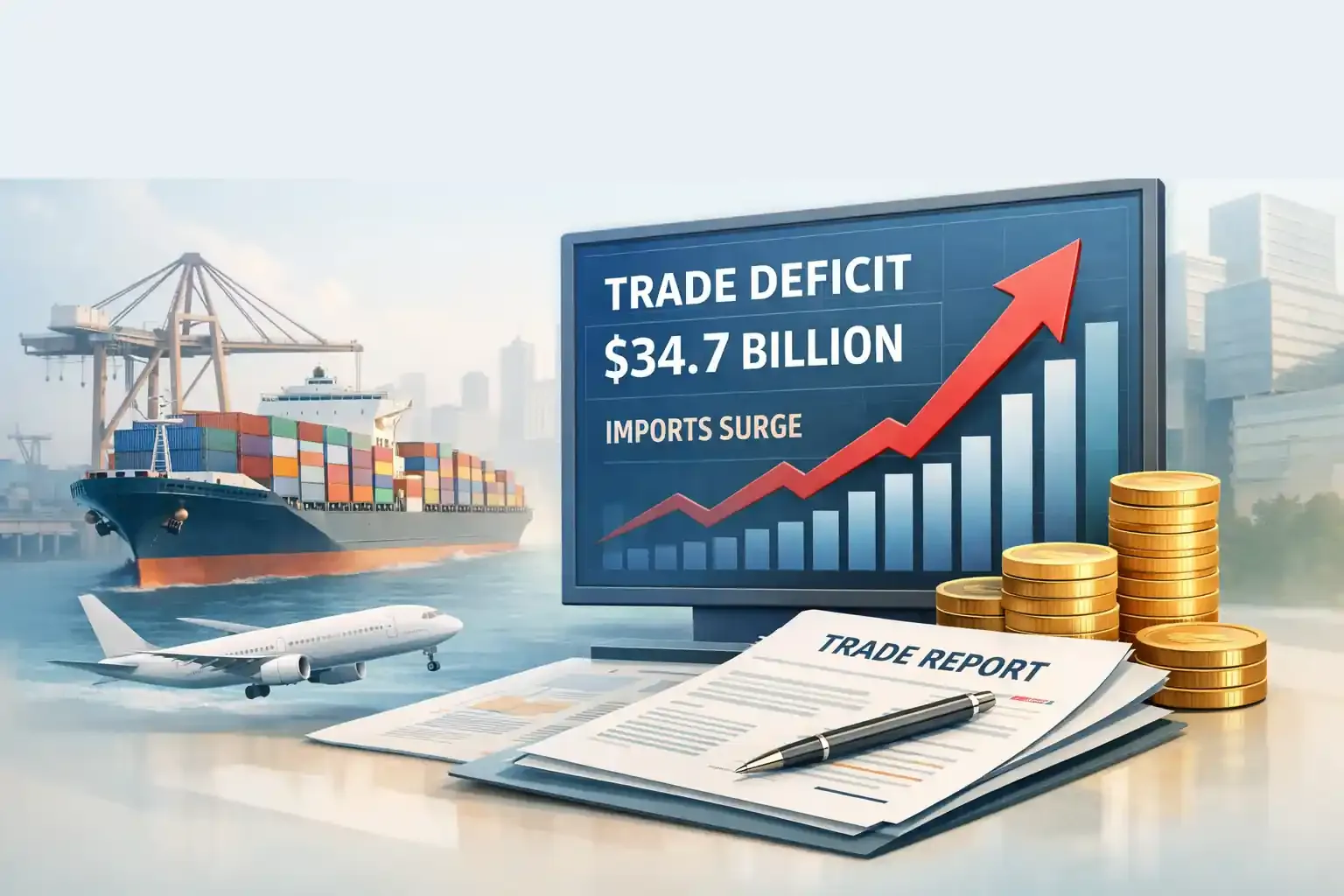
India has expanded its merchandise trade deficit to $34.7 billion in January 2026, as its imports have increased by 19.2% YoY to $71.24 billion and exports have increased by 0.6% to $36.5 billion.
The January trade numbers in India highlighted the intensity of a growing merchandise trade gap, with the rate of import growth surpassing the export momentum. Services exports also offered a high surplus buffer, but the headline deficit was further widened by the increased imports of goods over the year.
The United States remained the pivot of Indian export flows, although current trade negotiations and tariff changes are shaping the short-term outbound shipment expectations.
What Drove The Wider Deficit?
-
In January 2026, the trade deficit in merchandise increased to $34.7 billion, a year after the $25.4 billion of January 2025, indicating a more pronounced imbalance between imports and exports.
-
The imports increased by 19.2% (year on year), YoY, to $71.24 billion as there was an increased inbound demand of various categories of goods and an increase in the volume of procurement.
-
Gold imports alone stood at $12.07 billion. Just a month earlier, the figure was $4.13 billion. The rise reflects both firm global prices and strong demand at home, where gold continues to attract investors as well as traditional buyers.
-
Another factor behind the increase is the growing popularity of gold-linked investment products. Inflows into gold ETFs, nearly doubled to ₹24,004 crore. When investors invest in gold ETFs, fund houses must hold physical gold to match those investments. That, in turn, leads to additional imports.
-
Exports grew at a rather low 0.6% YoY to $36.5 billion, which implies a weaker momentum in outbound shipments and limited compensation for the import boom in the month.
How Did Major Partners Perform?
-
The United States remains the largest export destination for India. Exports to the US have reached $72.46 billion in the current fiscal year. However, merchandise exports from India to the US saw a 21.77% decline, as a result of the 50% Trump tariffs.
-
China was the largest overseas supplier this year; through the first ten months of Fiscal Year To Date (FYTD), the value of all incoming freight totalled $108.18 billion, and the increase from last year is almost 14%. This dependence upon supplies from China is substantial.
-
Graphing the flow of goods between trading partners shows that India depends on the US market for exports and on the quick response time of suppliers in China to meet its imports. This creates a higher level of bilateral trade across both countries.
Did Services Cushion The Gap?
-
India has a services trade surplus of $24.3 billion in January 2026, compared to $18.04 billion last year, which offers a better buffer to the external account.
-
Services exports rose to $43.9 billion from $34.75 billion. Services imports also increased, to $19.6 billion from $16.7 billion, but the rise was smaller, which widened the surplus.
-
The growing services surplus partly counteracted the pressure caused by the merchandise deficit and made the balance of trade more moderate across the month.
What Do FYTD Numbers Show?
-
Exports of merchandise increased 2.22% FYTD to $366.6 billion, signalling a very low growth amid the uncertainty in the global demand.
-
The rise in the contribution of services in the export earnings will see India with total exports of over $860 billion, including the services exports.
-
The merchandise trade deficit from April to January increased by 14.5% to $283.2 billion, which was prompted by an increase in imports of $649.9 billion versus $606.1 billion a year earlier.
Also Read - India’s Power Capacity Addition Crosses 50,000 MW
Key Investor Takeaway
For investors tracking export-linked sectors, January’s wider merchandise deficit is a reminder that imports are still running ahead of exports. Services are helping balance things for now, but the goods gap remains something to watch closely.
Trade talks between India and the United States could influence the near-term direction. The first phase of the deal is expected by March 2026, and proposed tariff cuts from about 25% to 18% can ease some pressure on exporters if they go through.
So the real question for investors is simple: can export growth pick up enough over the next few quarters to narrow the trade gap, especially with imports still on the higher side?
Sources:
NDTVProfit

Since its incorporation on 20 July 1994, Kotak Neo has grown into one of India’s most trusted brokerage houses - backed by over 30 years of expertise across stocks, funds, IPOs, and full-service investing.
With a pan-India footprint of 145+ branches, 1000+ franchises and presence across 310+ cities, Kotak Neo serves 5 million+ customers nationwide.
From equities and IPOs to mutual funds and derivatives, Kotak offers comprehensive, research-backed investment solutions - simplifying wealth management for retail and institutional clients alike.
Kotak News Desk brings you latest updates, expert insights, and market-ready ideas - helping you stay informed and invest smarter.
Connect on: Linkedin
0 people liked this article.