Will Lower Tariffs Open India’s Roads to More European Luxury and EV Brands?
- 30 Jan 2026 at 12:02 PM IST
- 4 minutes read
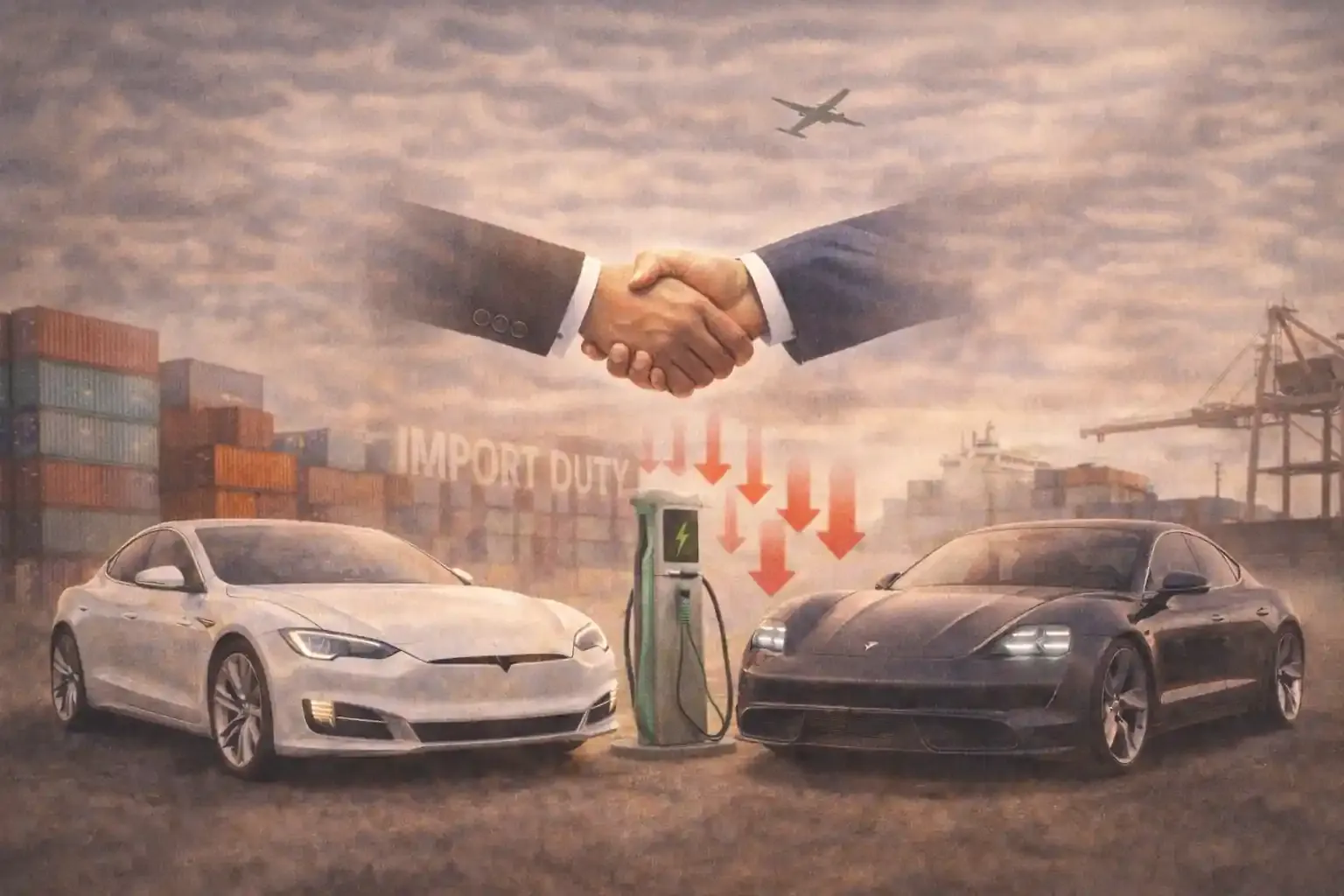
India and the European Union are nearing what could be a landmark Free Trade Agreement (FTA) expected to reduce import duties on automobiles, including electric vehicles, for certain passenger cars. The move could make premium European vehicles more price-competitive in India’s growing auto market.
If these cuts materialise under the deal reportedly nearing conclusion at a bilateral summit, it could increase access to European luxury and electric vehicles, a shift that may accelerate premium EV imports and consumer choice. This raises a key question. Can reduced import duties under the India-EU FTA broaden the appeal of high-end EVs and reshape India’s passenger vehicle landscape?
How Much Could Tariffs Be Reduced Under the FTA?
The proposed agreement will enable India to reduce its import tariffs on European Union-manufactured vehicles. India will reduce import tariffs on specific foreign vehicles to 40%, down from existing tariffs that range from 70% to 110% for high-end vehicles.
Over time, these charges could be further reduced to 10% to 15%, especially for vehicles sourced from the EU's 27 member nations, providing long-term tariff relief for importers and buyers.
The price gap between domestic and imported vehicles would narrow, leading to increased demand for high-end international brands. Will carmakers adjust their prices promptly to attract Indian consumers who seek affordable vehicles?
Why Is the EU Framing the FTA as a Security and Defence Partnership?
European officials have described the India–EU trade pact not just as an economic agreement, but as a “security and defence partnership,” signalling a broader strategic intent beyond tariffs and market access. According to reports, the European Union views the FTA as a key pillar in strengthening supply chain resilience, reducing strategic dependencies, and deepening cooperation with India amid rising geopolitical uncertainties.
The framing shows that Europe wants to move trade and industry links away from concentrated markets, especially in important areas like cars, clean energy technologies, and advanced manufacturing. For India, this makes the arrangement more than just a regular trade deal; it becomes a long-term strategic partnership. This might speed up cooperation in areas like industrial strategy, technology transfer, and defence-related supply chains.
This makes the agreement even more complicated. Will the India–EU FTA become a bigger strategic framework that changes not only trade flows but also long-term collaboration in security and industry?
Could the Tariff Cut Spur Luxury EV Imports?
Industry observers believe that easing duties on auto imports will particularly benefit luxury EV brands and high-end internal combustion vehicles that have struggled against India’s traditionally high tariffs. The current levy structure has kept many European models out of reach for most buyers.
A potential reduction in duties to 10% to 15% will enable luxury electric vehicles from BMW, Mercedes-Benz, Audi, and Volkswagen to attract more interest from affluent Indian buyers in the luxury market.
The BMW Group India also stated that reduced customs duties will create better market conditions for premium vehicles, thereby increasing their competitiveness against locally produced cars.
The first question to arise from this situation concerns the two groups. Can India expect a significant increase in luxury electric vehicle sales through two measures: tariff reductions and improved access to charging infrastructure?
What Does This Mean for India’s Auto Market and Manufacturers?
India's automotive industry has relied on local assembly operations and high import tariffs for several decades to maintain its market dominance. The FTA's impending completion will trigger market changes, according to industry analysts and automakers, affecting vehicle pricing, model distribution, and market competition patterns.
European manufacturers will consider implementing full local manufacturing operations in India, taking advantage of reduced duty rates, to access both the Indian and international markets. However, customers may not receive immediate price reductions until supply chains and after-sales networks reach full operational capacity.
As India aims to grow its electric vehicle ecosystem, policymakers may seek to balance import access with incentives for local manufacturing, requiring them to protect domestic industry objectives through tariff cuts. Will this FTA implementation achieve a proper equilibrium between international market access and domestic production expansion?
Sources: Economic Times 1
0 people liked this article.