How Dollar Strength and Rupee Weakness Stalled US–India Trade Talks?
- By Kotak News Desk
- 27 Jan 2026 at 11:14 PM IST
- Market News
- 4m
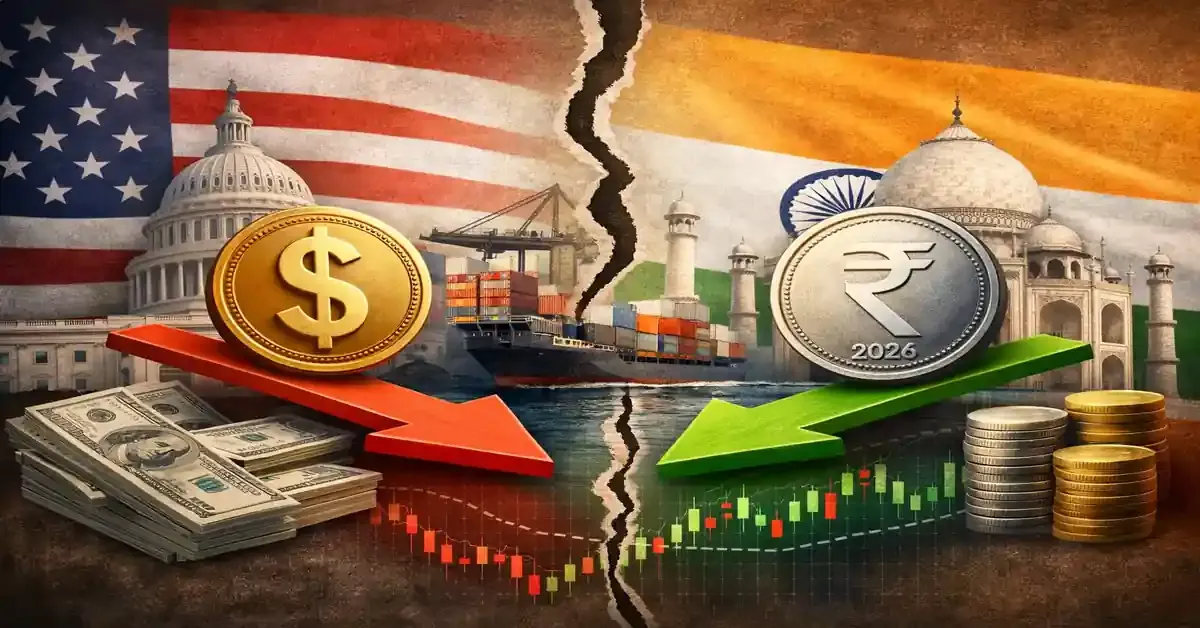
A Comprehensive India-US trade deal, which was to be finalised, has come on hold, not just due to tariff disagreements or market access issues. A growing currency concern is a major reason which highlights the broader strategic and economic frictions between the two democracies. This has increased the pressure on the Indian rupee against the US dollar, which has added to the problem. This currency stress is determining how negotiations will take place, how investors will react and how trade outcomes are shaping up.
How Trade Negotiations and Currency Volatility Became Interlinked?
For more than a year, the negotiations for a bilateral trade agreement have been going on between the two sides. They are trying to resolve issues like non-tariff barriers, digital taxes and tariffs on industrial and agricultural products. The US has urged for higher market access for its exports, whereas India is defending its domestic industries and strategic autonomy. The concern got more complex in August 2025 due to tariff imposition by the US as high as 50% on select Indian goods, citing India’s continued imports of Russian crude and a widening trade imbalance. This has led to raised urgency in trade negotiations, which has influenced the currency markets.
The Indian rupee has come under sustained pressure due to uncertainty about the trade deal. The currency weakened to historic lows, crossing ₹90 per US dollar several times in late 2025, and it even crossed the ₹91 mark once. This was due to Foreign institutional investors (FIIs) withdrawing their money and traders opting for dollar liquidity.
Forex markets saw significant currency pressure:
-
Rupee had been falling and records low near ₹90.46/$ and even beyond. This was a result of halted trade talks and steady capital flows.
-
Around ₹1.48 lakh crores were taken away by Foreign Portfolio Investors in the year 2025. This increased the demand for dollars.
-
As per Analysts the rupee depreciated by around 5-6% in 2025, which made it one of the weakest major currencies in Asia.
How Currency Politics Are Reshaping US–India Trade Diplomacy?
While currency markets move minute by minute, the real story is much deeper. Washington’s push for tariff cuts and market access has clashed with New Delhi’s aim to maintain tariff autonomy and protect key industries, which has extended the trade talks. Additionally, India’s broader foreign policy orientation, including continued engagement with Russia, procurement of discounted energy, and moves to promote local currency settlements, has contributed to US unease over the dollar’s dominance in global trade.
This discomfort is not merely academic. The US trade agenda is now more focused on reducing trade deficits and protecting American industries. Currency considerations — particularly the impact of a weaker rupee on import-export economics — factor into this calculus, even if tacitly.
What initiated as a routine trade negotiation has converted into broader trade and financial diplomacy. The dollar-rupee equation is now responsible for geopolitics, capital flows and market sentiments. A weaker rupee can help Indian exports, but the lack of a clear trade deal (in spite of $59.4 billion in exports to the US from April 2025 to Nov 2025) has left policymakers and investors uneasy.
What are Investor Takeaways?
For India, the stalled US–India trade deal means currency stability and strategic alignment now matter as much as tariffs. The increasing dollar-rupee tensions indicated geopolitical and trade frictions. This is increasing the pressure on the rupee and capital outflows. A weaker rupee may be good for exports, but in the long run, it can affect foreign investment and lead to volatile markets.
For stock investors, this is a caution phase, not a panic moment. You can expect short-term volatility due to export-heavy and dollar-sensitive sectors. Investors should keep an eye on trade negotiations, ups and downs in currency prices, and FPI flows closely. They should prefer companies that have a strong balance sheet, diversified global exposure, and less reliance on US trade policy outcomes.
Source

Since its incorporation on 20 July 1994, Kotak Neo has grown into one of India’s most trusted brokerage houses - backed by over 30 years of expertise across stocks, funds, IPOs, and full-service investing.
With a pan-India footprint of 145+ branches, 1000+ franchises and presence across 310+ cities, Kotak Neo serves 5 million+ customers nationwide.
From equities and IPOs to mutual funds and derivatives, Kotak offers comprehensive, research-backed investment solutions - simplifying wealth management for retail and institutional clients alike.
Kotak News Desk brings you latest updates, expert insights, and market-ready ideas - helping you stay informed and invest smarter.
Connect on: Linkedin
0 people liked this article.