
Treasury Bills (T-Bills)
T-Bills are short-term debt instruments issued by the Government of India to manage short-term liquidity. They are zero-coupon securities, meaning they don’t pay interest — instead, they’re issued at a discount and redeemed at face value.
Announcement
RBI announces new T-Bills with tenures of 91, 182, or 364 days, along with the auction date and issue size.

Let’s Learn How T-Bills Work with an Example
Step 1. A T-Bill is Announced:
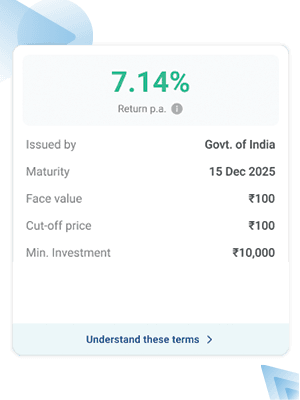
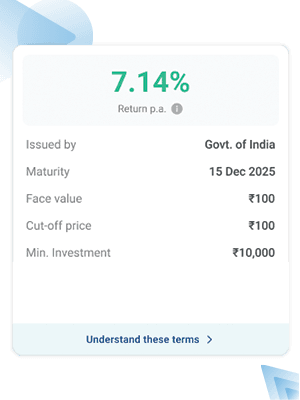
The RBI announces a 91-day T-Bill with a cut-off price and face value of ₹100.
Step 2. You Place an Order:
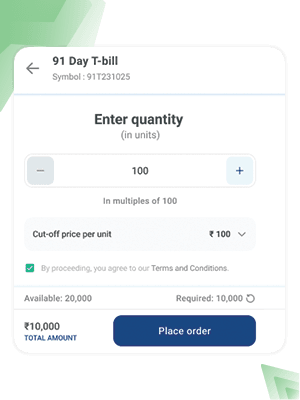
You apply for 100 units at ₹100 each.
Amount Blocked: ₹10,000
- This is the maximum you’ll pay; the actual price could be lower.
Step 3. Auction & Allotment:
What Happens After You Bid?
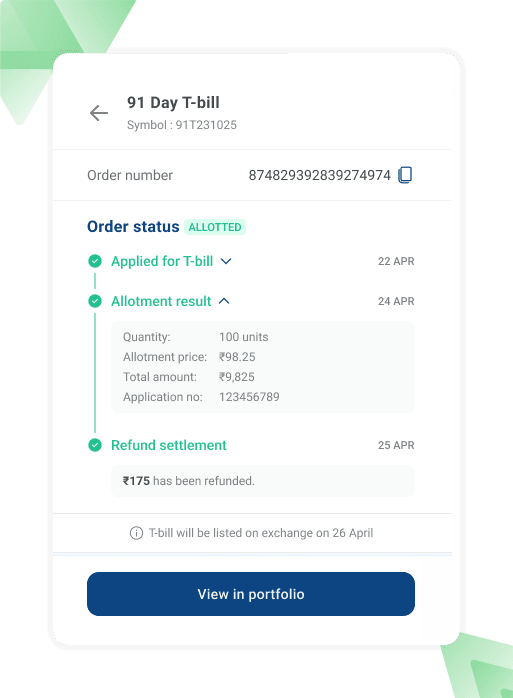
- Once bidding ends, a final price is decided (e.g., 96.25).
- You’re allotted 100 units at this final price.
- Since you had paid ₹10,000 in advance and only ₹9825 is needed, ₹175 is refunded to your bank account.
- The allotted units are credited to your demat account automatically.
Step 4. What Happens at Maturity:
- On maturity (after 91, 182, or 364 days), the full face value (₹100 per unit), i.e ₹100 is credited to your bank account.
- Net Investment: ₹9825
- Principal Returned: ₹10,000
- Net Earnings: ₹175
You don’t need to hold T-bills until maturity.
- Sell anytime on the exchange via your demat account
- Sale value will depend on market demand and prevailing interest rates
- You may receive more (premium) or less (discount) than what you paid
Tip: While early exit is allowed, T-bills prices can fluctuate, and liquidity may vary—so plan your holding period accordingly