
State Development Loans (SDLs)
SDLs are government bonds issued by individual states in India to raise money for development projects like roads, health, or education. Like central government bonds (G-Secs), SDLs are low-risk, fixed-return instruments — but with slightly higher yields in some cases.
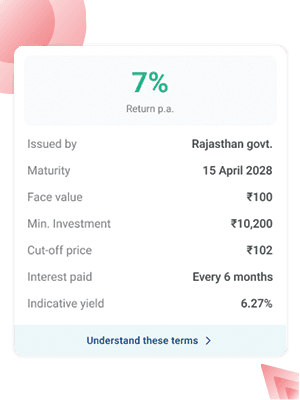
Announcement
RBI announces SDLs with details like tenure, interest rate, and auction date.
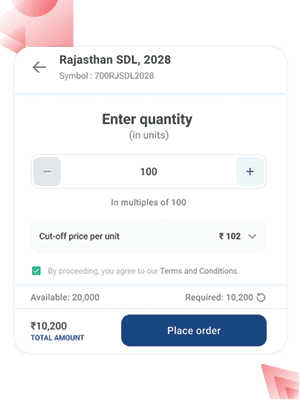

Let's Learn How Do SDLs Work with an Example.
Step 1. An SDL is Announced:
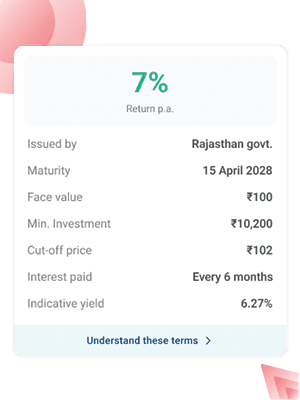
The RBI announces a State Development Loan – Karnataka SDL 2027 (tenure of 3 years) with a coupon rate of 7% and a cut-off price of ₹102.
Step 2. You Place an Order:
You choose to invest — e.g., 100 units at cut-off price
- ₹10,200 (₹102 x 100) is blocked.
- This is the maximum you’ll pay; the actual price could be lower.
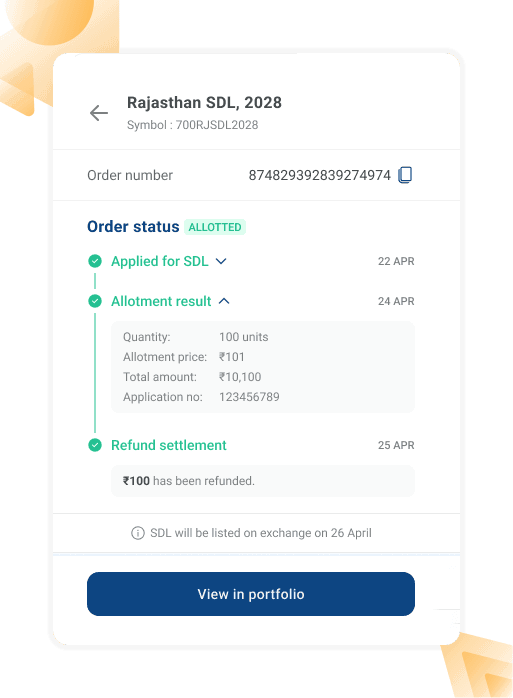
Step 3. Auction & Allotment:
What Happens After You Bid?
- Once bidding ends, a final price is decided (e.g., ₹101).
- You’re allotted 100 units at this final price.
- Since you had paid ₹10,200 in advance and only ₹10,100 is needed, ₹100 is refunded to your bank account.
- The allotted units are credited to your demat account automatically.
Step 4. What happens after allotment:
You Start Receiving Interest.
SDLs pay fixed interest twice a year. You earn on the face value (usually ₹100), not on your purchase price.
- Coupon Rate: 7% annually → 3.5% semi-annually
- Face Value : ₹100
- Tenure: 3 years (6 interest payouts)
0 – 6 Months | 3.50% | ₹350 |
6 – 12 Months | 3.50% | ₹350 |
1 – 1.5 Years | 3.50% | ₹350 |
1.5 – 2 Years | 3.50% | ₹350 |
2 – 2.5 Years | 3.50% | ₹350 |
2.5 – 3 Years | 3.50% | ₹350 |
Total Interest earning ₹2,100
The interest is credited to your bank account automatically every 6 months.
Step 5: What Happens at Maturity? (End of Year 3):
a. Principal Repaid:
You receive ₹10,000 (₹100 × 100 units), as bonds are redeemed at face value, not at your purchase price of ₹101.
b. Final Interest Credit:
The last ₹350 interest (if not already paid) is deposited into your bank account.
c. Your Total Returns:
- Total Invested: ₹10,100
- Interest Earned: ₹2,100
- Principal Returned: ₹10,000
- Net Earnings: ₹2,000
You don’t need to hold SDLs until maturity.
- Sell anytime on the exchange via your demat account
- Sale value will depend on market demand and prevailing interest rates
- You may receive more (premium) or less (discount) than what you paid
Tip: While early exit is allowed, SDLs prices can fluctuate, and liquidity may vary—so plan your holding period accordingly