India’s Textile Sector Poised For Revival As Global Tariff Pressures Ease
- By Kotak News Desk
- 09 Feb 2026 at 11:53 AM IST
- Market News
- 4m
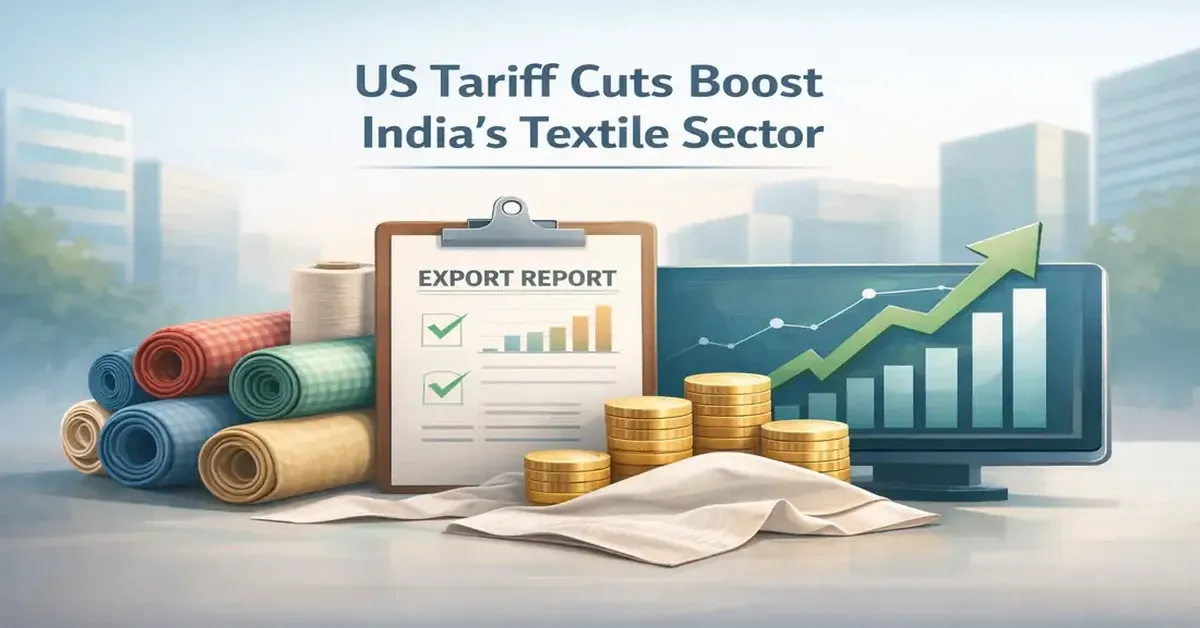
India’s textile industry has received a big boost after the US tariff reduction announcement on Indian imports. The changes are expected to support export growth, capacity expansion, and renewed investment across the industry.
India’s textile industry has received a near-term boost after recent changes in the US tariff policy. The move is expected to ease cost pressures for exporters, many of whom have been dealing with weak overseas demand and rising compliance expenses over the past year.
The immediate reduction in tariffs from 50% to around 18% has significantly eased pricing stress for manufacturers. The move is expected to boost the domestic textile industry, which has been struggling for the last one year.
As per the industry estimates, this sector shrank by nearly 4%, with several small units struggling to continue operations.
Why Is The Tariff Cut Important For Indian Textile Exporters?
The US is India’s largest textile export market. It accounts for nearly 28% to 29% of total shipments. Until now, Indian exporters were excluded from the benefits of the Free Trade Agreement (FTA) and paid higher duties compared with suppliers from competing countries.
The tariff cut could change that equation. It may improve landed costs and restore competitiveness in key categories. Industry participants see this as part of a broader shift in global trade, where restrictive policies are giving way to more open market access.
Over the medium term, proposed FTAs with the US, the UK and the European Union could further improve conditions. If concluded, these deals could make nearly 70% to 75% of India’s textile exports duty-free.
The domestic textile industry is expected to gain the most. Indian suppliers have long-standing relationships with buyers in the US and Europe. Product acceptance remains strong. Despite earlier tariff disadvantages, India has retained a solid share in towels and bed linen.
China continues to face higher US duties. This usually creates an opportunity for Indian exporters to capture additional shares.
What Structural Changes Will Shape The Sector Next?
The Indian textile industry is in the middle of a structural change. The Man-Made Fibre (MMF) is gaining ground in the domestic market. This opens new growth avenues, even though China and Vietnam still dominate global MMF supply.
Cotton remains India’s core strength. It accounts for about 62% of textile exports. Blended fabrics are seeing rising demand. Technical textiles are also growing and are emerging as a key non-apparel segment.
What Lies Ahead?
Lower trade barriers are expected to support a fresh investment cycle. Export growth is likely to lift domestic fabric demand. This could lead to forward integration and capacity expansion in weaving and processing.
Manufacturers estimate that capacity additions may take 12 to 18 months. Several companies are planning new units under the Make-in-India programme.
Textile and apparel exports currently make up about 8 per cent of India’s total exports. This share is expected to rise to 10% to 12% over the next few years. Industry exports are projected to grow from around USD 36 billion to USD 45 to 50 billion.
With better market access and improved demand visibility, the sector is entering a phase of measured but sustained growth. Shares of textile companies like Arvind Fashions and Raymond Lifestyle could see increased investor interest if the recovery sustains.
Sources:
The Economic Times
TOI
The Tribune

Kotak News Desk brings you latest updates, expert insights, and market-ready ideas - helping you stay informed and invest smarter.
Connect on: Linkedin
0 people liked this article.