IRCTC Excluded from F&O Segment Starting February 25, 2026
- By Kotak News Desk
- 23 Dec 2025 at 12:46 PM IST
- Market News
- 4 min read
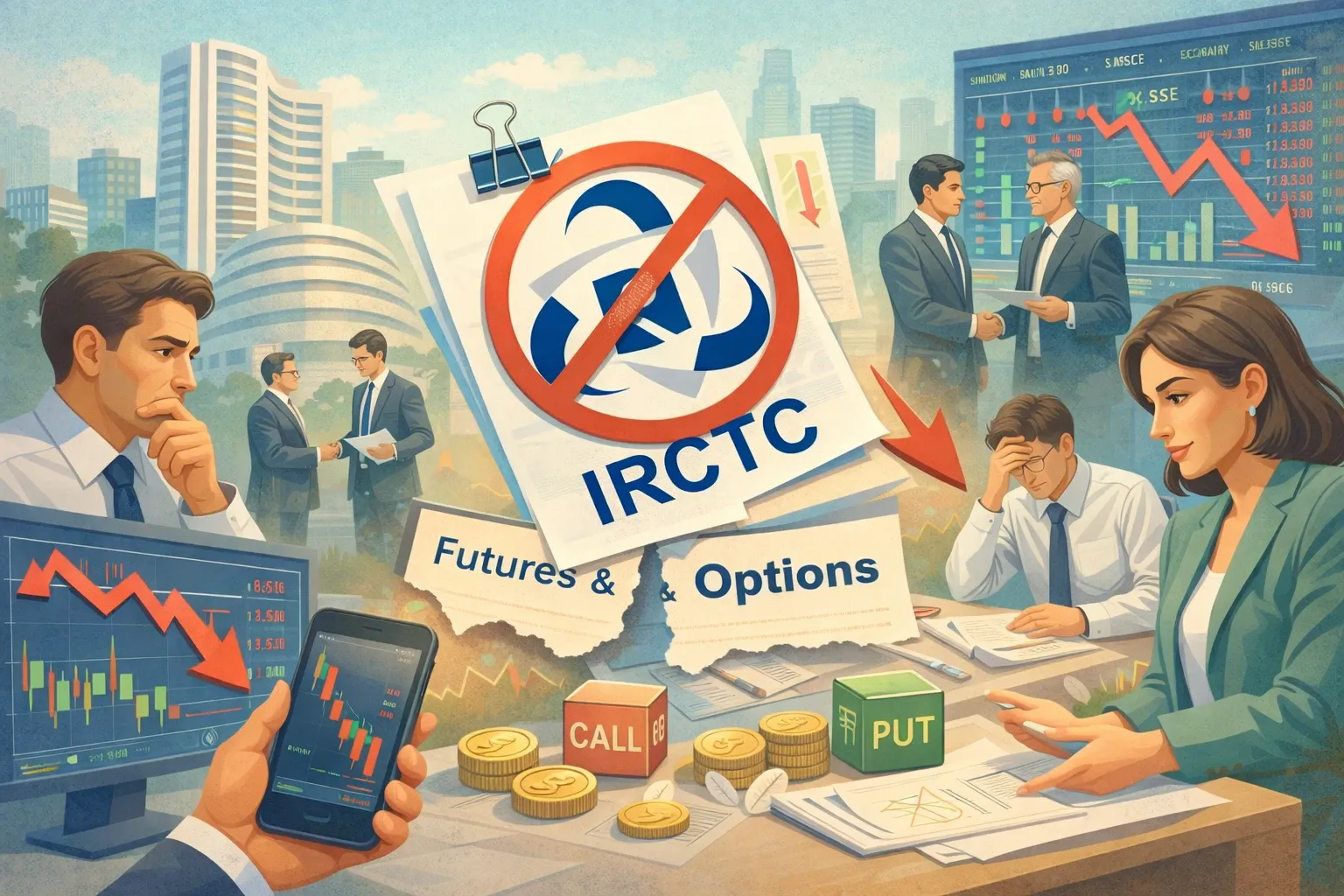
As per recent changes made to the Securities and Exchange Board of India (SEBI's) specifications for derivative stocks for the purpose of ensuring stability in the marketplace, IRCTC is being phased out from participation in the Futures and Options (F&O Segment) from 25 February 2026.
Traders will have until settlement to manage outstanding positions for the December 2025, January 2026, and February 2026 expiries. Therefore, traders holding these contracts will have time to close their positions before the contracts expire.
The phased approach for removal of the stock from the derivatives market allows for an effective and smooth transition to be made to the new participation criteria set forth by regulations. But, the question is: what does this removal of IRCTC mean for traders in the derivative market and the cash market dynamics?
How Did SEBI's Revised Norms Trigger This?
A more detailed analysis of derivative stock eligibility by the SEBI has resulted in tighter criteria based on factors such as liquidity, market depth, and volatility, with the objective of protecting retail investors. As a result, although IRCTC plays a prominent role in the railway ticketing and tourism sectors, it does not meet the revised eligibility requirements and will no longer be available for trading as an F&O product once trading under the new measures begins after the completion of the February 2026 expiry cycle.
Due to the added time frame of three months’ worth of trades between the December 2025 and February 2026 contracts, it will allow the orderly resolution of contracts that will prevent any forced square-offs.
This change is consistent with the objectives established by the marketplace reforms to eliminate speculative bubbles in single-stock futures and options, which will focus on quality first and then on quantity within the segment.
The exchanges will no longer offer new contracts after the February expiry, focusing their attention on trading within the cash market. IRCTC’s ability to continue operating within its core business remains unchanged. As a result, volatility may translate into cash equivalents in equity transactions.
What Happens to Existing IRCTC F&O Contracts?
All existing contracts that are set to expire in December 2025, January 2026, and February 2026 might give ample opportunity for hedgers and speculators to effectively exit their positions.
In addition, there will continue to be liquidity for these legacy contracts until expiry, thereby preventing panic-selling when the deadline nears. The SEBI's staged phase-out of IRCTC's derivative contracts has reduced the systemic risk while ensuring compliance with the new measures.
At the completion of the F&O exclusion, IRCTC's F&O derivatives completely ceased to be effective beginning on 25th February 2026, with volumes transferred to the underlying equity shares.
Market Stability and Trader Implications
As part of its sweeping reform of F&O criteria, SEBI has created an environment that fosters sustainable F&O ecosystems by eliminating illiquid stocks that can be easily manipulated.
The recent increase in the number of retail investors participating in F&O markets has created a need for regulators to continue to support new innovations while ensuring retail investors are adequately protected.
Through the case of IRCTC's decision to exclude F&O contracts while still allowing trading to occur through February's expiry, a fundamental question that must be addressed by F&O traders is: how will this change affect their ability to manage their positions and utilise the opportunities available in cash markets associated with Indian Railway PSUs?
Sources:
Kotak News Desk brings you latest updates, expert insights, and market-ready ideas - helping you stay informed and invest smarter.
Connect on: Linkedin
0 people liked this article.