Indian IT Stocks Under Pressure In US: Infosys ADRs Down 7%, Wipro Slips 5%
- By Kotak News Desk
- 13 Feb 2026 at 12:31 PM IST
- Market News
- 4 minutes read
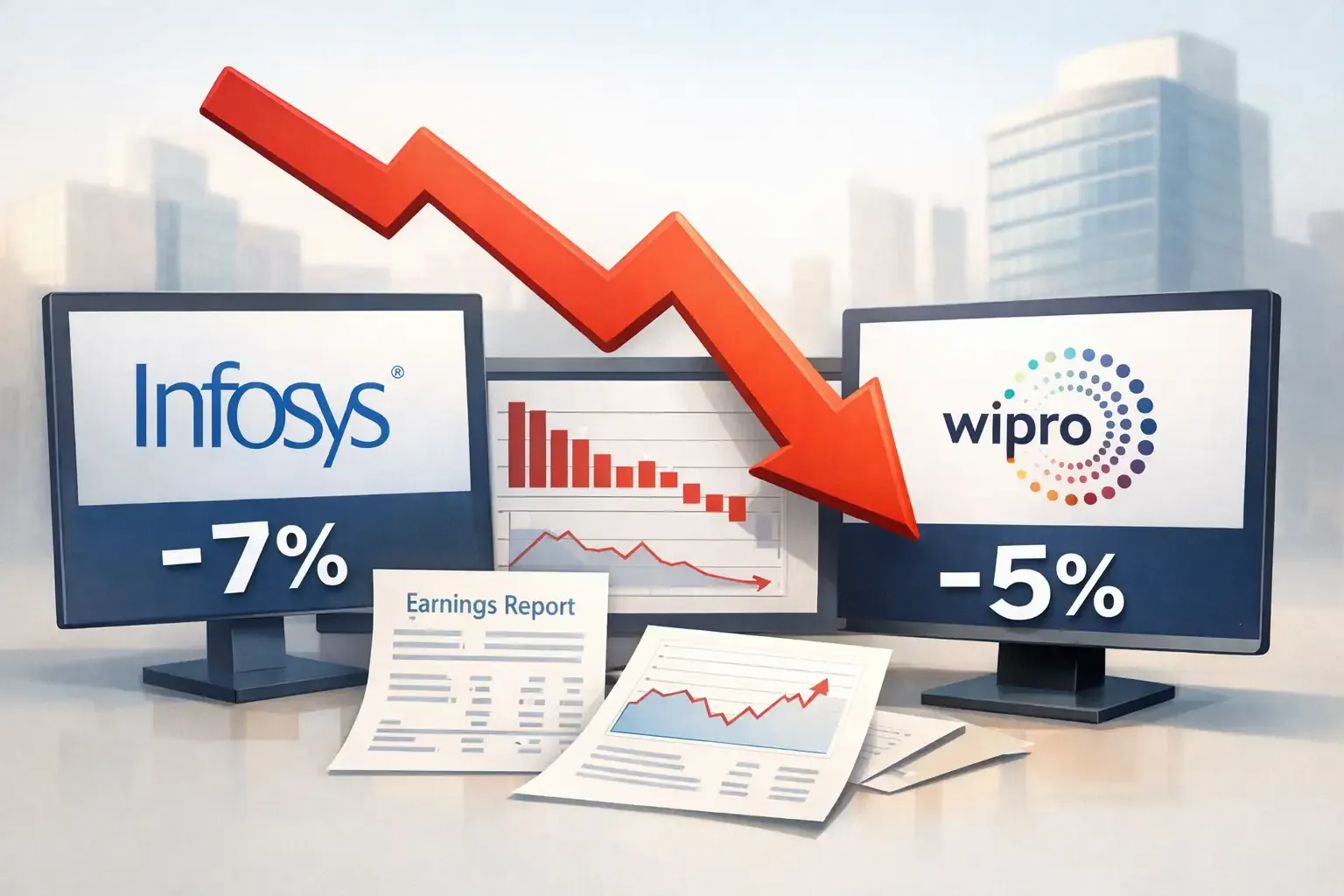
Infosys ADRs fell over 7%, and Wipro shares declined around 5% as tech turbulence deepened on Wall Street, driven by broader sell-offs in global technology stocks. The weakness in U.S. markets spilled over to Indian IT names listed overseas, reflecting risk-off sentiment amid rising interest rates and AI-related rotation.
American Depositary Receipts (ADRs) of Indian information technology (IT) majors Infosys and Wipro slid sharply on Thursday, reflecting broad volatility in technology stocks and weakness in global markets.
Infosys ADRs plunged more than 7% to an intraday low of about $14.59, while Wipro’s ADRs fell around 5.4%, ending the session near $2.26. This downturn mirrored steep declines in Indian IT shares and broader turbulence on Wall Street.
Why Did US Tech Stocks Drag Indian IT ADRs Lower?
The fall of the Indian IT ADRs followed intense pressure in the US markets by the technology names. The Nasdaq Composite continued to fall and dropped by over 300 points or over 1% as the sell-off deepened.
At around 11:11 AM ET (9:43 PM IST), key US indices were trading lower:
-
Nasdaq Composite: 22,764.90
-
S&P 500: down 0.6% at 6,902.80
-
Dow Jones Industrial Average: down 249.27 points (0.50%) at 49,872.10
Among major tech stocks, Cisco plunged 11%, while heavyweights including Apple, Nvidia, and IBM were down as much as 6% during the session.
How Did Indian IT Stocks Perform In Domestic Markets?
Indian benchmark indices dropped sharply, with technology stocks in the lead. The Nifty IT index went down by 5.5 per cent, and all 10 stocks in the index were falling.
The fall triggered panic selling across the sector, wiping out nearly ₹1.3 lakh crore in the combined market capitalisation of IT stocks in a single session.
Over the past 12 months, Nifty IT has fallen 21%, making it the worst-performing index among sectoral benchmarks.
What Triggered Panic Selling In The IT Sector?
The acute sell-off was explained by market participants as the continued fear of AI-driven disruption of the Indian IT services sector, with stronger-than-expected US job numbers minimising the chances of interest rate cuts in the near future.
Vinod Nair, Head of Research at Geojit Investments, said the decline was driven by stronger US employment data and a marginal drop in unemployment, which reduced the likelihood of an early policy pivot by the US Federal Reserve.
He also commented that there is an increasing tendency towards structural uncertainty in the IT model, which is based on outsourcing. Artificial intelligence (AI) adoption is reshaping Indian IT services by reducing project timelines and automating repetitive tasks, putting pressure on the traditional headcount-based outsourcing model.
He further noted that even enterprise resource planning (ERP) implementation work is becoming vulnerable, highlighting that clients are increasingly shifting towards outcome-based pricing rather than effort-based billing.
“In the coming quarters, AI adoption could create headwinds for deal wins, potentially impacting topline, making close monitoring of deal flow essential to assess its real impact,” Nair said.
Read More - Parag Parikh Flexi Cap Fund Raises
What Does This Mean For Investors?
The steep fall in Infosys and Wipro ADRs underscores the intensity with which Indian IT stocks are now dependent on the overall global technology mood and US market trends. As heavy selling was witnessed on Wall Street technology counters and the Nasdaq plummeted drastically, stress immediately overflowed onto the Indian IT names in the US and local markets.
The sharp decline in the Nifty IT index and the massive loss of market capitalisation in the sector are usually signs of increased investor disbelief. Concurrently, fears of AI-led upheaval and diminished prospects of US rate declines in the near future might contribute to the uncertainty regarding the growth prospects of the sector.
Generally, this trend indicates that Indian IT stocks are susceptible to both the global macro triggers and structural change in the outsourcing business model, which could keep volatility elevated in the near term. Investors may therefore need to remain cautious and assess broader market sentiment before making fresh investment decisions.
Sources:
Economic Times
CNBC TV18

Kotak News Desk brings you latest updates, expert insights, and market-ready ideas - helping you stay informed and invest smarter.
Connect on: Linkedin
0 people liked this article.