India Probes Chinese Rubber; What's the Impact?
- By Kotak Neo Team
- 18 Dec 2025 at 10:26 PM IST
- Market News
- 4 min read
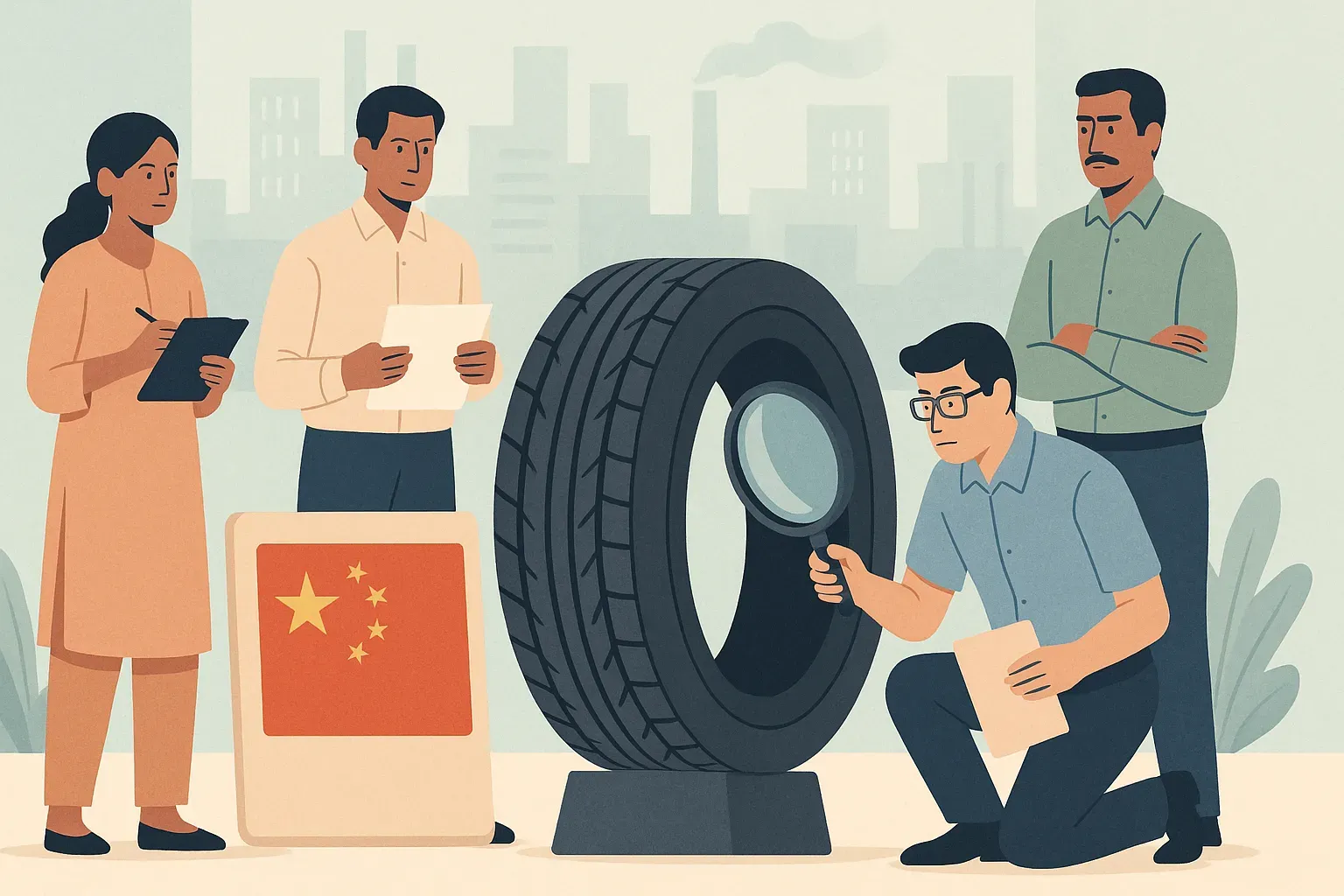
Import of a major industrial rubber from China is under scrutiny. The Commerce Ministry in India has officially launched an anti-dumping investigation into this raw material’s imports. The probe has been initiated by the DGTR (Directorate General of Trade Remedies) and is targeting "Halo Isobutene and Isoprene Rubber." This industrial rubber is an essential component that is primarily used in the automotive industry. This is a direct response to a formal complaint filed by Reliance Sibur Elastometers.
Reliance Sibur Elastomers, is a domestic producer who has alleged that Chinese exporters are "dumping" (selling it at unfairly low, below-normal-value prices) the product into the Indian market. This is allegedly causing "material injury" to the domestic industry. The local prices are being undercut and production is negatively affected.
After reviewing the "prima facie evidence," (or evidence at first impression) DGTR has found the application is duly substantiated. Thus, it has officially initiated the investigation. Now, the auto industry's supply chain is directly in the crossroads. So, what does this investigation signal for the entire manufacturing ecosystem, and what are the real-world stakes for investors?
What Is It About The Specific Rubber & "Material Injury"?
The product in consideration is Halo Isobutene and Isoprene Rubber (also known as Halobutyl rubber). This is a high-performance synthetic elastomer. Its single most important property is its exceptionally low permeability (ability of materials to pass through) to air. This is making it the default, non-negotiable material for manufacturing the inner tubes of tyres. It is used in bicycles, cars, commercial trucks, and even heavy-duty agricultural vehicles. Beyond this primary use, it is also a crucial component in hoses, seals, conveyor belts, and even protective clothing, thus deeply integrated into India's industrial framework.
Reliance Sibur Elastomers’ allegation is based on "material injury". This is a critical term in trade law. It not just means that the domestic industry is facing tough competition. But it implies that the alleged dumping is so severe that it is directly responsible for three aspects.
- Price Suppression - To force the domestic producer to sell at unsustainably low prices to compete.
- Loss of Market Share - It is related to a tangible decline in sales and market foothold as buyers switch to the cheaper Chinese import.
- Financial Distress - There is a direct negative impact on profits, cash flow, and the ability to raise capital for future expansion.
Now, the DGTR has started the formal process of collecting data to determine if this alleged injury is real. The investigation will seek a clear link between the dumped imports and the health of the domestic industry. With the stakes so high for a material this important, what is the procedure or path forward, and what does it mean for the end-users?
What Is the Process, and Who Feels the Impact?
The process would unfold in four clear stages.
-
Investigation - The DGTR will now conduct a detailed investigation, collecting data from the Chinese exporters, Indian importers, and the domestic industry (Reliance Sibur).
-
Determination - It will then analyse this data to confirm if dumping is happening. It will analyse if the domestic industry is truly injured, and if the dumping is the direct cause of the injury.
-
Recommendation - If all conditions are met, the DGTR will recommend the imposition of an anti-dumping duty.
-
Final Decision - The DGTR can only advise. However, the final call to impose the duty rests with the Finance Ministry, which will make a decision based on the DGTR's findings.
The immediate impact is uncertainty for importers and the tyre industry. If a duty is imposed, the input cost for tyre manufacturers can rise almost overnight. This cost can be inevitably passed on which can potentially lead to higher prices for everything from new trucks to a replacement bicycle tube.
A Case of Strategic Trade Theory
This probe can be an example of a government balancing free-market principles with domestic industrial policy. The WTO (World Trade Organization), of which both India and China are members, generally promotes free trade. However, it also explicitly permits anti-dumping duties to counter unfair practices.
This action aligns perfectly with what economists call Strategic Trade Theory. This theory argues that in a global market characterised by imperfect competition, where foreign giants may be heavily subsidised or supported by their governments, a country should intervene to protect its own "infant" or "strategic" industries.
Source

Kotak Neo (Kotak Neo) is India's venerable stockbroking company with a rich legacy. It offers comprehensive investment services across asset classes, prioritising a technology-first approach for a seamless experience. Trusted by 5 million+ customers, it guides you toward financial success with ease of investment and speed of trade.
Note: The opinions expressed in this blog are personal viewpoints and should not be construed as recommendations.
0 people liked this article.