Why Gold & Silver Prices Are Rising in 2025
- By Kotak Neo Team
- 18 Dec 2025 at 10:26 PM IST
- Market News
- 4 min read
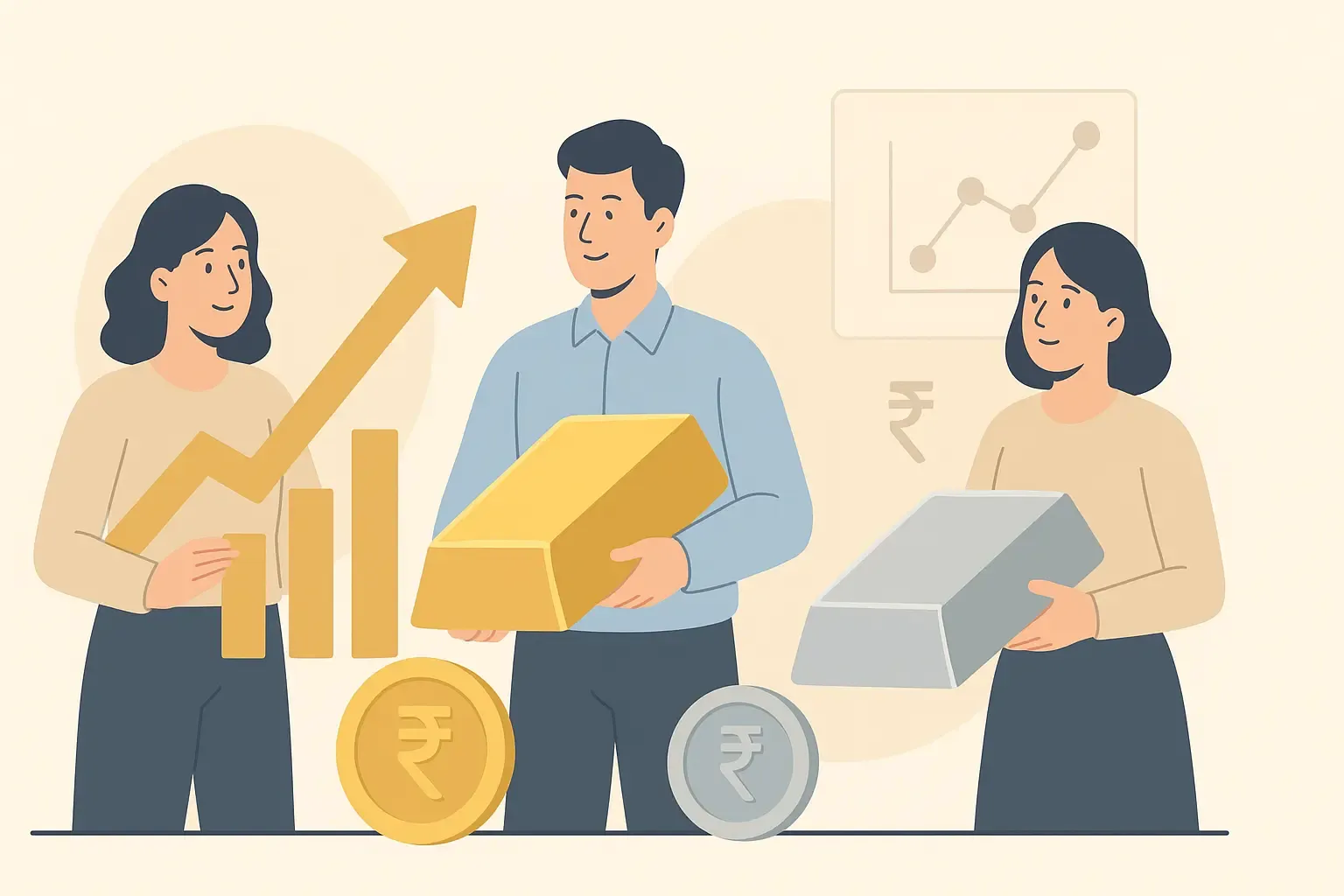
Rising expectations that the US central bank will cut rates have boosted global demand for gold. In India this Monday, 24-carat gold surged to about ₹1,29,810 per 10 grams. At the same time, silver prices, trading around ~₹1,88,000 per kg, also reached fresh records in the spot market, reflecting a broader rally in precious metals. Will this trend continue, and what should investors keep in mind?
Why Gold and Silver Rose, What Global Signals Are at Work?
International bullion markets pushed higher on renewed bets that the US Federal Reserve will lower interest rates soon. Lower global rates tend to weaken the dollar. A weaker dollar makes gold cheaper for buyers holding other currencies and improves its appeal as a non-yielding asset. Spot gold hit a fresh high globally as rate-cut expectations strengthened.
In India, the rupee also plays a role. When the rupee weakens a little against the dollar, the local price of gold and silver rises even if global prices stay flat. Reports say that for every 20–30 paise slide in the rupee, gold can rise ₹100–150 per 10 grams.
Silver followed gold’s lead, gaining sharply as investors expanded buying to silver, partly on rate-cut hopes and partly on demand for cheaper yet liquid metals. The silver rally adds support to overall bullion demand across metals.
How Current Levels Affect Demand, Inflation and Investor Moves
At roughly ₹1,29,810 per 10 grams for 24-carat gold, domestic prices are now close to the previous peaks of ₹1,32,294 per 10 gm seen earlier in 2025. This high level implies two things:
-
Jewellery and gold demand, including weddings and festivals, may slow temporarily, as high prices can deter retail buyers.
-
On the other hand, investors and savers may treat gold as a hedge against economic uncertainty or currency fluctuations. Given potential price volatility, many may wait for dips and monitor broader cues like the rupee and dollar.
For silver, high local rates may dampen industrial or jewellery demand. Still, investors may view silver as a lower-cost alternative to gold, especially if silver continues to show momentum.
From an inflation and macro angle, higher bullion prices may add to demand for imports. That could modestly widen the import bill. If oil and other commodity prices remain firm, the combined pressure may reflect in inflation or current-account metrics for the economy.
What To Watch Next, Key Triggers for Bullion Prices
The near-term trajectory of gold and silver will likely track global interest-rate signals and currency movements. See below:
- Official statements and minutes from the US central bank. If rate cuts become more probable, precious metals could stay supported. If the Fed signals caution, metals may correct.
- Dollar index and rupee-dollar exchange rate. A weaker dollar plus a stable or weakening rupee tends to support Indian bullion prices.
- Domestic demand seasonality. Festivals, weddings, and the wedding season can push local prices and demand higher.
- Inflation and interest-rate moves in India. Any rate cuts by the Indian central bank or slippage in inflation can make gold more attractive relative to fixed income.
Gold and silver have regained shine due to global cues. The key question now: will the metals hold near ₹1.30 lakh (gold) and record highs (silver), or will gains fade if global rates or currency shift against them?
References

Kotak Neo (Kotak Neo) is India's venerable stockbroking company with a rich legacy. It offers comprehensive investment services across asset classes, prioritising a technology-first approach for a seamless experience. Trusted by 5 million+ customers, it guides you toward financial success with ease of investment and speed of trade.
Note: The opinions expressed in this blog are personal viewpoints and should not be construed as recommendations.
0 people liked this article.