Sensex's Steepest Fall Since Sept: Fed Decision Spooks Markets Despite RBI Boost
- By Kotak News Desk
- 18 Dec 2025 at 10:26 PM IST
- Market News
- 4 min read
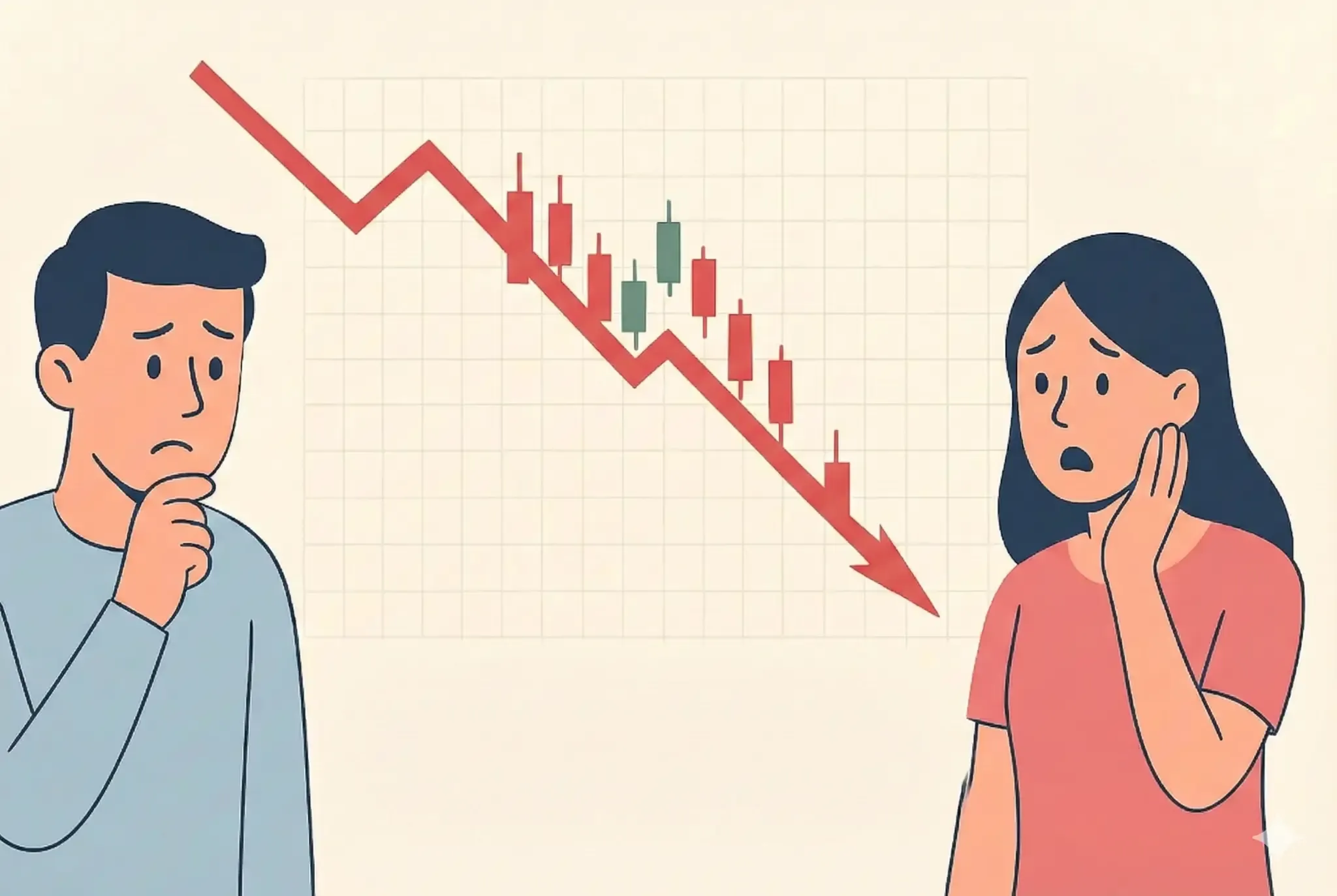
On Dec 8, the Nifty50 and SENSEX witnessed their sharpest single-day fall since Sept 25. The week for the Indian equity market investors started on a precarious note.
- The benchmark Nifty50 declined below the psychological 26,000 mark.
- The SENSEX shed 609.68 points (0.71%) to close at 85,102.69. The market had a sharp and overwhelmingly negative breadth. On the BSE (Bombay Stock Exchange), out of 4,485 stocks, 3460 ended in the red. This led to the market capitalisation of BSE decline of 1.24%.
Furthermore, all the sectoral indices ended in the red zone with realty and PSU banks being the top losers (down 3.5% and 2.8%, respectively). With such volatility expectations, India VIX rose more than 7%. India VIX is the market’s anxiety measurement.
This downturn has come as a surprise, especially given the RBI’s (Reserve Bank of India’s) decision on Dec 5 to cut the repo rate by a quarter percentage point. This move was celebrated by equity investors, cheering the indices up.
However, the domestic cheer is now wiped out by a wave of global caution. Investors have turned defensive ahead of the pivotal US Federal Reserve policy meeting scheduled for later this week.
This widespread selling pressure has considerably eroded investor wealth. But now, there is an important question for the investors. Is this a healthy correction before a year-end rally, or a warning sign that global macro headwinds are overpowering domestic growth stories?
Why Did The Market Fall Despite RBI's Rate Cut?
India’s domestic setup is drawing a robust image on paper. Painting the picture of a resilient economy are three main aspects:
- The RBI’s rate cut
- A lowered inflation forecast
- An upgraded GDP growth projection
Governor Sanjay Malhotra has made a dovish commentary suggesting that rates are likely to stay low to support growth. This is a stance that usually fuels risk assets.
However, on Dec 8, the market's reaction marked a classic "sell on news" behaviour. To put it more accurately, the market witnessed a realignment of risk priorities.
The domestic liquidity remained supportive. However, the immediate trigger for the sell-off was external. The persistent selling by overseas funds has created a liquidity drag (meaning, there are factors reducing the cash flows) that domestic institutions are struggling to fully absorb in the short term.
FPIs (Foreign Portfolio Investors) have become net sellers. They are gradually pulling out liquidity amid global uncertainties.
Furthermore, the Indian rupee (₹) is consistently under pressure. It is trading past the 90-mark against the dollar. A weakening currency can especially cause foreign investor anxiety, as it erodes their dollar returns.
This currency stress is combined with the anticipation of the US Fed's decision. Therefore, the traders are forced to trim their long positions, especially in high-performing sectors like realty and metals.
The Fed Factor
Undoubtedly, the elephant in the trading room is the US Federal Reserve.
Markets are currently betting on a high probability of a rate cut, but the fear lies in the "dot plot." The Fed's projection of future interest rates rules the narrative.
So, if the US Fed signals a slower pace of easing for 2026 due to sticky inflation or labour-market resilience, it might strengthen the dollar.
There is also a divergence of the monetary cycle. Meaning, while India is cutting rates to support growth, the US is battling to engineer a soft landing.
If the Fed disappoints, the risk-off sentiment might deepen. Conversely, a dovish Fed might provide the very trigger Indian markets need to reclaim the 26,000 level.
A Tug-of-War Between Macro And Micro
In theory, the asset prices are heavily influenced by systemic factors such as:
- Interest rates
- Currency movements
- Geopolitical events
These factors often overshadow company-specific fundamentals. So, until the global interest rate trajectory becomes clearer, domestic fundamentals may continue to take a back seat to global liquidity dynamics.
Sources:

Kotak News Desk brings you latest updates, expert insights, and market-ready ideas - helping you stay informed and invest smarter.
Connect on: Linkedin
0 people liked this article.