EV Insurance in India: Charging Ahead with Innovation
- By Kotak Neo Team
- 18 Dec 2025 at 10:26 PM IST
- Market News
- 4m
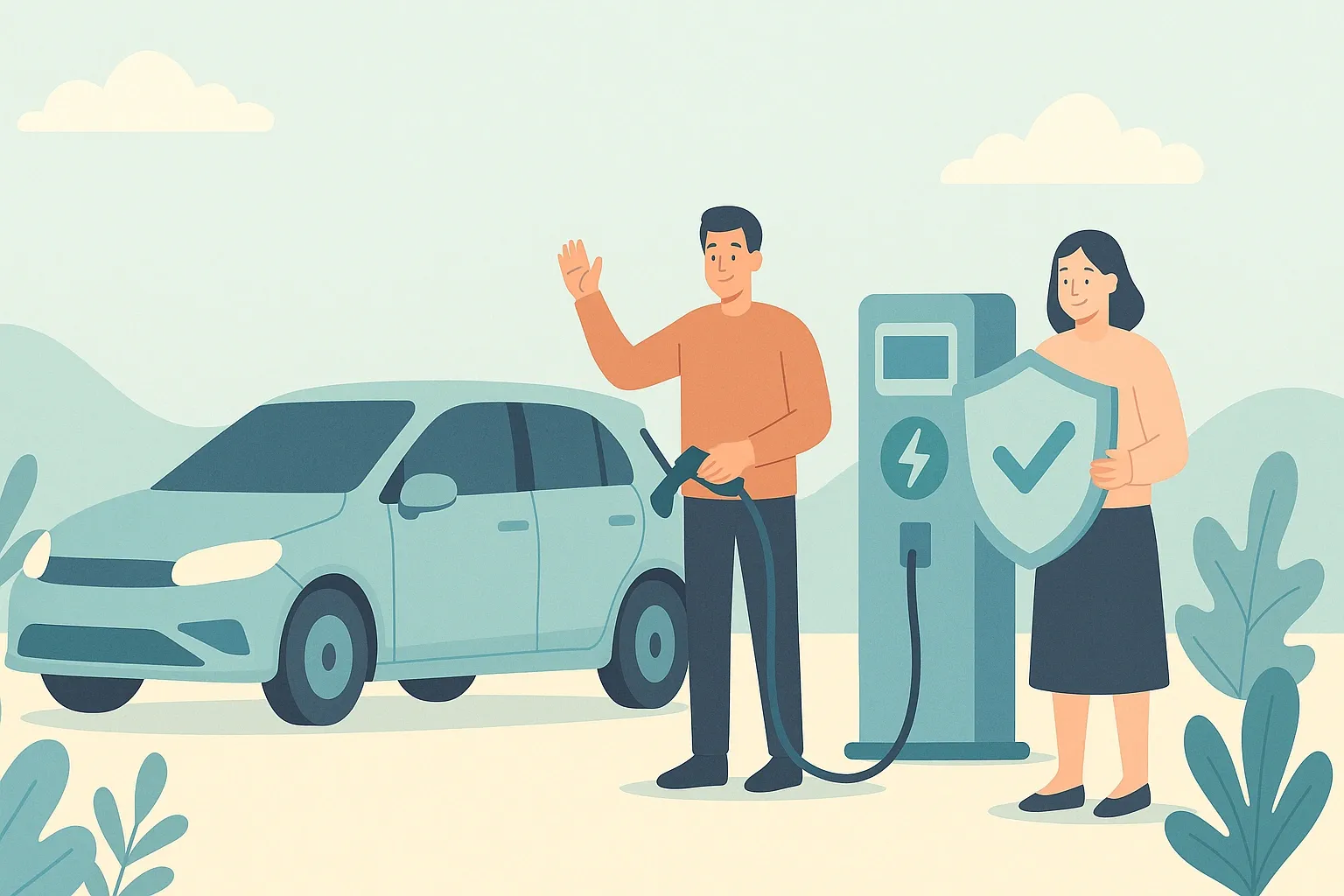
With India’s electric vehicle (EV) market on a strong upward trajectory, a lesser-discussed but equally critical component of the ecosystem is beginning to evolve: EV insurance. From established insurers launching tailored products to tech startups entering the fray, EV insurance is becoming the next frontier of innovation in the mobility space. And now, Tesla’s potential entry into India could catalyse a new wave of change — not just for automakers and consumers, but also for the insurance and investment communities.
Why EV Insurance Deserves Attention Now
The electric mobility transition is not just about swapping engines for batteries. It's a systemic shift involving new risks, asset classes, and technologies. Traditional motor insurance models, built around internal combustion engine (ICE) vehicles, often fall short when applied to EVs. For example:
- Battery replacement costs can make up to 40-50% of an EV’s value — a major risk factor. (McKinsey & Co.)
- EVs require specialised servicing and diagnostics, influencing claims processing.
- Telematics, battery health, and real-time driving behaviour are now part of underwriting.
This complexity opens up a massive opportunity for data-driven, usage-based EV insurance models, which could reshape underwriting norms in India.
Tesla’s Entry: A Trigger for Insurance Innovation
According to a recent Business Standard article, Tesla's entry into India may lead to "a wave of innovation in EV insurance" as domestic players race to meet the expectations of global OEMs that demand smarter, tech-aligned insurance solutions (Business Standard).
Tesla’s cars are already integrated with autonomous driving features, self-diagnostic tools, and built-in data capabilities. This necessitates an entirely different insurance design — one that’s proactive, AI-powered, and behaviour-based. Indian insurers will be forced to move beyond the traditional “renew once a year” model to dynamic, real-time risk-based coverage.
In effect, Tesla could serve as a forcing function that fast-tracks the digitisation of India’s motor insurance sector, especially in EVs.
Opportunities for Investors: A Parallel Growth Story
The EV insurance space isn't just a derivative of auto sales — it's a massive industry in its own right.
As per ICRA estimates, India’s motor insurance market was valued at ₹75,000 crore in FY24, with EVs making up a small but rapidly growing slice. With EV penetration expected to touch 30% in private vehicles and 70% in commercial fleets by 2030 (Niti Ayog and Rocky Mountain Institute Report), the insurance premium pool for EVs alone could surpass ₹15,000–₹20,000 crore annually by the end of the decade. (Markets & Data)
This growth will be led by:
- Tech-enabled insurers creating battery-specific and warranty-linked covers.
- Startups and OEMs collaborating on embedded insurance at the point of sale.
- Data-as-a-service platforms offering EV health analytics to insurers.
For equity investors, this translates into opportunities in listed general insurers (like ICICI Lombard, New India Assurance) and New-age insuretech firms. Venture capital is also pouring into EV insurance startups — a space where India is still nascent compared to the US or EU.
A New Asset Class for Traders?
For traders, EV insurance stocks and related ETFs (as they emerge) could become a niche thematic play. With ESG investing gaining traction, companies contributing to the EV ecosystem — including insurers innovating in this space — may see valuation rerating over time.
Moreover, trading volumes in general insurance stocks could see a pickup if Tesla’s India entry leads to a revaluation of the total addressable market (TAM) for EV-linked financial products. Any announcements around strategic partnerships between Tesla and Indian insurers could act as catalysts. (The New Indian Express)
Challenges That Remain
While the opportunity is compelling, it is not one without hurdles:
- Lack of historical EV data makes pricing premiums difficult. (Digital Insurance)
- Infrastructure risks like battery fires and charging mishaps are not fully understood. (wtw)
- Consumer awareness around EV-specific insurance remains low.
- IRDAI began issuing EV-specific insurance guidelines in FY2019–20, including separate third-party premium rates and incentives like 15% discounts. While this marked a key regulatory milestone, the ecosystem still awaits detailed frameworks for new-age EV risks like battery-only cover, charger damage, and usage-based EV products — areas where further regulatory clarity can support innovation. (e-Amrit)
That said, many of these issues are solvable — and perhaps inevitable challenges as the ecosystem matures.
The Bigger Picture: EV Insurance is an Enabler, Not a Sidecar
What’s becoming increasingly clear is that EV insurance is not a support function — it’s a critical enabler of the entire ecosystem. Without robust insurance products:
- Fleet operators may hesitate to convert to EVs.
- Financiers may see EVs as unbankable or high-risk assets.
- Retail buyers may shy away from high upfront costs without insurance cover for batteries or chargers.
Thus, the growth of EV insurance directly influences EV adoption, financing penetration, and even used-EV resale markets.
The Road Ahead
As India’s EV ecosystem matures, we may see the emergence of:
- Pay-as-you-drive and battery health-linked insurance products.
- OEM-insurer-fintech ecosystems offering bundled mobility solutions.
- Dynamic pricing models using AI, IoT, and vehicle telematics.
Global players like Tesla, and domestic leaders like Tata Motors and Mahindra Electric, will likely push insurers to match their pace of innovation.
This opens up a multi-billion-dollar white space — not just in vehicle insurance, but also battery warranty, EV asset protection, ride-sharing risk covers, and more.
To conclude, the EV insurance market in India is at an inflection point. As Tesla and other global players enter the scene, expect a paradigm shift in how vehicles are insured — from static policies to dynamic, real-time risk models. For traders and investors, this space offers early-mover advantages in both public and private markets. And for the Indian EV story at large, innovative insurance could be the missing puzzle piece that makes adoption mainstream.
Sources:
McKinsey & Co.
Business Standard
Niti Ayog and Rocky Mountain Institute Report
Markets & Data
The New Indian Express
Digital Insurance
wtw
e-Amrit

Kotak Neo (Kotak Neo) is India's venerable stockbroking company with a rich legacy. It offers comprehensive investment services across asset classes, prioritising a technology-first approach for a seamless experience. Trusted by 5 million+ customers, it guides you toward financial success with ease of investment and speed of trade.
Note: The opinions expressed in this blog are personal viewpoints and should not be construed as recommendations.
0 people liked this article.