What is an Investment Policy Statement (IPS)? A Beginner’s Guide
- 4 min read
- 1,079
- Published 18 Dec 2025
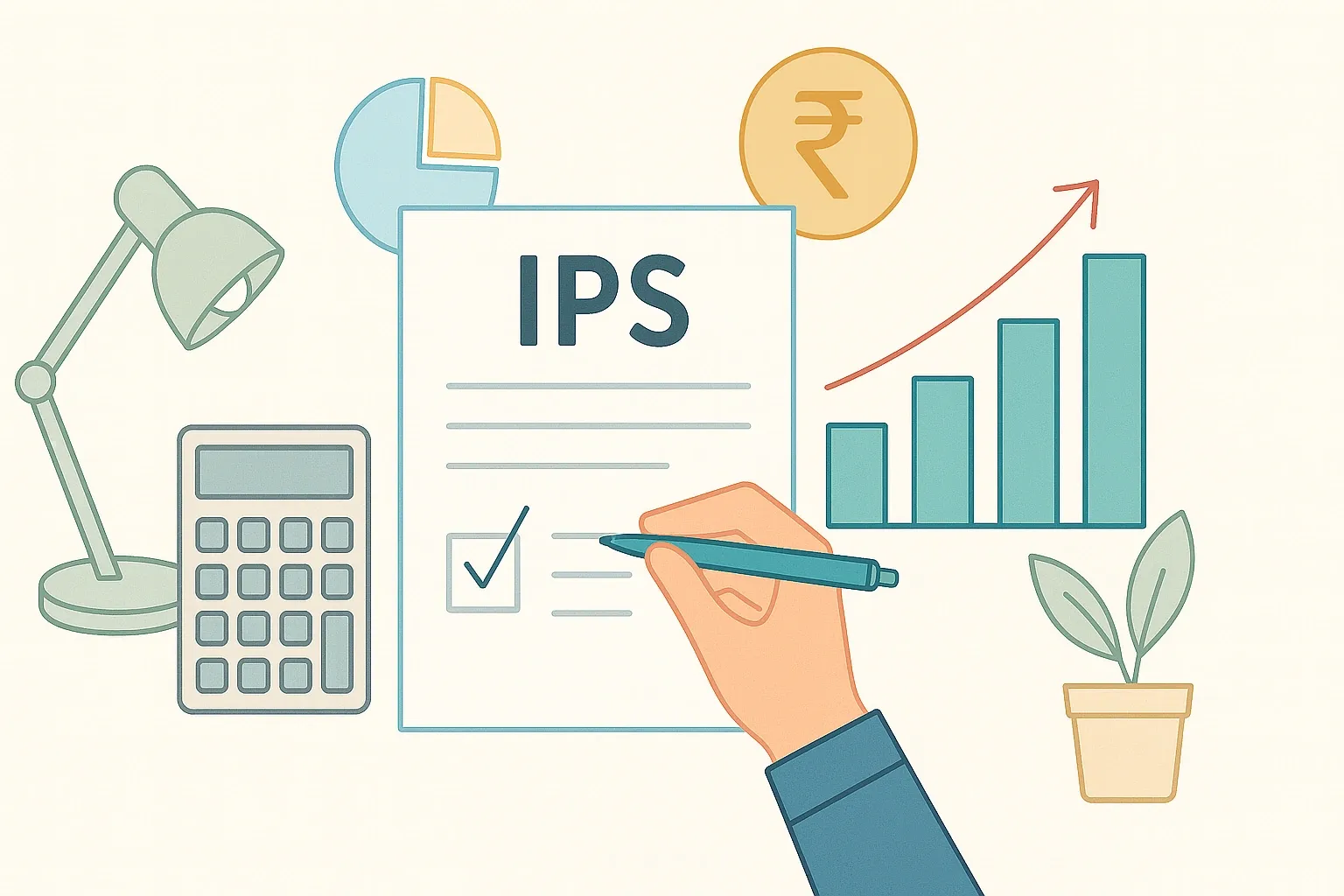
An Investment Policy Statement (IPS) is a written plan that helps you manage your investments. It explains your financial goals, the level of risk you are comfortable with, and how long you plan to invest.
Think of it as a roadmap. It helps you stay focused, especially when markets fluctuate, and ensures your investment decisions align with your long-term goals. This beginner’s guide breaks down what is IPS, what it includes, and why it’s useful for investors.
What is Investment Policy Statement (IPS)?
An Investment Policy Statement, or IPS, is a formal document that talks about an investor’s financial goals and objectives, asset allocation, risk tolerance, liquidity needs, investment strategy, etc. The document is drafted between a portfolio manager and an investor, outlining the roles and responsibilities of the manager in managing the portfolios. It must also contain the strategies that the manager must employ to meet the client’s goals.
Components of IPS
Some of the key components of an IPS include:
-
Goals and objectives: Before you start investing, it is essential to clearly define the goals and objectives of the investment. How long you want to invest—short term (1-5 years), medium term (5-10 years), or long term (more than 10 years); do you need a regular interest or dividend or you want to focus on growth; do you want to invest for children’s education or to build a retirement corpus.
-
Investor information: This includes your basic details, such as name, age, income, and the purpose of the investment, as well as any relevant investment experience.
-
Asset allocation strategy: This is a crucial factor when making any investment. The IPS outlines the asset allocation across various classes, including bonds, stocks (also known as equities), gold, real estate, cash, and alternative investments. It may also specify the percentage of allocation.
-
Risk tolerance: How much risk can you take? Are you willing to take that risk? Can you handle market fluctuations?
-
Performance benchmarks: This component will include the performance benchmarks against which your portfolio’s performance will be measured. The benchmarks include the Nifty 50, S&P 500, and the inflation rate, among others.
-
Investment criteria: What kind of investments should you choose, what are the criteria for selecting investments within each asset class, how to pick stocks, what are the specific assets or industries that you should avoid, etc. All these will be included in the IPS.
-
Review: The IPS must be reviewed regularly to ensure it remains aligned with your goals, objectives, and market conditions.
Key advantages of using an Investment Policy Statement
-
Provides clarity: An IPS gives clarity about your investment goals and objectives—why and how you want to invest, what performance metrics will define the performance of portfolios, and helps you make informed decisions. It will also ensure you focus on long-term goals and avoid unnecessary risks.
-
Risk management: By outlining guidelines for diversification of portfolio, asset allocation, risk tolerance and investment constraints, the IPS helps you manage risk even when markets are volatile.
-
Accountability: An IPS helps you create a benchmark against which the investment performance can be measured. It also sets guidelines that allow you to monitor the investments and make adjustments to the investment strategy as needed. This helps to track the progress.
-
Aligns investment with goals: The IPS ensures your portfolio is aligned with your investment objectives, whether it is for buying a home, building a retirement corpus, or funding your children’s education.
-
Discipline: If you maintain an IPS, you will follow an investment strategy for the long term, which can yield good returns. It will prevent you from taking impulsive decisions based on short-term market fluctuations.
How to create an IPS
Here’s a step-by-step guide to help create an IPS:
- Outline your investment goals and objectives.
- Choose your asset allocation.
- Evaluate the levels of risk that you can afford to take.
- Devise an investment strategy, i.e., will you invest in mutual funds, stocks, or ETFs.
- Set performance metrics to review how your investments are performing.
- Make the IPS simple, clear, and concise and revisit periodically.
Mistakes to avoid while creating an IPS
Here are a few things that you must keep in mind while creating an IPS:
- Do not be too rigid with the document. You must review and update the document periodically, depending on market fluctuations or any changes in life events, such as marriage, loss of employment, etc.
- Do not set unrealistic goals, as markets are inherently volatile.
- Do not ignore the risks, as it can lead to panic selling during a market crash.
- Do not overcomplicate the IPS. Keep it simple to understand.
Conclusion
So, what is Investment Policy Statement? It is more than just a document. It is considered a business plan for your diversified portfolios that details the investment strategy. As the guidelines are mentioned in the IPS, they help make informed decisions. If you have an IPS, remember that it should be reviewed and updated periodically, making adjustments based on changing financial circumstances, market conditions, or life events.
0 people liked this article.