Why India’s Alcohol Industry Rarely Slows
- 4 min read
- 1,007
- Published 13 Feb 2026
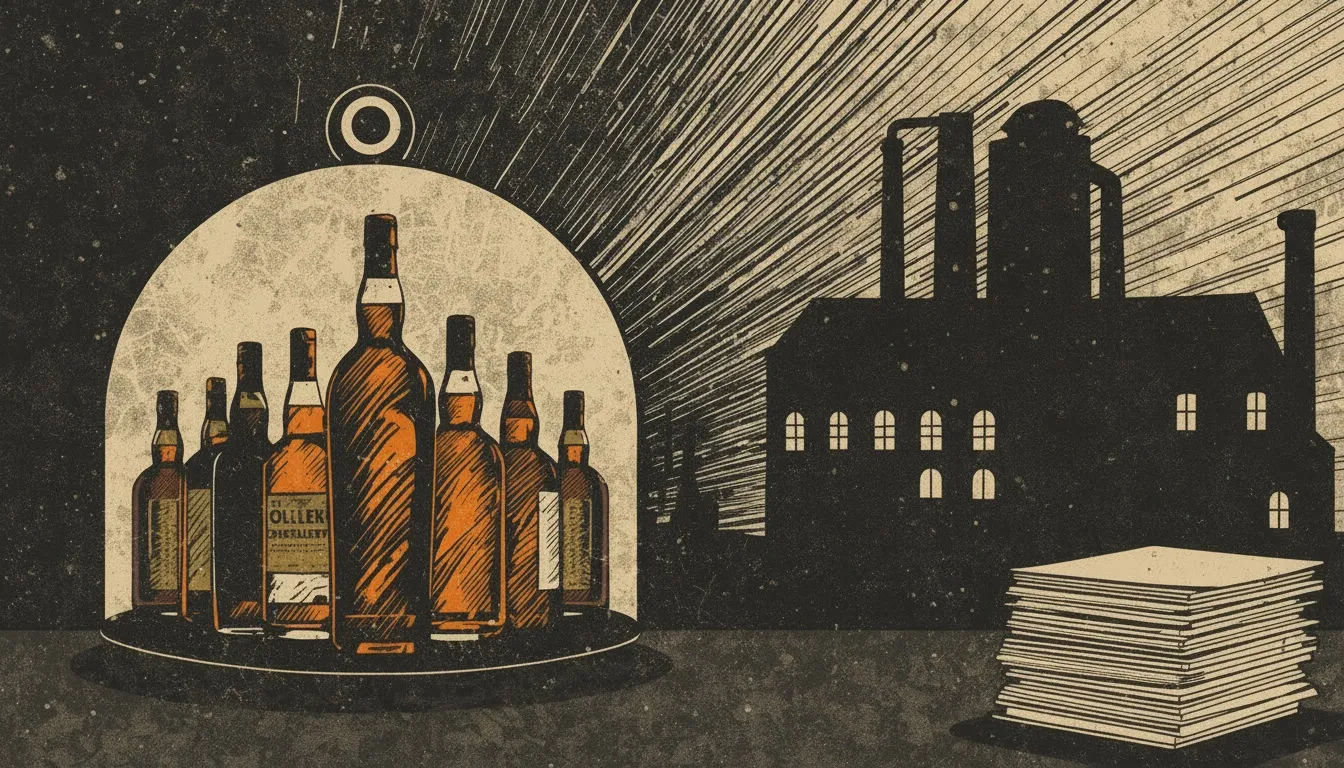
Flip through the ancient texts.
Long before quarterly earnings were a thing, sura and soma were a part of the debates.
The Indus Valley left behind pottery with residues suggesting that somebody, somewhere, was already fermenting something interesting between 3300 and 1300 BCE.
By the Vedic period, drink had entered scripture.
By the Mughal era, taverns were humming in urban centres.
Then the British arrived and did what empires do best.
They formalised licensing, built excise systems, and quietly turned alcohol into a dependable revenue machine.
That habit never left.
Which is why, when somebody asks why the Indian alcohol industry appears so resilient, one need not immediately think of bottles or brands.
The more revealing lens is history and taxation.
It is woven deeply into the fiscal fabric of the country.
And that is where the economic story really begins.
A Market That Refuses to Go Flat
In 2023, India’s alcohol market touched 6.7 billion litres in volume, growing 7.5% year-on-year.
In value terms, estimates hover around $60 to 65 billion in 2024 to 2025.
These are not the numbers of a sleepy industry.
They point to steady, almost stubborn demand.
Pure alcohol consumption stood at nearly 3,239 million litres in 2023.
On a per adult basis, about 4.5 litres in 2022 to 2023.
Still lower than many Western markets, yet clearly rising over the past two decades. That gap is not merely a cultural footnote.
It represents room for further expansion.
Imports of alcoholic beverages surged to roughly $1 billion in 2023, largely driven by distilled spirits.
At the same time, states continue to lean heavily on excise duties.
When a sector is both aspirational for consumers and essential for government revenues, it develops a peculiar kind of durability.
Spirits, Beer and the Premium Pull
Spirits dominate the landscape.
In FY2024, they accounted for 66.3% of total alcohol volume, roughly 767 million cases.
Indian Made Foreign Liquor (IMFL) and local spirits drive the bulk of this.
Beer sits second in value terms, with the Indian beer market estimated at ₹444.6 billion in 2024.
But the real shift lies in premiumisation.
Super premium IMFL grew by about 23% in 2024.
Premium IMFL grew nearly 18%.
That is not merely consumers drinking more. It is consumers trading up.
Wine remains small by volume, yet even here, exports are ticking higher.
Indian grape wine exports reached 8.71 lakh litres in 2024 to 2025, valued at $5.97 million.
Tiny in the larger scheme, yes.
Symbolic, absolutely.
It hints at brand ambition beyond borders.
The Supply Chain That Anchors It All
Resilience is rarely glamorous.
It usually lives in warehouses and distilleries.
India’s Extra Neutral Alcohol (ENA) market was valued at around ₹105.4 billion in 2024.
That signals deep domestic production and bottling capacity.
Most of the value chain stays within the country.
According to IWSR, regional manufacturing clusters, contract distilling, and the rise of local brands add flexibility.
When shocks happen, the system bends instead of breaking.
As of June 2025, there were about 499 distilleries that could make almost 1,822 crore litres of ethanol per year.
That scale matters.
It lowers the need for imports of industrial alcohol and helps meet fuel blending goals.
Maharashtra and Uttar Pradesh are still the main sources of sugarcane and molasses.
A stronger sugar season in late 2025 improved raw material availability for distillers.
This is where second-order thinking begins.
The industry is not just selling bottles.
It is embedded in agriculture, energy policy and rural supply chains.
Policy as Shield and Sword
Alcohol for human consumption sits outside GST.
Each state controls its own taxation through excise duties and levies.
Collectively, states earn roughly ₹80,000 to ₹95,000 crore per year from alcohol related taxes.
Uttar Pradesh alone earned about ₹47,600 crore from liquor in FY2023 to 2024.
When a sector funds state budgets at that scale, prohibition becomes complicated.
Gujarat has enforced it since 1960.
Bihar introduced a statewide ban in 2016.
But large revenue states tread carefully.
India also imposes high ad valorem customs duties on imported finished alcoholic beverages.
From 2024 to 2025, most imported spirits and wines have faced duties commonly reported in the 100 to 150% range.
That amounts to meaningful protection.
In February 2025, the basic customs duty on certain bourbon whiskey tariff lines from the United States was reduced to 50%; selective relief, not a floodgate opening.
For domestic producers, this protective stance limits external competition.
For investors, it is a reminder that global competition here operates on India’s terms.
Fragilities Beneath the Foam
None of this makes the sector bulletproof.
Tax increases at the state level can quickly lower margins.
Heavy fiscal dependency means that any big state that restructures or bans something can hurt both volumes and state budgets at the same time.
Tragedies involving illegal alcohol, including the Kallakurichi event in June 2024, which reportedly killed about 60 people, hurt trust and led to stricter regulations.
Molasses and rectified spirit from the sugar industry are important to supply networks.
High-end brands depend on imported materials like Scotch bulk spirit and oak barrels.
Changes in sugar production, export controls, or the value of the rupee can all raise expenses.
In inflationary phases, price-sensitive consumers may down trade.
This is where stock selection matters.
The Investor’s Glass
For equity investors, the Indian alcohol story is neither about romanticising spirits nor comparing Indian whisky to American bourbon.
It is about structural durability.
You are looking at steady demand, visible premium growth and a taxation framework that ties the sector closely to state finances.
Focus on companies with strong premium portfolios, wide state presence and backward integration in ENA and distillation.
Watch excise changes like you would watch interest rates.
Track raw material cycles.
Keep an eye on debt.
Treat it as defensive plus growth.
Not flashy growth, but layered growth.
The kind that comes from consumers trading up, from domestic supply chains that cushion shocks, from policy settings that lean protective rather than permissive.
In a world where sectors rise and fall on global whims, the Indian alcohol industry feels distinctly local, deeply entrenched and quietly strategic.
Like soma in an ancient text, it has survived empires, reforms and regulatory twists.
For investors willing to look past the label, that resilience is the real vintage.
Sources and References:
- SCROLL
- EUROMONITER
- RESEARCHANDMARKETS
- ABDINDIA
- FAS
- MONIKALCOBEV
- TIMESOFINDIA
- LIVEMINT
- IMARCGROUP
- THEIWSR
- CHINIMANDI
- REUTERS
- ECONOMICTIMES
- PRESSREADER
- BBC
0 people liked this article.