LPG Shortages Are Choking India's MSMEs
- 5 min read
- 7,303
- Published 20 Mar 2026
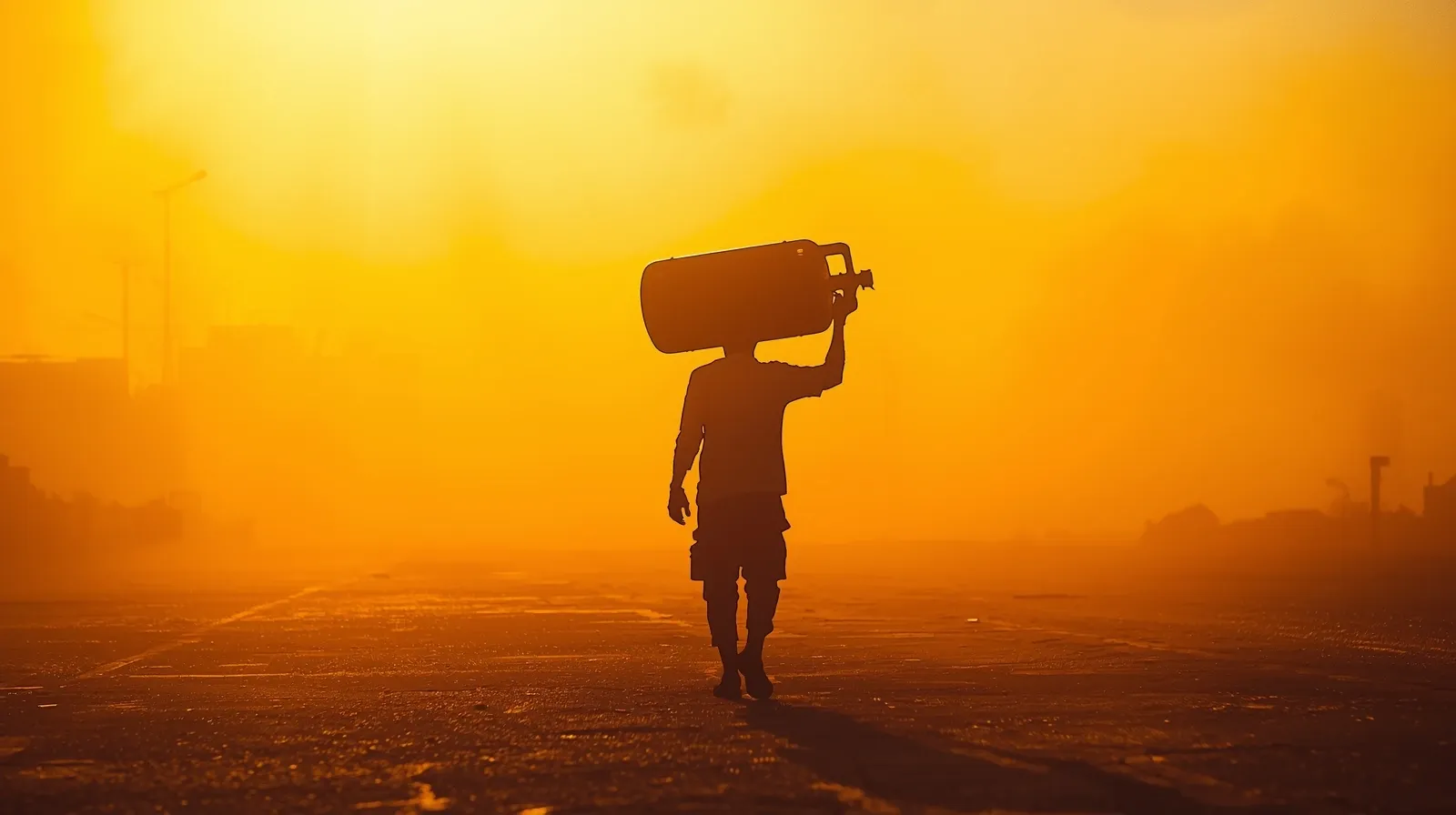
In a small commercial kitchen, the first thing to go quiet is the second burner.
Orders still come in, but the pace changes. Someone decides what can wait.
Outside, the familiar script plays out. Crude oil charts start trending, aviation stocks get nervous, and prime-time debates rediscover geopolitics.
It is almost comforting in its predictability.
And then there is LPG, missing from the conversation but shaping everything underneath.
Because this time, the disruption is not playing out at petrol pumps or airline balance sheets.
It is playing out in bakeries, ceramic kilns, dairy units and small factories that do not make headlines but keep the economy ticking.
Source: JM Baxi Group Tidings
Most LPG that India consumes travels a long, narrow path through the Strait of Hormuz.
About 90 to 95% of shipments pass through this single chokepoint.
It works smoothly until it does not. India consumes close to 3 million tonnes of LPG every month and stores only about 1 million tonnes.
That is not a cushion. That is a short pause.
Put another way, two large vessels carrying roughly 92,700 tonnes can meet just about a day and a bit of national demand.
The margin for error is thin, and in a disruption, it disappears quickly.
From coastal terminals like Dahej, Hazira and Kochi, this fuel travels inland through pipelines, rail and trucks, eventually landing in bottling plants before reaching businesses.
It is a long chain. Any break in it shows up at the very end, where the smallest players operate.
The Quiet Prioritisation
When supply tightens, the system does what it is designed to do. It protects households.
India has over 333 million LPG-connected homes, and ensuring domestic supply becomes the priority.
Commercial users move quietly to the back of the queue.
In several states, non-essential sectors are receiving only 10 to 20% of their normal commercial LPG supply.
In Karnataka, around 1,000 cylinders are being split across more than one lakh eateries each day.
The math is brutal even before you run it.
For MSMEs, this goes beyond inconvenience.
It directly determines whether they can operate at all.
Where the Wheels Actually Slow Down
A bakery in Khamgaon that supplies products for Parle-G needs about 3 tonnes of LPG daily.
A supply crunch forced it to shut operations, affecting over 500 workers and cutting wages in half. Chapati-making units that typically produce 20,000 to 25,000 units a day are now managing 6,000 to 8,000, and even that feels stretched.
New orders are being turned away.
These are early signals of how tightly fuel supply and production are linked in the MSME world.
The uncomfortable part is how quickly a few tonnes of missing fuel can stall entire micro-ecosystems.
The Illusion of Substitution
On paper, there are alternatives: Electricity, biomass, and coal.
In practice, they come with trade-offs that MSMEs feel immediately.
Electricity demand in places like Gurgaon jumped by 80 lakh units in just nine days as businesses tried to switch away from LPG.
But electric cooking at scale is more expensive, less efficient for certain processes, and often limited by infrastructure.
Coal prices have already climbed 20 to 22% in two weeks, moving from ₹7,000–7,500 to ₹8,500–9,000 per tonne.
So even the fallback options are getting pricier.
Substitution exists. Seamlessness does not.
A Familiar Vulnerability, Just Larger Now
India has seen energy shocks before.
The 1973 oil crisis, the 1991 balance of payments crunch, and the 2008 price surge. Each time, the lesson was clear.
Dependence on imports creates fragility.
That dependence has not gone away; it has deepened.
Crude import reliance has climbed to 88.6% in FY2025–26 from about 82% earlier.
LPG tells a similar story.
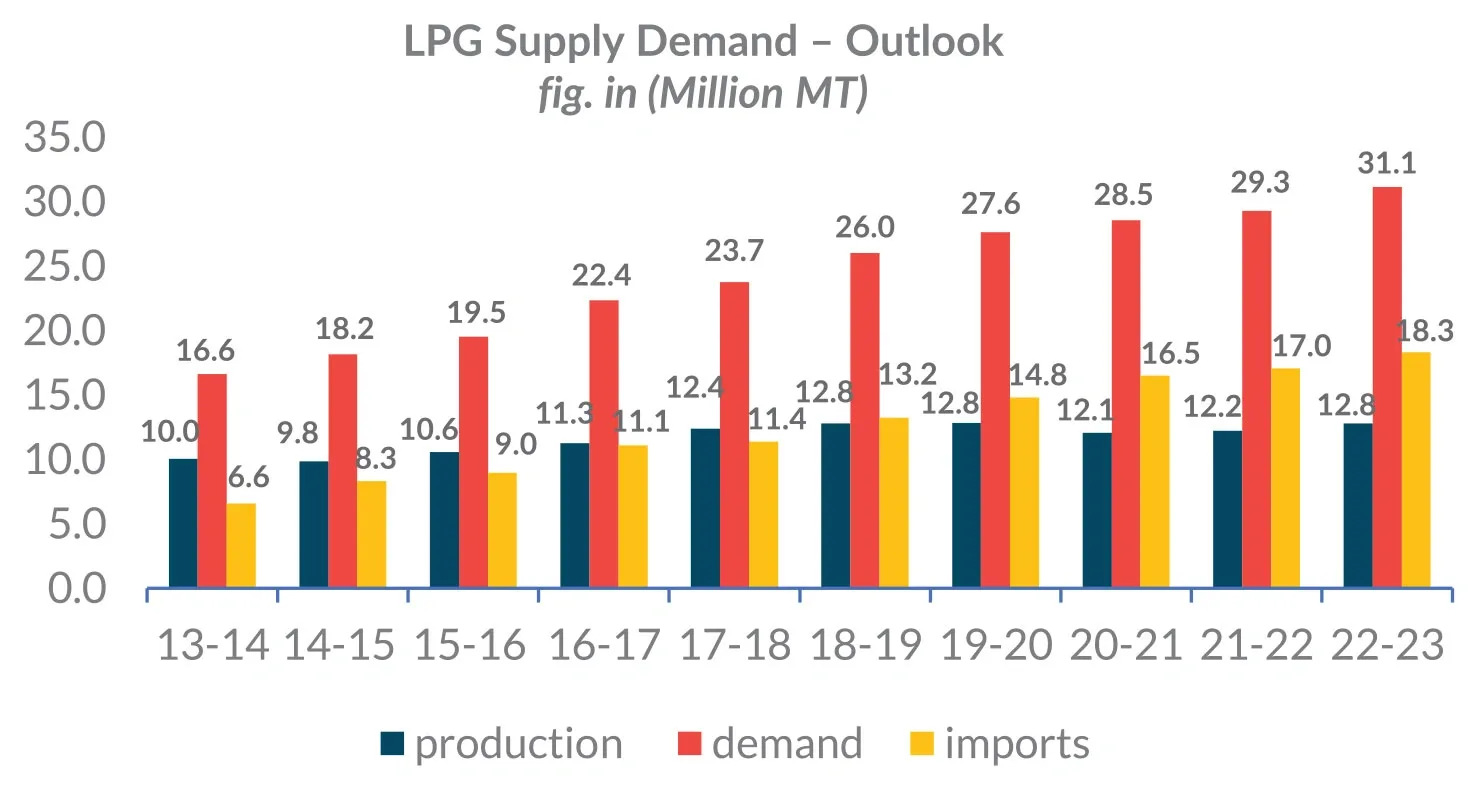
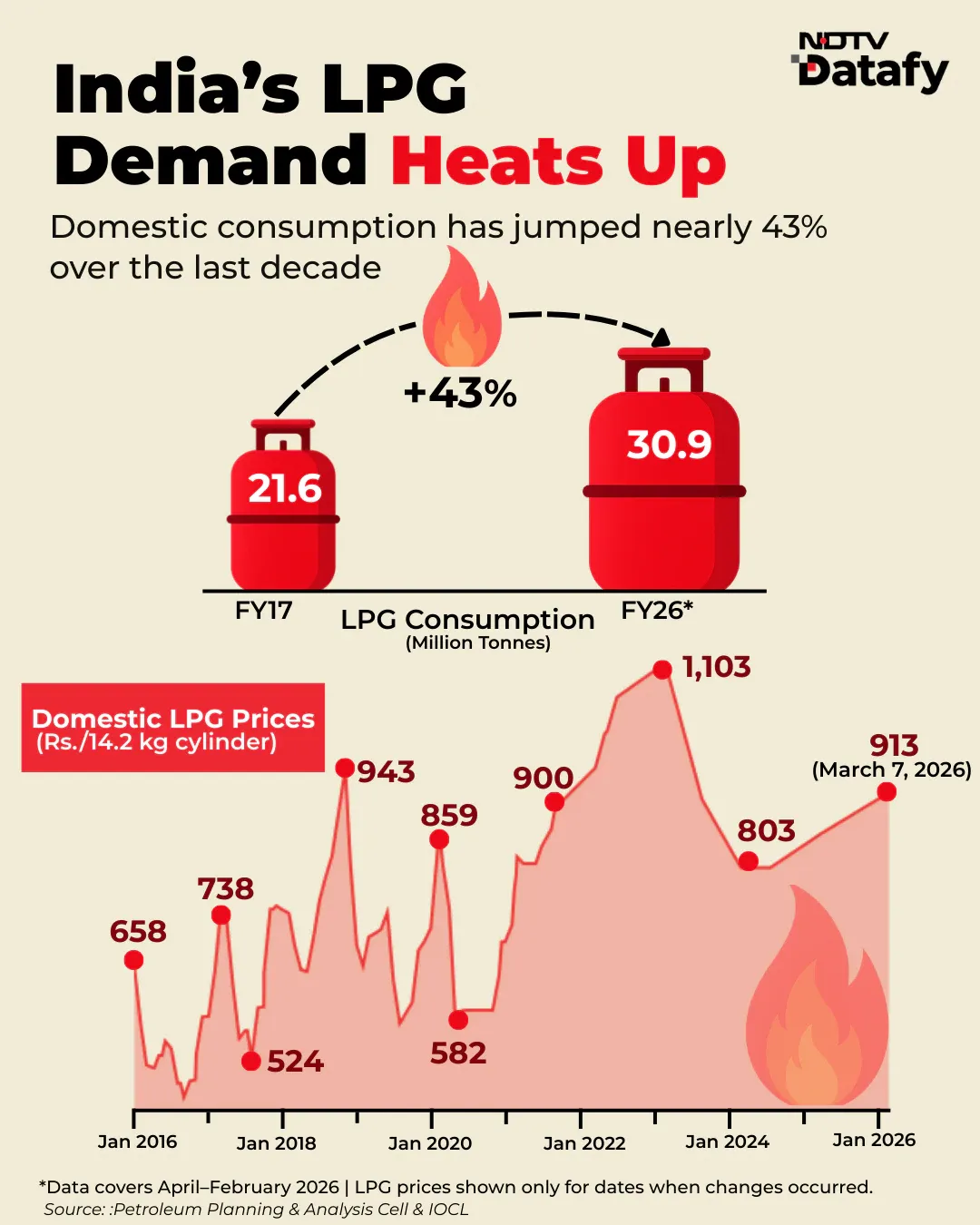
Demand reached 29.66 million tonnes in 2023–24, while domestic supply stood at 12.78 million tonnes.
The gap, nearly 16.88 million tonnes, is filled by imports.
Which means even a short disruption can trigger a sharp fall in supply.
A 17.3% year-on-year decline is not a theoretical risk.
It is what happens when the chain is stressed.
India has built strategic reserves for crude covering around 74 days of demand.
LPG has not received the same treatment.
The vulnerability has scaled with demand.
Source: NDTV
The Backbone Nobody Prices In
MSMEs are often described as the backbone of the economy.
It sounds like a cliché until you look at the numbers.
Over 63 million enterprises employ roughly 110 million people.
This is effectively the employment engine of the economy.
And many of these units run on LPG.
Dairy and sweet units rely on it for boiling and processing.
In Madhya Pradesh, disruptions have already cut milk processing capacity from 12 to 13 lakh litres down to nearly 8 lakh litres.
Hospitality businesses use LPG for everything from cooking to hot water.
With supply capped at about 20%, they are cutting services, scaling down operations and losing revenue.
Small manufacturing clusters use LPG for heating, drying and chemical processes.
Remove that input, and production slows or stops.
This is not an inflation story; it is a throughput story.
Where Markets Will Finally Notice
The first impact stays invisible, like a factory running fewer hours, a catering unit declining an order, or a dairy reducing output.
Nothing shows up on a stock ticker.
Then, after 60 to 90 days, the effects start showing up where markets do pay attention: credit quality.
MSMEs cannot hedge fuel costs.
They do not hold strategic reserves.
When margins get squeezed or production drops, cash flows tighten.
Loan repayments begin to stretch.
This is where NBFCs and MSME-focused lenders start feeling the heat.
Lenders like Ugro Capital, Five-Star Business Finance and Veritas sit closest to this ecosystem.
Their exposure is not to fuel prices directly, but to the businesses that depend on that fuel.
If the disruption persists, the stress will likely show up in NPA data in Q1 FY27 results.
It will not arrive suddenly, but will creep in.
The Supply Chain Ripple
There is another layer that tends to get ignored until it is too late.
Large companies often rely on MSMEs for components, packaging and outsourced processes.
When MSMEs slow down, the ripple travels upstream.
Delays start appearing, costs creep in, and margins get nudged.
Companies may not immediately attribute it to LPG shortages, but operational commentary over the next two quarters could start reflecting these pressures if the disruption continues.
This is how a fuel issue becomes a supply chain issue.
Policy, Patches and Possibilities
There are attempts to manage the situation.
Refineries have been pushed to increase LPG output, leading to a 25% rise in domestic production in March 2026.
There is also a visible shift in behaviour.
PNG enquiries have jumped 20%, with 22,000 new users added in just 15 days.
The intent to diversify fuel sources is clear.
Alternatives like dimethyl ether and electric cooking are being discussed, though scaling them quickly is another challenge altogether.
Dynamic allocation of supply, stricter checks on hoarding and faster expansion of gas networks are all part of the playbook.
The question is less about availability of solutions, and more about how quickly they can be implemented at scale.
The Investor Lens
At first glance, this does not look like a market-moving story.
There is no immediate spike, no headline index reaction.
But the impact sits in layers.
MSME-heavy lenders carry direct exposure through credit quality.
Companies dependent on MSME suppliers carry indirect operational risk.
On the other side, city gas distributors and alternative fuel providers could see incremental demand as businesses look for stability.
It becomes less about reacting to fuel prices and more about reading second-order effects.
Some disruptions announce themselves.
Others sit quietly in the background and change how the system functions.
The LPG story belongs to the second kind.
Sources and References:
- JMBAXI
- ARGUSMEDIA
- TIMESOFINDIA
- INDIATIMES
- REUTERS
- NDTV
- MSME
- REDIFF
- ECONOMICTIMES
- THEHINDU
0 people liked this article.