Spit, Waste, Delay: How Bad Habits Compound into Crore Losses
- 5 min read
- 5,037
- Published 18 Dec 2025

It all starts small.
Stand at any railway platform in India for ten minutes, and you’ll see a pattern.
Someone spits a stream of gutka, another follows, soon the corner is painted red.
And it almost starts looking like it was designed that way.
Step onto a busy junction, and motorists treat red lights like ornaments while horns blare impatiently.
Walk a few metres further, and an overflowing garbage heap greets you.
None of this shocks us anymore; it’s simply part of the backdrop of daily life.
But one bad habit, repeated millions of times, quietly snowballs into a giant national expense.
Take the Railways for example, a viral reel recently revealed it spends ₹1,000 crore every single year just wiping away gutka stains and graffiti marks.
A thousand crores, just on cleaning these marks off trains and platforms.
If that doesn’t scream “hidden tax,” what does?
Investors love to talk about efficiency, but civic ignorance is a leak that runs like a dripping tap.
Small, constant, and adding up to an astonishing bill.
Traffic: India’s Favourite Slow-Motion Reel
Bengaluru alone makes commuters lose 243 hours every year while driving – just sitting, honking, scrolling, cursing.
On the surface, it looks like a population problem: too many cars, too few roads.
But the real culprit is civic behaviour.
Speeds dip to 18 km/h in peak hours because commuters seldom follow lane discipline, red lights are treated as mere decorations, and construction sites have turned into permanent fixtures.
Result? The economy coughs up ₹1.47 lakh crore annually across major cities in lost fuel, lost productivity, and lost patience.
These hidden costs creep into fuel imports, logistics delays, and corporate balance sheets.
But it doesn’t have to stay this way.
Smarter traffic management, better public transport, and stricter enforcement of basic rules could save crores.
That’s money and time freed up to flow straight back into growth.
Waste: Where Half Goes Missing
India generates 160,038 tonnes of solid waste every single day.
That’s 58.4 million tonnes a year.
And yet, barely half of it gets treated.
The reason isn’t just inadequate infrastructure.
Households and businesses rarely segregate waste, leaving municipalities to clean up a toxic mix that rots away, releases methane, and poisons groundwater.
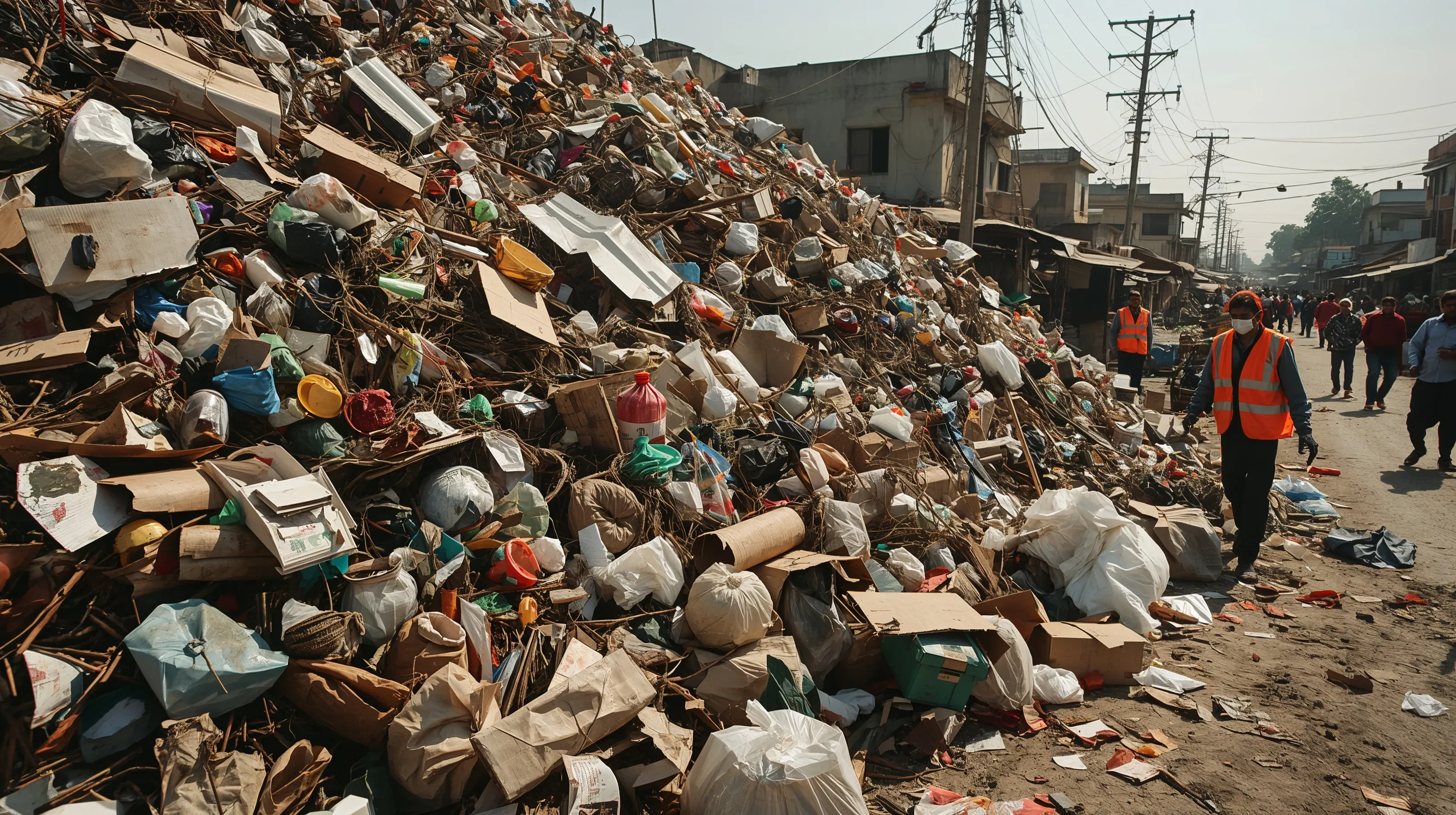
This laziness is expensive, forcing cities to spend more on fire-fighting clean-ups instead of investing in long-term, sustainable systems.
For investors, the cost shows up differently: poor ESG scores, higher compliance risks, and valuation discounts.
But small fixes at the source such as segregation and recycling could flip this liability into a value driver.
This way cleaner streets would not just look better but make for healthier balance sheets.
Tourism: Taj, Selfie, Plastic, Repeat
In 2024, India welcomed 20.57 million international tourists, a 8.89% growth.
Yet the experience often tells a different story.
Almost 2.5 billion domestic tourists flock to the same overburdened hotspots, leaving plastic trails and ecological scars, while ignoring lesser-known destinations.
Despite ₹3,200 crore spent on Swadesh Darshan 2.0 circuits, many remain underutilised.
The fallout? A leakage of foreign exchange earnings (US$33.185 billion in 2024), further worsened by dodgy intermediaries and patchy GST compliance.
In the end, what should be India’s global calling card too often gets reduced to Instagram reels of cows on runways and litter-strewn ghats.
But it doesn’t have to stay this way.
Better awareness, stricter compliance, and smarter promotion of untapped destinations could spread the tourism load, boost local economies, and protect India’s brand value.
For investors in hospitality, aviation, and consumer sectors, that’s not just good optics, it’s good economics.
Aviation: Flying Blind on ATF
India’s skies are busier than ever.
165.4 million domestic passengers and 33.8 million international flyers in FY25.
Yet, ask the average traveller about DGCA norms or their passenger rights, and you’ll mostly get blank stares.
Meanwhile, aviation turbine fuel (ATF) averaged ₹103,499/KL in the first 10 months of FY25.
58% higher than pre-COVID and yet only a few tourists connect the rising fuel costs to their ticket prices.
This lack of awareness becomes a hidden subsidy to inefficiency, allowing airlines to pass on costs without much pushback.
But informed passengers are powerful passengers.
Clearer disclosures, stronger enforcement of rights, and public awareness can create accountability, making airlines more competitive and efficient.
For investors, that translates into an industry better aligned with global standards, not one weighed down by opacity and passive consumers.
Civic Sense = Compound Interest
Like interest, good habits grow value over time.
Clean streets attract tourists, disciplined roads save productivity, queues build trust.
But bad habits compound just as quickly.
One person spits, 10 follow.
One lit cigarette butt, a thousand normalise.
Before long, the compound cost isn’t just crores spent on clean-up.
It’s an opportunity lost.
Bad Habits, Heavy Valuations
Civic ignorance isn’t background noise.
It shapes policy, inflates costs, and tarnishes brands.
Unchecked behaviour forces regulators to step in.
Compliance bills swell, and businesses end up paying the tab.
So, next time someone shrugs off a paan stain, sees overflowing garbage, or honks through a red light, see it as more than an inconvenience.
Think of it as a debit entry on India’s collective P&L.
The mark we should leave behind is a green tick on governance, efficiency, and accountability.
One that will benefit citizens, businesses, and investors alike.
Sources and References:
- TIMESOFINDIA
- CLEANINDIAJOURNAL
- NEWSINDIANEXPRESS
- SURYAFOUNDATION
- ETVBHARAT
- AVIATION360
- ICRA
- BUSINESSSTANDARD
- CBRE
- OPENVOICENEWS
- IBEF
- KPMG
- SSINTERNATIONAL
0 people liked this article.