- 4m
- 1,313
- Published 21 Jun 2023

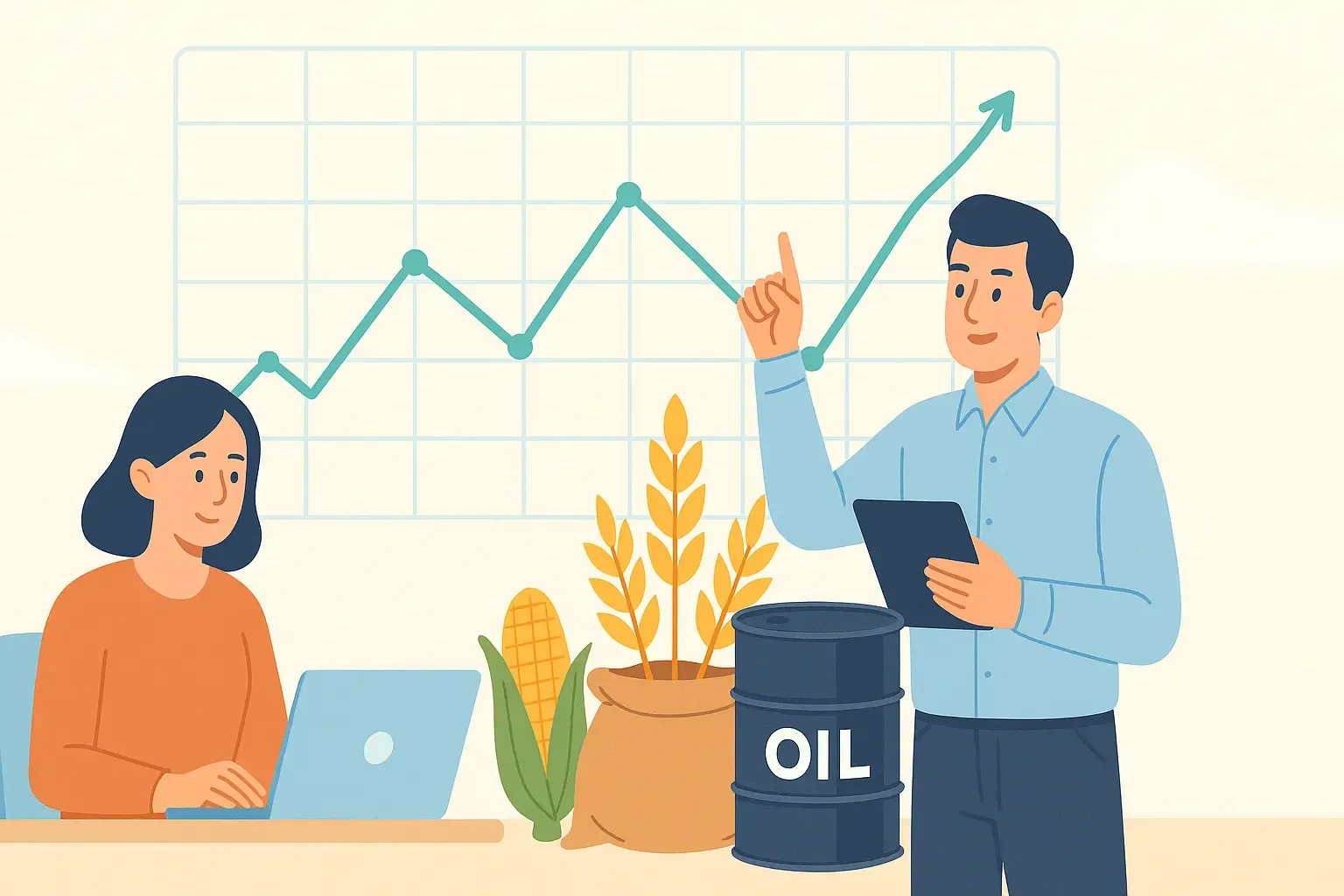
India, one of the world’s fastest-growing economies, boasts a diverse range of sectors contributing to its growth. Among these sectors, the commodity market plays a crucial role. The commodity market in India is a dynamic platform where various raw materials or primary products, such as metals, energy, agricultural produce, and more, are bought and sold. So, what is commodity market in India, its significance, participants, and key features? Let’s find out.
Commodity Market Definition
The commodity market serves as a trading platform where a diverse range of raw materials or primary products, including metals, energy resources, and agricultural produce, are exchanged. It establishes a marketplace where participants can buy and sell commodities, enabling the determination of fair market prices through the interplay of supply and demand dynamics.
Significance of Commodity Market
The commodity market serves as a vital component of the Indian economy due to several reasons. Firstly, it provides a platform for price discovery and transparency. Buyers and sellers can determine fair market prices based on supply and demand dynamics by trading commodities in a regulated market. This transparency assists in reducing market manipulation and provides a level playing field.
Additionally, the commodity market acts as a risk management tool for various stakeholders, including producers, consumers, and investors. Hedging strategies allow participants to protect themselves against price volatility by locking prices for future deliveries. This feature particularly benefits farmers, exporters, and industries heavily reliant on commodities.
Types of Commodity Traded
The Indian commodity market is broadly categorized into three segments: metals, energy, and agricultural commodities.
-
Metals: This segment includes base metals like copper, zinc, aluminum, lead, and nickel, as well as precious metals such as gold and silver. Metals are widely used in industries such as construction, automobiles, and electronics, making them essential for economic growth.
-
Energy: Energy commodities comprise crude oil, natural gas, and petroleum products. Given the rising energy demands in India, these commodities are crucial for sectors like transportation, manufacturing, and power generation.
-
Agricultural Commodities: This segment encompasses various agricultural products such as wheat, rice, pulses, edible oils, spices, sugar, cotton, and more. Trading agricultural commodities allows farmers, traders, and consumers to manage price risks and ensure market stability.
Participants in the Commodity Market
The commodity market involves several participants, each with specific roles:
-
Producers: Individuals or entities engaged in the production of commodities, including farmers, miners, and energy companies.
-
Consumers: Industries and individuals that require commodities for their manufacturing processes or consumption.
-
Traders: Market intermediaries who facilitate buying and selling of commodities on behalf of producers and consumers.
-
Investors: Individuals or institutions who participate in the commodity market to gain profit through speculation or investment in commodity-related financial instruments.
Commodity Exchanges of India
India has several recognized commodity exchanges where trading activities take place. The two primary exchanges are the Multi Commodity Exchange (MCX) and the National Commodity and Derivatives Exchange (NCDEX). These exchanges provide electronic trading platforms and facilitate transparent price discovery, offering a wide range of contracts across various commodities.
Benefits of Trading in Commodity Market
Trading in the commodity market offers several benefits, including potential profit opportunities, diversification of investment portfolios, risk management through hedging strategies, and exposure to various sectors of the economy. However, it is essential to note that commodity trading involves risks, and individuals should thoroughly understand market dynamics before participating.
Conclusion
The commodity market in India plays a vital role in the country's economic growth and development. It provides a platform for transparent price discovery, facilitates risk management, and benefits various stakeholders across sectors. With robust regulations and the participation of diverse market participants, the Indian commodity market continues to evolve and contribute to the overall stability of the economy
FAQs
0 people liked this article.