Zomato’s Journey to Becoming a Unicorn: From Start-up to Global Success
- 6 min read
- 3,023
- Published 07 Jan 2026
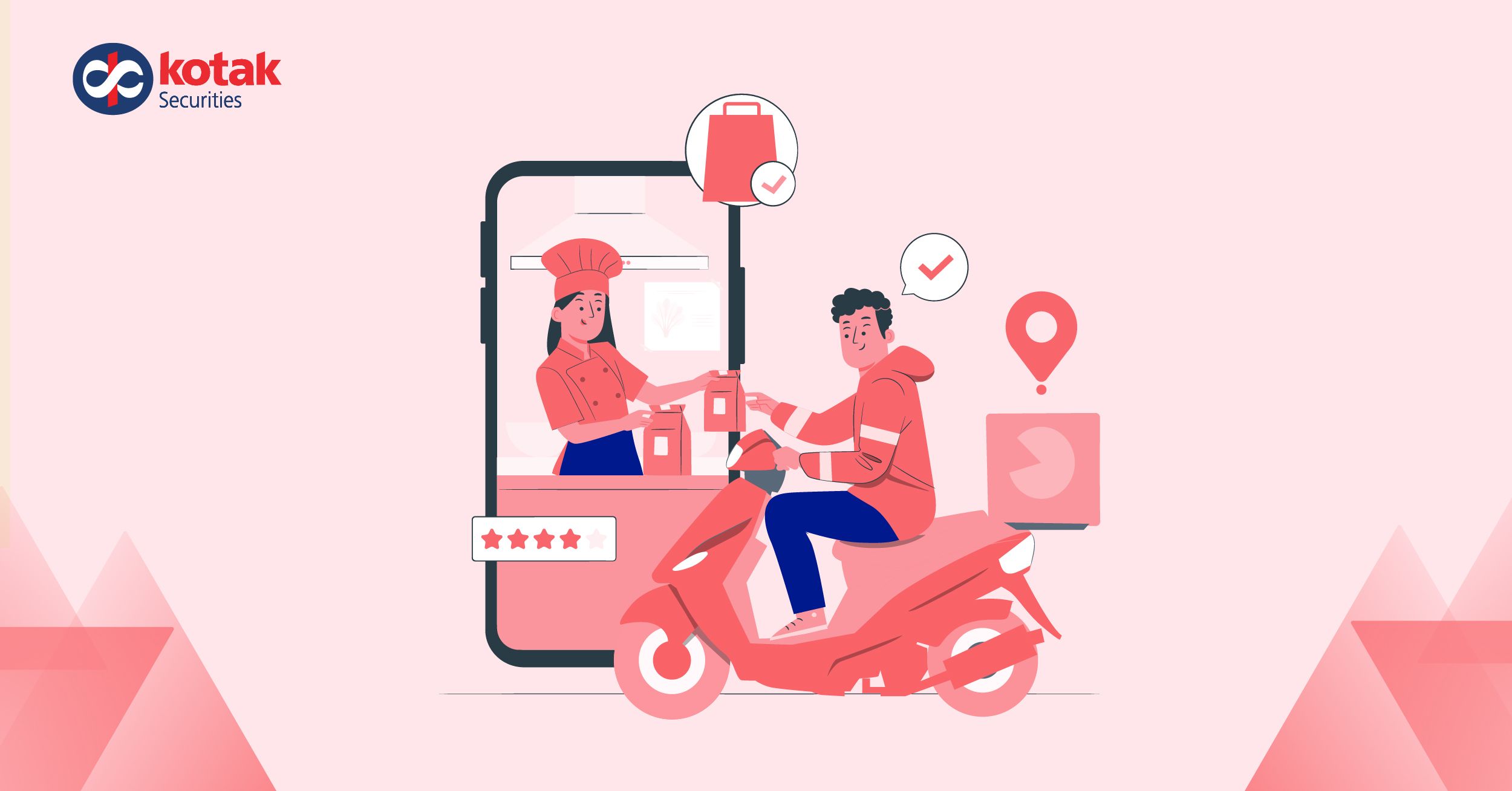
The journey of Zomato, a name synonymous with food delivery and restaurant discovery, from a start-up to a unicorn is a fascinating tale. Empowering customers to discover new tastes and experiences, Zomato's humble beginning as a billion-dollar company is one of India's biggest success stories in the start-up ecosystem. So, how did it all begin? Let's find out.
Why Was Zomato Started?
The story began in 2008, when the founders Deepinder Goyal and Pankaj Chaddah noticed a problem: most office-going people struggled to find restaurant menus and reliable food information. If they wanted to order food, their only options were to rely on outdated menus or restaurants they had only heard about.
And so, the seeds for Zomato were sown, starting with Foodibay (The platform the founders built, where you could find menus, reviews, and ratings all in one place). The idea quickly became popular, proving that a digital way was required to help people discover restaurants and make better dining choices.
The Founders and Their Vision
Zomato was founded by two IIT Delhi graduates named Deepinder Goyal and Pankaj Chaddah. These two shared a strong interest in using technology to solve everyday problems.
While Pankaj handled the technical side of creating a smooth and scalable platform, Deepinder focused on the business and the customer side of things.
Their goal was simple: all they wanted to do was to help people get a better dining experience based on reliable information. They wanted people to have easy access to restaurant menus, reviews, and ratings so they can make the decisions based on experiences rather than confusion.
Business Space and Early Challenges
When Zomato started, the food scene in India was quite different from the one we know and recognise now.
- It was uncommon for people to look for restaurants online.
- Most of us depended on newspapers or printed menus to choose where to eat.
- Or we would let the advice of our peers guide our dining decisions.
- Restaurant owners did not see a lot of value in digital platforms and hesitated to list their businesses online.
Aside from these, Zomato itself struggled with limited funding and slow Internet access. Not to mention the struggle it faced when scaling across cities with different dining habits. It was a challenge to convince both the users and the restaurants to trust in an online platform.
However, Zomato kept on improving, and today we cannot imagine ordering in all dining out without checking the restaurant ratings on Zomato.
Industry Overview
India’s food-tech industry has become a part of our daily lives. Would you believe that the food tech market in India was valued at Rs. 959.16 billion back in 2022 and is expected to reach Rs. 3509.50 billion by 2027?
That’s because people are spending more money on packaged foods, dining out and online food delivery due to various factors like increased urban living, busy lifestyles, increasing income and the unavoidable need for convenience.
Rebranding to Zomato
Foodiebay was rebranded as Zomato after two successful years, and as they say, the rest is history. Support from investors and several rounds of funding helped Zomato build its valuation and a diverse portfolio of investors, including InfoEdge India, Vy Capital, Ant Financial, and Temasek.
Rebranding to Zomato was a crucial step, as the new name was short, memorable, and easy to pronounce. This made it a perfect fit for a brand aiming to go global. After tasting success in Delhi and NCR, it started branching out to other Indian cities like Chennai, Ahmedabad, Hyderabad, and Pune. By 2012, it expanded its services to Sri Lanka, the UK, Qatar, the UAE, and the Philippines. Brazil, Turkey, and New Zealand were added to the list in 2013.
During this period, India was witnessing a smartphone boom, and Zomato's founders wanted to cash in on it. They refined their technological prowess to launch their app and acquired foreign companies to increase their global footprint. In 2014, they acquired Poland's restaurant search service, Gastronauci and Italian restaurant finder, Cibando. In 2015, they acquired NexTable and Urbanspoon.
Innovations and Strategies
Zomato is the innovative version of what started as a menu listing platform. Safe to say that Zomato’s got innovation in the bag.
- Turned a simple menu listing site that expanded into food delivery, subscriptions to Zomato Gold and Pro and even cloud kitchens.
- Built trust among people with the help of user reviews and ratings.
- Built an easy-to-use mobile application that brings all you need to make your dining experience amazing at your fingertips.
- But that’s not all, Zomato also utilised smart acquisitions (Urbanspoon and Runnr) to move forward. It kept adding new capabilities instead of building everything from scratch, which worked in its favour.
- Another key strategy was customising to the local public by understanding how the food habits differed from city to city.
Overcoming Obstacles
In hindsight, Zomato did not have a smooth journey.
In the early days, it was quite a hassle to convince restaurants to get listed online. There was a lot of doubt and stigma around the value of digital platforms. It was hard to secure funding since the whole food tech space was new to India.
Not to mention the legalities, rules and regulations, food safety concerns, and logistical challenges the start-up faced. And how can we forget the intense competition from players like Swiggy?
Achievements and Awards
Over the years, Zomato has hit several major milestones, including:
- In 2015, it stepped into food delivery as online ordering started picking up in India.
- In 2020, Zomato took over Uber Eats India, giving it a much stronger hold on the market.
- By July 2021, it went public in one of India’s most talked-about tech IPOs.
- It also expanded beyond India into places like the UAE and the US.
Along the way, it launched Zomato Pro and used AI to make deliveries faster and smoother.
Impact on the Industry
Zomato has left an indelible mark on the industry and society. Today, we can’t imagine our lives without Zomato.
For the restaurants, it helped them go digital and reach more customers, especially during slow times like the pandemic. And for the customers, it presented a simple and reliable platform that prioritised hygiene and contactless delivery.
It’s important that we don’t forget that Zomato opened up large-scale job opportunities from delivery partners to tech roles, contributing to the overall Indian economy.
Share of Struggles
Every success story has its share of struggles, and Zomato was no different. In 2015, Zomato experienced dwindling revenues, forcing it to make massive layoffs. 2016 was also slow, with further revenue losses, and it had to roll back operations in nine countries it had expanded into.
The unicorn journey had hit a roadblock, but as Rocky Balboa had put it - Every champion was once a contender that refused to give up. Deepinder and Pankaj did just that, steering their dream effectively during the tough times. New initiatives, such as cloud kitchen and Zomato Gold, were taken during this period despite the latter attracting criticism that hurt the company's goodwill to some extent.
Gaining the unicorn status and going for IPO
The company's breakthrough moment came in February 2018, when it gained unicorn status in its series H funding round. Zomato share was listed on bourses on 23rd July 2021 at a valuation of over USD 13.3 billion with an issue price of ₹76 apiece. The IPO was successful, as it was oversubscribed 38 times.
Smashing numbers
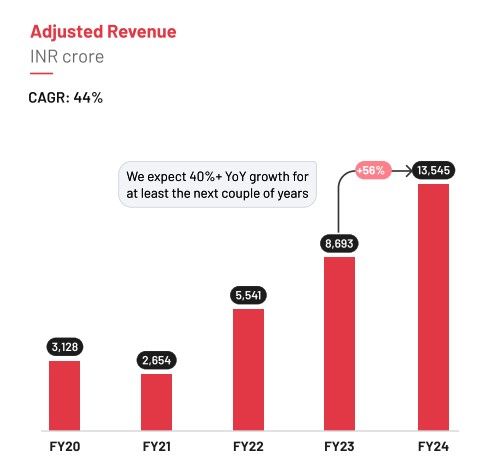
Zomato recorded a 225% rise in revenues in the first half of FY 2020, and its adjusted revenues from FY 20 to FY24 witnessed a CAGR of 44% (see image).
Challenges in the Industry
Zomato has come a long way, surviving struggles and delivering smashing numbers. But even with all this growth there are challenges that continue to test Zomato and others in the industry:
- The food safety and quality control remain unsteady. And small suppliers and street vendors are not the only victims. Cloud kitchens and quick commerce dark stores are also facing the heat.
- Poor infrastructure, such as the lack of proper storage areas, gaps in transportation, and fragmented sourcing, means that managing supply chains is quite a hassle.
- It’s difficult to get a pricing advantage because there’s so much competition in the unorganised and the organised sectors.
To add fuel to the fire, companies must constantly adapt and evolve to keep their customers engaged while keeping costs, hygiene, and reliability in check.
Future Prospects
What will Zomato do next? Well, currently it’s working on using AI to make food suggestions smarter and delivery smoother. There are also testing their hand at embracing cloud kitchens, using subscriptions to their benefit, and quick commerce with Blinkit.
Today, Zomato has expanded its business from food delivery to quick commerce. Zomato’s journey from a start-up to a unicorn is a testament to its innovation, adaptability, and customer focus. With a strong brand and a growing customer base, Zomato is well-positioned to script many more success stories in the coming days.
FAQs
0 people liked this article.