A Crude Oil Ripple in the Middle East, A Big Wave in the Indian Market
- 5 min read
- 5,747
- Published 18 Dec 2025
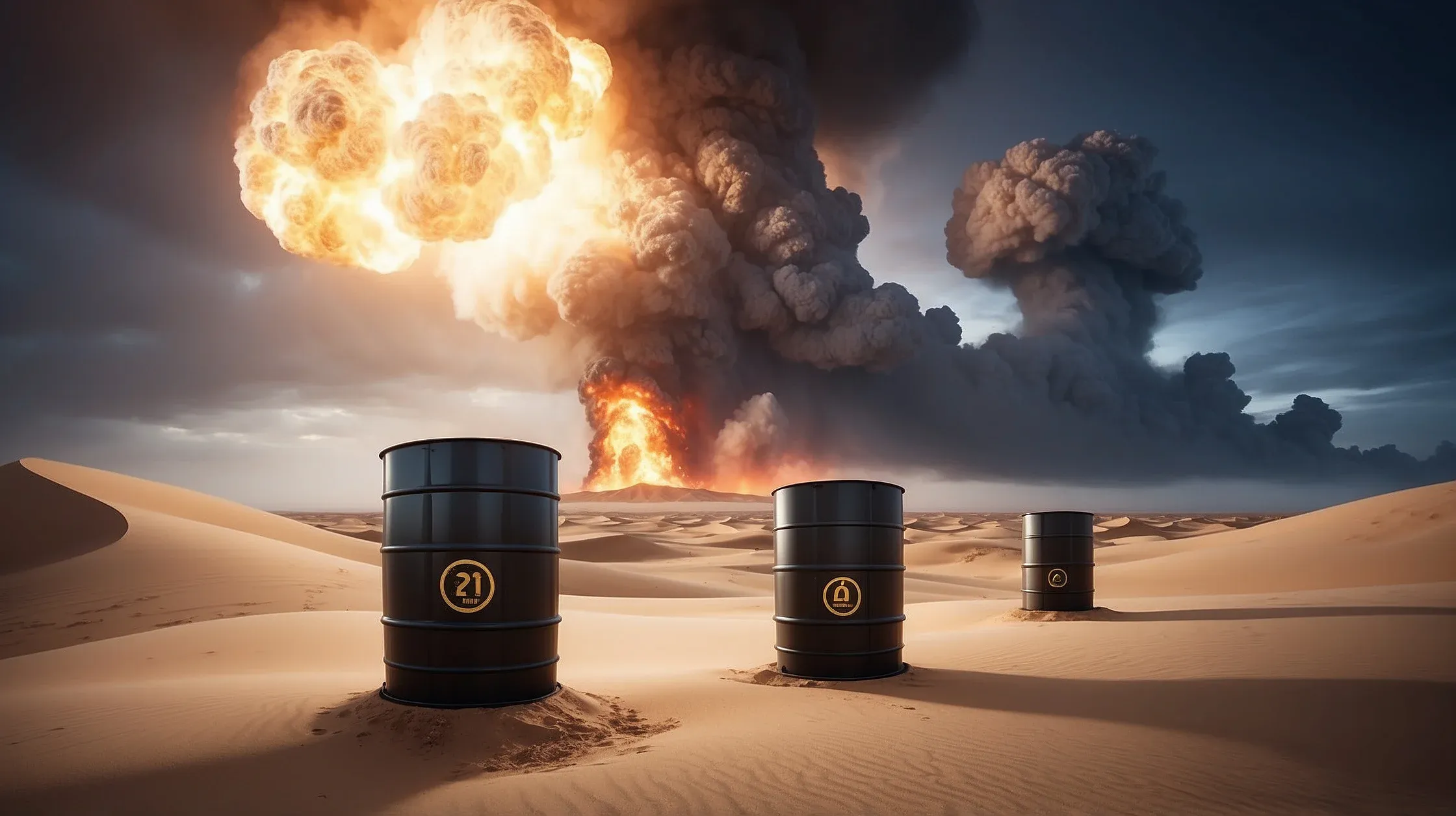
Somewhere between the desert skies of Tehran and the trading desks of Dalal Street, a gust of heat had begun to rise—not from the sand, but from crude.
Brent was climbing, the rupee was sliding, and investor pulses had started to twitch.
The headlines screamed missiles. But the charts? They whispered opportunity.
And here’s the thing—every time oil markets rumble in the Middle East, Indian stocks don’t just flinch—they shift, not in panic, but in pattern.
If you know where to look, these ripples can turn into waves worth riding.
When Crude Moves, India Dances
It’s an old rhythm. 1991. 2003. 2022. And now, 2025.
Every time the world wakes up to conflict over oil, India—80% dependent on imports—braces itself.
And yet, each time, something had changed.
This time, Brent was flirting with $80 per barrel, rising over 12% in the past week.
West Texas Intermediate (WTI) wasn’t far behind.
The rupee was hovering around ₹86 to the dollar.
You’d think markets would have wobbled.
But look closer: Oil & Natural Gas Corporation (ONGC) and Oil India were already grinning.
Airlines? Not so much.
And oil marketing companies (OMCs) like Bharat Petroleum Corporation Ltd (BPCL) and Indian Oil Corporation (IOC)?
They were caught in the crosswinds—while cheaper crude boosts margins, pricier crude leads to under-recoveries.
The stock market’s mood isn’t panic—it’s performance-driven. One eye on Aviation Turbine Fuel (ATF) costs, the other on energy ETFs.
It’s not about ducking. It’s about positioning.
Every Barrel Spills a Story
We’ve seen this movie before.
Back in 1973, the Arab oil embargo shocked the world.
Crude prices quadrupled.
For India, heavily dependent on imports, it meant ballooning deficits and the beginning of fuel rationing.
Growth slowed. Inflation climbed.
The oil meter ticked, and the economy winced.
Then came 1979.
The Iranian Revolution sent crude soaring again.
Oil import bills doubled, India’s inflation touched double digits, and GDP growth crawled to 2.5%.
It wasn’t just oil being burned—it was budgets too.
1991? The first Gulf War erupted.
Oil prices shot up from $15 to $30 a barrel.
India’s oil import bill nearly doubled.

Foreign exchange reserves were down to barely a few weeks’ worth of imports.
The result? A Balance of Payments (BOP) crisis that forced India to ship out its gold—and liberalise.
2003 brought the Iraq war.
Crude nudged up briefly.
ONGC rode the wave, downstream OMCs gritted their teeth, and airlines trimmed their in-flight snacks to stay afloat.
But India’s economy, now more resilient, absorbed the blow better.
Fast forward to 2022.
Russia’s tanks crossed into Ukraine, and Brent crude launched from $84 to $116.
For every $1 rise in crude, Indian OMCs took a ₹200–300 crore EBITDA hit.
But ONGC, Oil India, and their upstream tribe?
They laughed their way to the quarterly earnings.
And here we are in 2025.
Another conflict—this time between Israel and Iran—had briefly flared up.
Brent was dancing around $80, fuelled by geopolitical fears, but has since settled closer to its usual trading range as tensions in the Middle East have now eased.
And yet—even at the height of the spike—this didn’t feel like panic.
Exchange Traded Funds (ETFs) with upstream exposure have already outperformed the Nifty by 1.5% YTD.
Airlines had dipped briefly—down 1–2% on rising ATF costs. But they have bounced back since then as crude prices have cooled down and sentiment has stabilised.
The markets had moved from fear to calculation.
Because this isn’t about war, it’s about maths.
So, Where Do You Park Your Capital?
Every shock is a test.
Not just of policy but of portfolios.
When oil spikes, the usual suspects get all the love—or hate.
But some investors are quietly taking a different route.
REITs, for example.
Real estate doesn’t ride on crude—it rides on leases.
And those don’t change with barrel prices.
In fact, high inflation often drives up rental yields.
So, while energy stocks swing, REITs offer a calm corner—especially if you like quarterly payouts and urban infrastructure plays.
Then, there are target maturity debt funds.
They sit outside the noise—fixed maturity, government or PSU-backed bonds, steady returns.
Think of them as the fixed-deposit cousin of equity volatility.
And for the adventurous? Agri commodity futures.
No, really. Guar, cotton, wheat—they often dance to a different tune.
Guar seed, for instance, has a mind of its own: rains, demand, storage—not oil.
So, when crude oil prices rise, some of these commodities fall.
And, of course, green energy mutual funds.
When oil burns brighter, solar and wind start to look better—both economically and politically.
These funds aren’t just bets on renewables—they’re hedges against fossil fuel volatility.
A global EV push? Carbon targets? Those just add wind to the sails.
What the Patterns Whisper
If the past is any guide, here’s what you should keep on your radar:
- Upstream oil stocks (ONGC, Oil India) tend to benefit—strongly and consistently.
- Downstream OMCs (IOC, BPCL, HPCL) tend to come under pressure when crude prices stay elevated for long. When prices ease, their margins usually stabilise.
- Airlines face turbulence with every rise in ATF. Margins are razor-thin, and fuel isn’t getting cheaper.
- Energy ETFs often outperform during oil spikes—if they’re loaded with upstream weight.
- Sectoral repricing has replaced panic selling. The market’s learning. And rewarding nuance.
Crude Wisdom for Indian Investors
Let’s be clear: you’re not trading geopolitics.
You’re navigating its consequences.
When missiles fly, so do algorithms.
But long-term wealth isn’t built on reflex—it’s built on rhythm.
Oil shocks aren’t just about bracing for impact—they’re about spotting the silent winners.
The hedged positions.
The clean energy funds are gaining ground as petrol prices climb. The less-glamourous REITs are churning steady returns while the news cycles burn.
Can you ride the crude shock?
Yes—but not by chasing headlines.
By studying patterns, sector moves, and hidden correlations.
Because when the Middle East ripples and India feels the wave, it’s not always the obvious trades that win.
Sometimes, the smart money surfs sideways.
Sources and References:
0 people liked this article.